Paul preaching at Athens.

Did Paul Preach a Different Gospel?

DID PAUL, PETER AND JESUS PREACH THE SAME GOSPEL?

Posted on March 3, 2022 by Paul Ellis // 8 Comments

📷

Read the New Testament and you might come away with the idea that there is more than one gospel.

The very first words of the New Testament in the King James Bible are, “The Gospel According to Matthew.” Read on and you will also find the gospels according to Mark, Luke, and John.

In the Gospels of Matthew and Luke, we find Jesus preaching the gospel of the kingdom, while Mark refers to the gospel of Jesus Christ and the gospel of God.

The word gospel does not appear in John’s Gospel, but in Acts and all the letters that follow, the gospel is mentioned plenty of times with different labels:

  • the gospel of Jesus Christ (Mark 1:1)
  • the gospel of Christ (Rom. 15:19, 1 Cor. 9:12, 2 Cor. 2:12, 9:13, 10:14, Gal. 1:7, Php. 1:27, 1 Th. 3:2)
  • the gospel of God (Mark 1:14, Rom 1:1, 15:16, 2 Cor. 11:7, 1 Th. 2:2, 8, 9, 1 Pet. 4:17)
  • the gospel of the blessed God (1 Tim. 1:11)
  • the gospel of his Son (Rom 1:9)
  • the gospel of the kingdom (Matt. 4:23, 9:35, 24:14, Luke 16:16)
  • the gospel of the glory of Christ (2 Cor. 4:4)
  • the gospel of your salvation (Eph. 1:13)
  • the gospel of peace (Eph. 6:15)
  • the glorious gospel of the blessed God (1 Tim 1:11)
  • the eternal gospel (Rev. 14:6)

These are not different gospels but different labels for the one and only gospel, namely the gospel of grace.

When Paul refers to the gospel of grace in Acts 20:24, he means the same thing as when he and others refer to the gospel of God or the gospel of peace or the gospel of your salvation. All of these gospels reveal the One who is called Grace, who was given to us out of the fullness of the Father’s grace, and through whom we have received grace upon grace.

This is all pretty obvious, right? Only many don’t see it.

They see Jesus preaching one gospel and Paul preaching another. Or they see discord among the apostles. “Paul preached salvation by faith; James added works.” Or they see different gospels for different dispensations; a gospel for then, another one for now.

But if this were true, how would you know which gospel to believe? People would say things like, “I follow Paul.” “I follow Peter.” “Well I follow Jesus!”

Paul said if anyone preached a gospel different to the one he preached, let them be cursed (Gal. 1:9). So if Jesus preached a different gospel, Paul was cursing the Lord and the Bible can’t be trusted.

And if you believe there are different gospels, then you will have a divided heart. You will be forever wondering if you have picked the right one.

DID JESUS AND PAUL PREACH THE SAME GOSPEL?

Did Paul preach a different gospel? Jesus preached the gospel of the kingdom while Paul went around preaching the kingdom of God (Acts 20:25). Looks like the same gospel to me.

“But Jesus emphasized the kingdom, while Paul emphasized grace.” These are not different emphases but different ways of saying the same thing. When we preach the kingdom, we are revealing a King whose name is Grace. Grace is the language, the culture, and the economy of the kingdom.

When Jesus says seek first his kingdom and his righteousness, he is saying “seek me and my righteousness.” Where do we find his righteousness? In the gospel of grace!

For in the gospel the righteousness of God is revealed – a righteousness that is by faith from first to last. (Romans 1:17)

In many of his letters, Paul preached the gospel of Christ. On other occasions he preached the gospel of God. These are different labels for the gospel of grace because it is the grace of God revealed in Christ that makes the good news good news.

DID PAUL AND PETER PREACH THE SAME GOSPEL?

I had been entrusted with the gospel to the uncircumcised, just as Peter had been entrusted with the gospel to the circumcised… (Galatians 2:7)

Paul and Peter preached the same gospel to different audiences. Peter preached to the Jews (but not always), while Paul preached to the Gentiles (but not always). But they both preached the same gospel.

Paul is known to us as the apostle of grace, but Peter was an apostle of grace too. Peter preached about the God of all grace revealing his grace through a Savior (1 Pet. 1:10, 5:10).

It was Peter who encouraged us to be good stewards of the manifold grace of God and stand firm in the true grace of God (1 Pet. 4:10, 5:12).

And it was Peter who prayed that grace would be multiplied to us as we grow in the grace and knowledge of Jesus (2 Pet. 1:2, 3:18).

There is no question that Peter understood grace as well as Paul, but what about the odd man out? What about James?

DID PAUL AND JAMES PREACH THE SAME GOSPEL?

Many dismiss James as unacquainted with grace. A young Martin Luther even referred to James’ letter as an epistle of straw.

But James was an apostle of grace who understood the grace message as well as Paul. Like Peter, James preached to the Jews. His letter was written to religious people who believed in God and were diligent in their observance of the law.

The religious Jews were doing plenty of works, but their works were dead works and their faith was a dead faith (Jas. 2:17). They believed in God, but their faith was not accompanied by the “work” of believing in the one he sent (Jas. 2:14).

The apostles and epistle writers did not preach different gospels. They all proclaimed the grace of God and justification by faith in his Son.

Don’t be misled by the different labels. There aren’t different gospels for different folks or different times.

Just as there is one Lord and one faith, there is only one gospel – the gospel of grace.

Votre union incassable avec le Christ

May be a black-and-white image of one or more people

Posted on janvier 7, 2016 by Paul Ellis // 55 Comments

📷

Certains chrétiens comprennent leur union avec le Seigneur mais seulement à moitié.

” Bien sûr, Dieu est avec nous, mais parfois il ne l’est pas. Il vient et il s’en va. “

Il est vrai que dans l’Ancien Testament, le Saint-Esprit venait sur certaines personnes à certains moments, mais c’était à l’époque et c’est maintenant.

Jésus a dit que le Saint-Esprit demeure avec nous et fait sa maison avec nous (Jean 14:16-17).

Par maison, il veut dire foyer. Vous n’êtes pas une chambre de motel pour le Seigneur. Vous êtes un temple du Saint-Esprit qui marche, qui parle, qui vit et qui respire. Il ne va nulle part.

“Voulez-vous dire que le Saint-Esprit est avec moi même lorsque je pèche ?”

Oui ! L’amour du Christ pour vous et son union avec vous sont plus forts que n’importe quel péché.

Sous l’ancienne alliance, le péché était votre voie rapide vers la désunion. Si vous péchiez, vous risquiez d’être exclu du peuple de Dieu.

Jésus a dit : “Si ta main ou ton œil te font pécher, débarrasse-t’en” (Matthieu 5:29-30). Pourquoi Jésus a-t-il prêché l’auto-amputation à ceux qui étaient nés sous la loi ? Parce que sous cette alliance, il était logique de parler de l’élimination des parties du corps qui pouvaient contaminer l’ensemble.

Dieu merci, l’ancienne alliance a disparu ! Nous ne sommes pas sous la loi mais sous la grâce, et c’est une bonne nouvelle pour les membres du corps du Christ.

Union_Wiersbe

Lorsque nous péchons, Jésus ne nous coupe pas, nous restons membres de son corps. Cela change totalement notre façon de voir le péché. Sous l’ancienne alliance, nous étions retenus de pécher par la terreur mortelle, mais dans la nouvelle, nous sommes retenus par l’amour.

Vais-je donc prendre les membres du Christ et les unir à une prostituée ? Jamais ! (1 Co 6, 15b)

Regardez l’avertissement de Paul concernant les prostituées. Derrière l’avertissement – ne le faites pas – il y a une affirmation surprenante et rassurante de l’union. Paul dit qu’il est possible, bien que déconseillé, d’unir les membres du corps du Christ avec des prostituées.

Le voyez-vous ?

Les mariages terrestres peuvent se briser et échouer, mais votre union avec le Christ est incassable.

Le péché ne peut la briser.

La dépendance ne peut pas la briser.

Les décisions les plus stupides que vous puissiez prendre ne peuvent pas la briser.

Cela ne doit pas être pris comme un défi pour voir ce que vous pouvez faire, mais comme une déclaration stupéfiante de l’engagement absolu du Christ à vous aimer et à rester avec vous quoi qu’il arrive.

C’est ce qui nous change – non pas la faible influence de la règle, mais la passion implacable et déterminée de son amour.

L’amour de Dieu est la plus grande force de l’univers. Le péché fléchit devant lui. Lorsque vous rencontrez l’amour inébranlable et sans fin de Christ, cela vous change.

Vous ne voulez plus pécher.

Les plaisirs passagers de ce monde perdent leur attrait parce que vous avez trouvé un amour qui est plus vrai et meilleur de loin.

Traduit avec www.DeepL.com/Translator (version gratuite)

Like

Comment

Est-ce que 2 Pierre 2 dit que vous pouvez perdre votre salut ?

Posted on mai 11, 2017 by Paul Ellis // 74 Comments

📷

Dans ce monde d’anxiété et de peur, il est radical de proclamer la sécurité éternelle du croyant.

Un avec le Seigneur, votre avenir est le même que le sien. Personne ne peut vous arracher de sa main, rien ne peut vous séparer de son amour.

Pourtant, chaque fois que je dis des choses comme ça, quelqu’un pointe du doigt 2 Pierre 2, comme si ce seul chapitre pouvait annuler les nombreuses promesses de Dieu et rendre l’œuvre salvatrice du Christ sans effet.

“Pierre parle de chrétiens qui ont abandonné le Seigneur et ont été condamnés”, disent-ils. “Autant pour une fois sauvé, toujours sauvé”.

Aargh. Vous m’avez eu. Ce seul verset défait toute la Bible.

Sheesh.

Il ne se passe pas un mois sans que j’aie l’occasion de parler de 2 Pierre 2. Est-ce que 2 Pierre 2 dit que vous pouvez perdre votre salut ? Non ! Dans ce chapitre, Pierre met en garde contre les faux enseignants qui renient le Seigneur et enseignent l’hérésie. Il ne fait PAS référence aux chrétiens. Ces hérétiques sont des esclaves de la dépravation (v. 19) qui ne cessent de pécher (v. 14). Ce ne sont pas des saints mais des bêtes brutes qui sont condamnées à périr (v. 12).

Mais ces pécheurs étaient-ils autrefois des saints ? Étaient-ils des chrétiens qui se sont égarés et sont tombés hors de portée de la grâce ?

C’est une question importante, car s’ils ont été sauvés une fois, alors vous pouvez perdre votre salut. Tout comme ces faux enseignants étaient voués à une “destruction rapide”, vous pouvez vous aussi vous diriger vers l’enfer si vous ne prenez pas garde.

PIERRE PARLE-T-IL DES CHRÉTIENS RÉCALCITRANTS ?

Selon presque tous les commentaires que j’ai lus, la réponse est oui. “Il s’agissait de chrétiens authentiques qui ont tourné le dos à Dieu et qui recevront maintenant un châtiment pire que celui qui n’a jamais rencontré Jésus.”

Oh jour heureux.

Même certains enseignants de la grâce sont convaincus que Pierre décrit d’anciens chrétiens qui sont maintenant damnés. Mais ces personnes ont-elles jamais été sauvées ? A première vue, l’évidence semble assez claire, car Pierre dit que ces faux enseignants…

– ont quitté le droit chemin et se sont égarés (v. 15)

– ont échappé aux souillures du monde pour s’y laisser à nouveau prendre (v. 20)

– ont connu le Seigneur et Sauveur Jésus-Christ (v. 20) et la voie de la justice (v. 21)

– sont retournés dans la boue comme un porc (v. 22).

Voilà, c’est tout. Fermez vos Bibles et occupez-vous à préparer votre salut, car si vous ne restez pas sur le bon chemin, vous êtes condamnés. Comme ces gars-là. “Les ténèbres les plus noires leur sont réservées” (v. 17), et vous aussi si vous ne faites pas attention.

Et pourtant, ne trouvez-vous pas intéressant que Pierre ne dise jamais : “Soyez avertis, chers amis, ce qui leur est arrivé pourrait vous arriver” ?

Il ne le dit jamais parce que cela ne peut pas arriver. L’idée même que nos péchés puissent survivre à la grâce de Dieu est absurde.

Je l’ai déjà dit et je le répète : Vous pouvez faire naufrage dans votre foi et vous égarer, mais votre Père céleste ne vous abandonnera jamais ni ne vous délaissera. Ce que le Seigneur commence, il le termine.

ALORS COMMENT LIRE 2 PETER 2 ?

La clé pour déverrouiller ce passage est Balaam :

Ils (les faux enseignants) ont quitté le droit chemin et se sont égarés pour suivre la voie de Balaam, fils de Bézer, qui aimait le salaire de la méchanceté. (2 Pierre 2:15)

Vous vous souvenez peut-être que le prophète Balaam avait été recruté par le roi de Moab pour maudire les enfants d’Israël (Nombres 22-24). Mais après avoir rencontré le Seigneur à trois reprises – l’une des rencontres les plus célèbres ayant impliqué un âne parlant et un ange – Balaam a fait volte-face et a béni les enfants d’Israël à la place.

Un homme intelligent, ce Balaam.

Le roi moabite était furieux que Balaam n’ait pas fait ce qu’il demandait. Alors Balaam, réalisant qu’il allait être renvoyé chez lui les mains vides, a enseigné au roi comment vaincre Israël (Ap 2,14).

Pour faire court, les hommes d’Israël ont été séduits par des femmes moabites et se sont détournés du Seigneur (Nb 25, 1-3). Ils étaient aux portes de la Terre promise, mais ils ont failli ne jamais y entrer, tout cela à cause de l’avide Balaam.

Un homme pas si malin que ça, ce Balaam.

Les Israélites ont fini par se repentir et ont poursuivi leur route vers Canaan. En chemin, ils ont tué le faux prophète Balaam qui leur avait fait tant de mal (Nb 31, 😎.

Bye bye, Balaam.

Lorsque Pierre dit : “Ces faux docteurs sont comme Balaam”, il veut dire qu’ils sont du mauvais côté de Dieu. “En pervertissant l’évangile, ils essaient de maudire ce que Dieu a béni. Et comme Balaam, ils connaîtront une mauvaise fin.”

Avec cette clé en main, nous pouvons maintenant déverrouiller les versets difficiles de 2 Pierre 2.

QUI SONT LES ADEPTES DE BALAAM ?

Verset 15 : Ils ont abandonné le droit chemin et se sont égarés, suivant la voie de Balaam qui aimait le salaire de l’iniquité…

Pierre ne décrit pas des chrétiens mais des personnes qui ont connu la voie à suivre – comme Balaam – et l’ont rejetée. Balaam a eu une rencontre personnelle avec le Seigneur. Il a entendu Dieu parler, mais lorsque l’argent était sur la table, Balaam a fait le mauvais choix. Il s’est opposé à Dieu, tout comme le font les faux enseignants lorsqu’ils pervertissent l’évangile.

Verset 20 : Car si, après avoir échappé aux souillures du monde par la connaissance du Seigneur et Sauveur Jésus-Christ, ils s’y laissent de nouveau entraîner et sont vaincus, cette dernière condition leur est devenue pire que la première.

Balaam a d’abord tenu tête au roi de Moab, mais il ne s’est jamais aligné sur le Seigneur. Ce qui était étrange. Si les Israélites étaient aussi bénis qu’il le disait, pourquoi ne pas les rejoindre ? Pourquoi rester avec le roi maudit de Moab ?

Le prophète était comme ces Hébreux qui ont échappé aux souillures de l’Égypte mais ne sont pas entrés dans la Terre promise. Ils sont sortis mais ne sont jamais entrés. Ils sont morts dans le désert à cause de leur incrédulité.

Verset 21 : Car il vaut mieux pour eux ne pas avoir connu la voie de la justice, que, l’ayant connue, de se détourner du saint commandement qui leur a été transmis.

Celui qui rejette le chemin de la justice (l’évangile) est plus malheureux que celui qui ne l’a pas entendu parce qu’il a endurci son cœur à ce qui pouvait le sauver. Il a refusé le saint commandement du Seigneur de “se repentir et de croire à la bonne nouvelle” (voir 1 Jean 3:23).

J’espère que vous pouvez voir qu’un disciple de Balaam n’est pas un disciple de Jésus. C’est quelqu’un qui a entendu et rejeté l’évangile. Ils ont eu une rencontre avec le Seigneur mais ont tourné le dos. Ils ont goûté au pain de vie et l’ont recraché. Ils n’ont pas répondu par la foi à la grâce de Dieu.

Verset 22 : Il leur est arrivé ce que dit le vrai proverbe : “Le chien retourne à son vomi” et “La truie, après avoir été lavée, retourne se vautrer dans la boue”.

Un chrétien n’est pas un chien ou un porc ! Une truie lavée reste une truie, mais un chrétien est une toute nouvelle création.

Si vous ne connaissez pas votre union avec Christ, vous pouvez tomber dans le mensonge qui dit que vous pouvez perdre votre salut. Vous pouvez même penser que Pierre décrit des chrétiens condamnés.

N’ayez crainte, cela n’existe pas.

Does 2 Peter 2 Say You Can Lose Your Salvation?

Posted on May 11, 2017 by Paul Ellis // 74 Comments

📷

In this world of anxiety and fear, it is a radical thing to proclaim the eternal security of the believer.

One with the Lord, your future is the same as his. No one can snatch you from his hand; nothing can separate you from his love.

Yet every time I say stuff like this, someone will point to 2 Peter 2 as though this one chapter could undo the many promises of God and make Christ’s saving work of no effect.

“Peter writes about Christians who forsook the Lord and were condemned,” they say. “So much for once saved, always saved.”

Aargh. You got me. That one verse undoes the whole Bible.

Sheesh.

Hardly a month goes by when I don’t have occasion to talk about 2 Peter 2. Does 2 Peter 2 say you can lose your salvation? No! In this chapter, Peter warns about false teachers who deny the Lord and teach heresy. He is NOT referring to Christians. These heretics are slaves of depravity (v.19) who never stop sinning (v.14). They are not saints but brute beasts who are condemned to perish (v.12).

But were these sinners once saints? Were they Christians who lost the way, and fell beyond the reach of grace?

This is an important question, because if they were once saved, then you can lose your salvation. Just as these false teachers were doomed to reap “swift destruction,” you too could be headed for hell – if you don’t take care.

IS PETER TALKING ABOUT BACKSLIDDEN CHRISTIANS?

According to nearly every commentary I have read, the answer is yes. “These were genuine Christians who turned their back on God and will now get a worse punishment than the one who never met Jesus.”

Oh happy day.

Even certain grace teachers are convinced that Peter is describing former Christians who are now damned. But were these people ever saved? At first glance, the evidence seems clear enough, for Peter says these false teachers…

– have left the right way and gone astray (v.15)
– have escaped the defilements of the world only to become entangled again (v.20)
– once knew the Lord and Savior Jesus Christ (v.20) and the way of righteousness (v.21)
– have returned to the muck like a pig (v.22)

So there you have it. Close your Bibles and get busy working out your salvation because if you don’t stay on the right way you’re doomed. Like these guys. “Blackest darkness is reserved for them” (v.17), and you too if you’re not careful.

And yet, don’t you find it interesting that Peter never says, “Be warned, dear friends, what happened to them could happen to you”?

He never says it because it CANNOT happen. The very idea that our sins could outlast God’s grace is absurd.

I’ve said it before and I’ll say it again: You may shipwreck your faith, and go astray, but your heavenly Father will never abandon or forsake you. What the Lord begins he finishes.

SO HOW DO WE READ 2 PETER 2?

The key to unlocking this passage is Balaam:

They (the false teachers) have left the straight way and wandered off to follow the way of Balaam son of Bezer, who loved the wages of wickedness. (2 Peter 2:15)

You may recall that Balaam the prophet was recruited by the king of Moab to curse the children of Israel (Numbers 22-24). But after encountering the Lord three times – one encounter famously involved a talking donkey and an angel – Balaam did a volte-face and blessed the children of Israel instead.

Smart man, that Balaam.

The Moabite king was furious that Balaam had not done what he asked. So Balaam, realizing he was about to be sent home empty-handed, taught the king how to defeat Israel (Rev 2:14).

Long story short, the men of Israel were seduced by Moabite women and turned away from the Lord (Num 25:1-3). They were on the doorstep of the Promised Land yet they almost never entered, all because of greedy Balaam.

Not so smart man, that Balaam.

The Israelites eventually repented and pressed on to Canaan. On the way they killed the false prophet Balaam who had done them so much harm (Num 31:8).

Bye bye, Balaam.

When Peter says, “These false teachers are just like Balaam,” he’s saying they are on the wrong side of God. “By perverting the gospel, they are trying to curse what God has blessed. And like Balaam, they will come to a bad end.”

With this key in hand, we can now unlock the difficult verses of 2 Peter 2.

WHO ARE THE FOLLOWERS OF BALAAM?

Verse 15: They have forsaken the right way, and gone astray, following the way of Balaam who loved the wages of unrighteousness…

Peter is not describing Christians but people who have known the way to go – as Balaam did – and rejected it. Balaam had a personal encounter with the Lord. He heard God speak, ut when the money was on the table, Balaam made the wrong choice. He opposed God just as false teachers do whenever they pervert the gospel.

Verse 20: For if, after they have escaped the defilements of the world by the knowledge of the Lord and Savior Jesus Christ, they are again entangled in them and are overcome, the last state has become worse for them than the first.

Balaam initially stood up to the king of Moab, yet he never aligned himself with the Lord. Which was strange. If the Israelites were as blessed as he said, why not join them? Why stay with the cursed king of Moab?

The prophet was like those Hebrews who escaped the defilements of Egypt but did not enter the Promised Land. They came out but never went in. They died in the wilderness on account of unbelief.

Verse 21: For it would be better for them not to have known the way of righteousness, than having known it, to turn away from the holy commandment handed on to them.

The one who rejects the way of righteousness (the gospel) is worse off than the one who has not heard it because he has hardened his heart to that which could save him. He has refused the Lord’s holy command to “repent and believe the good news” (see 1 John 3:23).

I hope you can see that a follower of Balaam is not a follower of Jesus. It is someone who has heard and rejected the gospel. They’ve had an encounter with the Lord but turned their back. They’ve tasted the bread of life and spat it out. They have not responded with faith to the grace of God.

Verse 22: It has happened to them according to the true proverb, “A dog returns to its own vomit,” and, “A sow, after washing, returns to wallowing in the mire.”

A Christian is not a dog or a pig! A washed sow remains a sow, but a Christian is a brand new creation.

If you don’t know about your union with Christ, you may fall for the lie that says you can lose your salvation. You may even think that Peter is describing condemned Christians.

Fear not; there is no such thing.

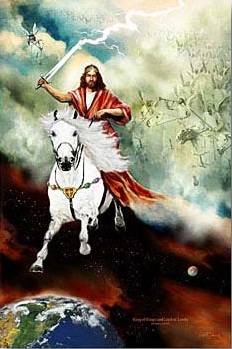
REVELATION of WHICH JESUS?

Would your Jesus kill little children because their parents sinned? Would your Jesus change salvation by faith back to salvation by works? Would your Jesus direct his disciples to rule with an “iron rod” instead of with love and forgiveness? Would your Jesusvomit you (and me) out of the Kingdom of God  for being only a little warm and not red hot in our faith walk?  And then not tells how he measures faith temperatures? Would your Jesus sendyou to hell for not believing every word of the Book of Revelation, and not tell you which is the unchangeable version of the hundreds of changed translations? And revoke his promise to never leave us and to be with us forever? Would your Jesus tell youhe is coming soon and then not come? Would Jesus change his appearance into that of a demonso it is so frightening to look at him that you will faint? Would Jesus give us the unbelievable images of chapter 9, and then tell us we have to accept them as the literal truth or be deprived of eternal life? Are we expected to believe chapter 28, verses 18 & 19 change all of Jesus’ promises of the New Testament? Revelation-101.org investigates the Book of Revelation and compares it to the Gospels and Epistles.  It is to aid Christians in putting aside unnecessary end time speculations about rapture, the Anti-Christ, and Armageddon.  This should help all to concentrate on taking up the cross daily and strive to be disciples of Jesus.This webpage analyses “Revelation” in two parts. First it gives some history of this controversial apocalypse and next it details its constant doctrinal conflicts with our Gospel, especially how “Revelation” is in total conflict with the Gospel of John.Careful reading of “Revelation” shows it disputes all twenty-six books preceding it. That being the case, “Revelation” teaches opinions contrary to those of Jesus and his Apostles.  Isn’t that heresy and blasphemy?Heresy is defined as:  “An opinion or doctrine that is at variance with the orthodox or accepted doctrine, esp. of a church or religious system,” and, “the maintaining of such an opinion or doctrine.”Strangely, “Revelation’s” description of Jesus and its record of Jesus’  words are greatly different than what is found in the prior twenty-six books of the New Testament.  Those  contradictions cause the Book of Revelation to be accused of being heretical.  Is the Book of Revelation heretical? What are these contradictions that cause it to be charged as being a book of heresy?We should remember that “Revelation” was always doubted in Eastern Christianity and not generally accepted into the New Testament until AD 508.  Some ancient Christian branches still do not include it in their Bibles.  So, we know  discussion and criticism of “Revelation” is not new and is not a disrespectful activity.It is generally believed John of Patmos recorded his hallucination around AD 90-95.  The Apostles John and Paul believed the authentic scriptures were completed during their life times. John (8:31,32; 17:20) and Paul (Eph. 3:20) wrote those opinions at least thirty years before John of Patmos wrote.  Based on this alone, “Revelation” is post Apostolic literature.  Obviously it was not written by the Apostle John because of its death curse at chapter 22:18,19.  John wrote of God’s never ending love and did not put such an abomination in his Gospel or his letters.Eusebius in his detailed history of the Christian Church (c. AD 324; see his comments on “Revelation” at Eusebius 3.25) listed uncertain books of the New Testament and included “Revelation” as one of those. So “Revelation” was doubted in the church very early.In the reformation times, Martin Luther included “Revelation” in his list of doubtful scriptures along James, Jude, 2nd Peter, 2nd, and 3rd John.  Jerome translated the New Testament into a Latin Bible (Vulgate) c. AD 388, and included the Book of Revelation in it.  Its acceptance by the Roman Church does nothing to change the uncertainty about it expressed in the early Eastern church and the later Protestant reformation.  Eusebius’ (a Roman Catholic) history is sixty-five years earlier than Jerome’s Vulgate, and it is also accepted by the Roman Catholic Church.In modern times, computer analysis of “Revelation’s” style and content prove it has a different author than John’s Gospel.  Without knowledge of this history or our using computer analysis, simple observation shows “Revelation” differs from the Gospel accounts.Let us ask, can we show anything in John of Patmos’  (John Patmos) apocalypse that is contrary to Jesus Christ’s Gospel?The answer is that almost everything in John Patmos’ hallucination opposes our Gospel Jesus Christ’s personality, words, ways, and teachings.All one must do is give a little attention to the words that John of Patmos wrote in the Book of Revelation!The Greek literary styles of John Patmos and John Apostle were examined in very early Christianity to prove these are two different writers.  Eighteen hundred years ago, Dionysius (Bishop of the Patriarchy of Alexandria) stated that “Revelation” was not written by the same person who wrote John’s Gospel and Letters, (Eusebius’ History of the Church, 7.25).His opinion came from his comparing their two styles and found John Patmos’ Greek to be entirely different from John Apostle and any other New Testament writer. John Patmos’ Greek is unrefined and contains many grammatical mistakes.We do not need to be Greek scholars to look at the text of the Gospel and letters of Apostle John to see that John Patmos contradicts John Apostle, and his Gospel, at every turn.Here are the contradictions:John Patmos’ “Revelation” is a hallucination he received while in a trance.  It is a detailed prediction of the future.  We can begin by wondering why. . . . .Why does this book violate Jesus’ direct instructions to live a day at a time and not be concerned about the future (Mt. 6:25-34 esp. 34)?We can also wonder about John Patmos’ extensive memory of things “seen” in his hallucination while he was unconscious – in a trance –  “ in the Spirit,” lying “as if dead.”He has “remembered” all the eyes, horns, wings, lamp stands, animals, smells, spirits, and sights in great detail, and he has given a verbatim report of all conversations.  There is no explanation of his unusual photographic recall.Yet John Patmos tells us we must accept his memory, exactly as written or be eternally punished (22:18,19) –  be cast out of the book of life!  That means: You will be sent to hell for that “sin”![Do YOU actually believe that? If so, explain why.]At the beginning, John Patmos tells there are seven spirits before Jesus’ throne.  Jesus only told us of one – the Holy Spirit.  Then Jesus says he is “the Alpha and Omega.”  This statement is new to the Bible, something Jesus never said before, and also is not needed by John the Apostle.  John the Apostle, in his Gospel, already taught us, “In the beginning was the Word and the Word was made man. (John 1:1-14)  Certainly John the Apostle doesn’t need any additional explanation about Jesus’ nature.  If he does, then John’s Gospel would be incomplete as written.One also can wonder if John the Apostle would faint (1:17-19) upon seeing Jesus. He had been with Jesus throughout his ministry and after the Resurrection.  Jesus showed John his wounds and cooked him breakfast after coming back to life.  Why would John the Apostle be frightened by seeing Jesus again?  Why tell John what he has done (1:18) when John the Apostle has already written this in his Gospel?Does the strange description of Jesus (Rev. 1: 12-16) match up with the Jesus of the Gospels?  Does that match YOUR opinion of your humble and humane Jesus?To those seven churches, not to the whole body of Christ – the whole Church – “Revelation’s”  Jesus says he is coming “soon” (1:1-3), the time is “near.”  John Patmos expected Jesus to return in the flesh – fully human once again. This promise is repeated in this book and finally stated at 22:20.[Soon:  “Within a short period after this or that time, event, etc.;  before long, in the near future; at an early date; promptly or quickly; readily or willingly; in a short period of time; before the time specified is much advanced; immediately; at once; forthwith; sooner instead of later.”][Near:  “Close to a point not far away; close at hand; within a short distance; close in relation; close by; short or direct; almost; nearly; not distant; lesser in distance; close in time; near at hand.”]John Patmos predictions are addressed only to the seven churches in Asia, and not to the whole church, the Church Universal – the whole body of Christ. So, why are these verses universalized and assumed to apply to the whole church and why do individual Christians assume they apply to themselves?  Have you done that?  If so, why?The predicted event of Jesus’ bodily return did not happen to those seven churches soon, or in the near time, or at all.  This is a false prophecy.At best this is a false prophecy.  At worst, it is appears to be an out and out lie.  Gospel Jesus Christ does not lie because he is the Truth.  Neither is he mistaken.  How can we excuse this conflict?Jesus’ second coming in the flesh happened after the resurrection.  Does that need to be done again?  His subsequent comings are said to be in the Spirit,  in the “clouds” as Spirit rather than flesh.  This is because his Kingdom – the Kingdom of Heaven – is not of this world.He must reappear in the Spirit to be omnipresent – in all places at all times.  To reappear in the flesh would limit him to one place at a time and require a “pope mobile.”  All true Christians know Jesus is with them everywhere they go, and at all times.  He promised, ” I will never leave you not forsake you.(Christians who wish to see Jesus can see him at any time in the spirit.  It is only in this manner Jesus can  be  omnipresent and put himself in the presence of every person at any time. Jesus has returned and is with YOU always.)Group judgment, good and bad, on seven churches listed (1:11) – is on the whole fellowship.  Members are judged collectively, by association, and not as individuals.  Here is “guilt by association” and not as individual children of God.  (Contrary to Mt.18: 1-14, esp. 10.)Group judgment starts with Ephesus, at Revelation 2: 1. Patmos’ Jesus says salvation of the whole Ephesus group depends on them loving him more (2:4).  Here again “Revelation” contradicts Apostle John’s Gospel that teaches salvation depends only on belief in Jesus (John 11: 25,26).Smyrna (2:9) must remain faithful to death to deserve salvation.  Thus, salvation of members in this group cannot be assured until its death (of all members or one or two?) according to John Patmos’ Jesus. John the Apostle’s Gospel Jesus says, “I am the resurrection and the life; he who believes in me, thus he shall die, yet shall he live, and whoever lives and believes in me shall never die.” (John 11: 25,26).  There is no revocation of Jesus Christ’ salvation in the Gospels. Pergamum (2: 12) is in Satan’s territory.  It held fast and did not deny Jesus during persecutions.  But Patmos’ Jesus rebukes them for eating food sacrificed to idols (2: 14). Here Patmos’ Jesus contradicts Paul who said this is permitted (1 Cor. 8).  Jesus Christ himself  said what we eat can neither contaminate nor improve our hearts (souls) in Matthew (Mt. 15: 17,18; Mk. 7: 18,19) .  The discussion on eating food sacrificed to idols came not from Jesus Christ but from the first conference in Jerusalem,  (Acts 15: 20, 29; 21: 25).  Patmos’ Jesus will punish for this “affront.” Compare John Patmos with the Gospel Jesus (Luke 9: 51-55). Jesus came to save lives, not to destroy them.  God’s love wills that all people saved.  John the Apostle knows this and wrote it in his Gospel, (3: 16-20). Thyatira (2: 18) has love, patience, faith, service and patient endurance.  But Patmos’ Jesus says that is not enough.  They have a bad woman in their midst who causing immoral acts and the eating of food that has been sacrificed to Idols.  Patmos’ Jesus will kill any children born from adultery with her (2: 22,23).Will the Gospel  Jesus kill innocent children because of the sins of their parents?  John the Apostle’s Gospel Jesus Christ is a man of love who teaches love, forgiveness, and protection of little children.Patmos’ Jesus will reward those who avoid this Jezebel and will turn them into hard and mean rulers (2: 24-28) who will rule with “rods of Iron!”  Does this sound like the meek, gentle, loving, and forgiving Jesus of the Gospels?   Did the Apostles “rule with rods of iron”?`Sardis (3: 1) is judged by Patmos’ Jesus as being dead for lacking works.  If their works do not improve, Patmos’ Jesus will come undetected and save only those in Sardis who have good works.  Contradicting Gospel Jesus, Patmos’ salvation is by works and not by faith. Also, Patmos’ Jesus revokes Gospel Jesus Christ’s promise to never leave us, and to be with us until the end of time.  (Mt. 28: 20b) Philadelphia (3: 7) has done everything right according to Patmos’ Jesus.  They have endured patiently.  If they will just keep on enduring, they will receive their reward.  Reward here is based on continuous enduring rather than faith.  It is only these who continue to endure that Patmos’ Jesus will save.  Those who cannot handle persecutions are condemned and outside the blessings. John the Apostle’s Jesus is entirely different.  The Gospel’s Jesus Christ said, “This is the work of God, that you believe in him who he has sent. “ (John 6:29) Laodice (3: 14) is neither hot nor cold so Patmos’ Jesus will vomit the lukewarm Christians out of his mouth – expel them from the body of Christ (3: 15,16) – in other words, send them to hell. Jesus Christ in John the Apostle’s Gospel will “draw all men unto him,” even “lukewarm” Christians (John 12: 30-32).  Patmos’ Jesus qualifies who he will bless by their works with their endurance being the measure by which they are judged worthy to be saved and remain saved. John Patmos’ salvation by works is opposite of Jesus Christ’s Gospel of Grace taught in John the Apostle’s fourth Gospel. Why this change? C contradicting the Gospel of Jesus Christ, John Patmos, in Revelation, always puts works as the  basis of your salvation .  Patmos’ contradiction of Jesus’ Gospel and final sacrifice for you and me  is specifically stated in “Revelation” at 20: 12,13. The Gospel Jesus saves us by his death and resurrection (Mt. 27: 51-54).  Through Jesus Christ, we can be saved by God’s freely given grace, and afterwards se can do the works of God by the Spirit he puts in us. We are not saved because of our works but only because God draws us to him.  (John 6:65) Christians can know they will never die and will be with Jesus forever in eternity when they are born again.  John Patmos’ Jesus salvation by works takes away this “blessed assurance.” The result of “Revelation’s” doctrines is that no one can know their status with God until they are raised from the dead and judged (20: 12,13).John Patmos’ Jesus is that of the Old Testament God, condemning, holding grudges, ruling with an “iron rod,” and viciously punishing.  It is obvious “Revelation’s” Jesus is not like, or a reflection of, the loving Abba Heavenly Father of John the Apostle’s Jesus Christ.Apparently  John Patmos is a saved Christian.  That is why he can say some good things about Jesus.  Equally obvious is he is a person who is different from John the Apostle.  Patmos appears to be a converted Jew who still thinks in Old Testament images.  This causes the contradictions listed and examined here.  (Also see the  essay on  “Book of Revelation” in the Jewish Encyclopedia.)Without much study and analysis, we know that the Gospel Jesus does not kill innocent children.We know the true Jesus Christ saves us by his work on Earth because we are all sinners and cannot save ourselves by our own efforts – by our works.  We know our Heavenly Father is a loving father and not a cruel God planning to punish the World he sent Jesus to save.  We know it is God’s will for everyone in the world will hear the Gospel in an intelligent fashion so they can choose Jesus. (Mt. 28:19)Christians know they are not going to live eternally in Hell if they do not accept every word in Patmos’ “Revelation.”  (22: 18,19).Which translation, of the hundreds circulating, would be the only correct, unchangeable one?Believing John Patmos’ “Revelation” is not a condition of pleasing God, according to Jesus. That extravagant threat has absolutely no New Testament precedence. This threat of revoking your salvation was made after Jesus ascended.  It was not part of his earthly example or the Gospel instructions he left for us.Patmos’ extravagant threat completely contradicts our Gospel’s Jesus Christ who said he came to save, not destroy (Luke 9: 51-56), and promised to remain with us always (Mt. 28: 20).Considering “Revelation’s” contradictions of the other twenty-six New Testament books, is it correct to say it is blasphemy and is heretical when you  measure against those books of traditional Christianity? You can decide this for yourself!Some questions remain.  First, can any careful Christian take “Revelation” seriously after reading it?  Next, why did God allow it into the New Testament canon?  We can only guess those answers.It might be Christians feel obligated to accept it because it is in the New Testament.  Believing the Bible to be the inspired word of God, many do not dare analyze its contents as has been done in this essay.  Few read it critically.But how can anyone take “Revelation” seriously?  It makes no sense and there is NO common agreement about its meaning.  After almost two thousand years, no two people have ever agreed on what it means! How can it be useful if it is not understood and only brings disputing and division?Reading John Patmos’ “Revelation” can  be a history lesson that shows us the type of person that was contesting with Paul about the nature of the Gospel.  John Patmos appears to be like the people of the “Party of James,” the “Circumcision Party,” who wanted the Jewish traditions continued in the Body of Christ and harassed Paul.We have read of Jesus’ words, works and ways in twenty-six New Testament books before coming to the Book of Revelation.“Revelation” is our “final examination!”  It is our test to see if we can “hear our Master’s voice.”“Revelation” is given to us as an example of a false prophet and a false Christ for our own protection!We ought to know enough about Jesus and Christianity when we reach “Revelation,” to realize it contradicts the rest of the New Testament.If we cannot easily see that, we fail our final exam and need to repeat the Jesus curriculum starting over from Matthew 1:1.Here in “Revelation” we actually see and hear a false prophet describing a false Christ.We have compared John Patmos and his Jesus to the Gospel Jesus. Now we know the difference. Recognition of the false prophets and false Christs will be easier next time we see one. Deception becomes more difficult.Learning to “hear our Master’s voice” and passing this “final exam” enables us to recognize and avoid false teachers, false prophets and false Christs when we next see and hear them – in print, in person, and on TV and Radio.False Prophets and false Teachers always add something more (a work, an add-on) that we must do or believe, to the simple, free, and loving grace given by our Abba Father through the true Gospel Jesus.Looking at Patmos’ beliefs can explain Paul’s peevishness against such beliefs that caused him to finally say to them, “Trouble me no more” (Galatians 6:17).We understand Paul’s frustration and want to say the same about “Revelation.”   The time, money,  and energy spent on disputes arising from debates about it is regrettable.We should say, “Trouble me no more about these useless, invented, and wrong, end time predictions!”The ancient argument about “works”  (James’ Letter) versus “faith” alone (Paul) is explained in Paul’s letters, (Romans 10, esp. 10:4).   Standard Christian theology is we are saved by faith and not by works.  Works do proceed from faith but are not the requirement for our salvation.  Good works can only come after salvation when directed by the Lord.The hallmark of all religious systems is their invented requirements of various works, including practicing required rituals, liturgies, and believing invented doctrines.“Revelation” diverts our time and attention from studying Jesus.  Debating it saps the energy we need to spend disciplining to Jesus instead of egotistically displaying our doubtful opinions.  Those debates divide Christians and bring dissention instead of harmony.Disputing about “Revelation’s” meaning greatly pleases Satan.   This controversy keeps our eyes off Jesus and on busily contesting with each other!

Why would facebook consider this spam or hurtful?? too much truth??

Jesus Loves all the children even the bad ones.