JESUS CHRIST THE PROMISED SEED

Gen 3:15

And I will put enmity between thee and the woman, and between thy seed and her seed; it shall bruise thy head, and thou shalt bruise his heel.

And the promise of victory over the Serpent continue to be Jesus through the seed line of promises.

Noahs seed

Gen 9 :9 Covenant promise to Noah and his seeds (all humanity)

Abrams seed

Gen 12 :7 God promised to the seed of Abraham (CHRIST) all the Land

Gen 15-17 GOD PROMISED CHRIST THE SEED OF ABRAHAM

Gen 13 :15 the land for ever.

Gen 13 :16 Multiply the Seed into huge numbers

Gen 15 :3 Abram doubts promise

Gen 15 :5 God gives a revelation of the Seed.

Gen 15 :13 God shows that Abrams seed Christ will always be foreign to the world

Gen 15 :18 God shows the seed will have the expanse of the world.

Gen 15:18

In the same day the LORD made a covenant with Abram, saying, Unto thy seed have I given this land, from the river of Egypt unto the great river, the river Euphrates:

Often these promises are used to prove the Israeli take over in 1948 was Gods will.

Yet when Jesus came He never mentioned promises for a literal plot limited to Egypt to Babylon. Jesus promised the whole earth to the meek and willing to follow Him. Matt 5 :5

Mat 5:5

Blessed are the meek: for they shall inherit the earth.

Jesus Christ never mentions a literal plot on the earth but rather all the Earth.

He promised a Everlasting life Mat 19 :29 Kingdom prepared for us Mat 25 :34, which is the Kingdom of God (mentioned several places)

Jesus never promised a land to a paricular race from Abraham either

Jhn 8:39

They answered and said unto him, Abraham is our father. Jesus saith unto them, If ye were Abraham’s children, ye would do the works of Abraham.

He did not promise it to a religion of the Jews either

Rom 4:13

For the promise, that he should be the heir of the world, was not to Abraham, or to his seed, through the law, but through the righteousness of faith.

The law would define the promise according to a pure race kept by not intermarrying. Yet the descendents of Abraham broke that rule. As well as every other commandement of the Law.

Rom 4:14

For if they which are of the law be heirs, faith is made void, and the promise made of none effect:

Rom 4:16

Therefore it is of faith, that it might be by grace; to the end the promise might be sure to all the seed; not to that only which is of the law, but to that also which is of the faith of Abraham; who is the father of us all,

Rom 4:17

(As it is written, I have made thee a father of many nations,) before him whom he believed, even God, who quickeneth the dead, and calleth those things which be not as though they were.

SO the promise of the seed came to all the descendents of Abrahams Faith not descendents of his genetic shadow. We see Jesus confronting the believe that race was the key as He constantly confronted their false religious belief.

Jhn 8:56

Your father Abraham rejoiced to see my day: and he saw it, and was glad.

Mat 3:9

And think not to say within yourselves, We have Abraham G11 to our father: for I say unto you, that God is able of these stones to raise up children unto Abraham.

Mat 8:11

And I say unto you, That many shall come from the east and west, and shall sit down with Abraham, and Isaac, and Jacob, in the kingdom of heaven.

Jhn 8:33

They answered him, We be Abraham’s seed, and were never in bondage to any man: how sayest thou, Ye shall be made free? ( you see the Pharisees were liars and they were at that very moment owned and slaves to Rome)

Jhn 8:37

I know that ye are Abraham’s seed; but ye seek to kill me, because my word hath no place in you.

Jhn 8:39

They answered and said unto him, Abraham is our father. Jesus saith unto them, If ye were Abraham’s children, ye would do the works of Abraham.

And what work is that but simply to believe in the Son of God which they did not!

Jhn 6:29

Jesus answered and said unto them, This is the work of God, that ye believe on him whom he hath sent.

Jhn 8:40

But now ye seek to kill me, a man that hath told you the truth, which I have heard of God: this did not Abraham.

Here seed, Abraham’s seed and the Promise are defined to be Christ and it is revealed to be Christ and nothing more than Christ.

Gal 3:6

Even as Abraham believed God, and it was accounted to him for righteousness.

Gal 3:7

Know ye therefore that they which are of faith, the same are the children of Abraham.

Faith in what? Good works? Your pure Jewish blood? Nope. Beleiving in the SON OF GOD gives everlasting life.

Gal 3:8

And the scripture, foreseeing that God would justify the heathen through faith, preached before the gospel unto Abraham, saying, In thee shall all nations be blessed. (in Abrahams faith that beleived in the Son of God)

Gal 3:14

That the blessing of Abraham might come on the Gentiles through Jesus Christ; that we might receive the promise of the Spirit through faith.

All the promises given from Adam to Noah to Abram to all after came through Faith in Christ

Gal 3:16

Now to Abraham and his seed were the promises made. He saith not, And to seeds, as of many; but as of one, And to thy seed, which is Christ.

This it the nail in the coffin of Zionism and promises to a race of Jews. The promise to inherit the whole Earth is through being meek to Christ Jesus and accepting His Seed into our heart.

All the promises came to not millions of descents tracing their legal rights by genetics. All promises made to Israeal and all GODS PEOPLE came through one seed and that is Christ. He is not a seed of human nature or flesh. The seed of Christ is Eternal life and is a spiritual seed.

I will continue looking back to the Promises made to Abraham our faith of Faith

Gen 17:4

As for me, behold, my covenant is with thee, and thou shalt be a father of many nations.

This promise was possible since the seed of Abraham was Christ and Christ was born into all those who believed in the Jesus of the Gospels. All races now could simply believe the good news become true Jews, the True Israel and Gods people.

Gen 17:5

Neither shall thy name any more be called Abram, but thy name shall be Abraham; for a father of many nations have I made thee.

God was foreseeing the multitudes that would come from all races and All Gentiles, including the physical descendents of Abraham. Not limited to it.

Gen 17:6

And I will make thee exceeding fruitful, and I will make nations of thee, and kings shall come out of thee.

Gen 17:7

And I will establish my covenant between me and thee and thy seed after thee in their generations for an everlasting covenant, to be a God unto thee, and to thy seed after thee.

There is a reason that God used the singular « seed » and not « seeds » in his promise to Abraham. It was afterall only one seed …..the Promised seed of victory, who was CHRIST

Gen 17:8

And I will give unto thee, and to thy seed after thee, the land wherein thou art a stranger, all the land of Canaan, for an everlasting possession; and I will be their God.

SInce this seed of Christ is SPIRIT IT IS TO ALL

Gal 3:26

For ye are all the children of God by faith in Christ Jesus.

Gal 3:27

For as many of you as have been baptized into Christ have put on Christ.

Gal 3:28

There is neither Jew nor Greek, there is neither bond nor free, there is neither male nor female: for ye are all one in Christ Jesus.

Actually the teaching that the Jews must prove their lineage to take over (i meant inherit) Israel in 1948 puts the burden to prove they are really genetic descendents of Abraham. The burden is on them, but they who teach this lie have to work very hard. God gave many rules to keep Abrahams race pure. Yet ever since Abram they could never resist those other women and they failed miserably.

The Jewish Geneticists cannot prove even 40% of European Jew have the right Genes.

https://www.science.org/…/article/tracing-roots-jewishness

https://www.forbes.com/…/israeli-researcher…/…

The concept of the “Jewish people” remains controversial. The Law of Return, the Israeli law that established the right of Jews around the world to settle in Israel and which remains in force today, was a central tenet of Zionism. The DNA that links Ashkenazi, Sephardi and Mizrahi, three prominent culturally and geographically distinct Jewish groups, could conceivably be used to support Zionist territorial claims —except, as Ostrer has pointed out, some of the same markers can be found in Palestinians, distant genetic cousins of the Jews, as well. Palestinians, understandably, want their own ‘right of return’

https://www.ncbi.nlm.nih.gov/pmc/articles/PMC5034383/

« Here, Jewishness is determined by genomic analysis as ‘statistical probabilities that DNA haplotypes will be more prevalent’ within identified groups. But the presence of a certain haplotype within an individual is not a guarantee that the individual is Jewish or not.45 Moreover, the historical claims that are entangled with these scientific studies are heavily debated.46 »

« Although genetic tests for Jewishness may have been intended to increase certainty and validate Jewish identity, they may provoke more confusion by adding another layer of definitional uncertainty »

All this confusion is unnecessary if we just agree with GOD and His word when He told us through Paul that if we are Christs we meet the criteria to inherit the Promised Land being thre NEW HEAVENS AND EARTH. As Paul said, there are no more Jews and Gentiles so why try to look for them??

Gal 3:29

And if ye be Christ’s, then are ye Abraham’s seed, and heirs according to the promise.

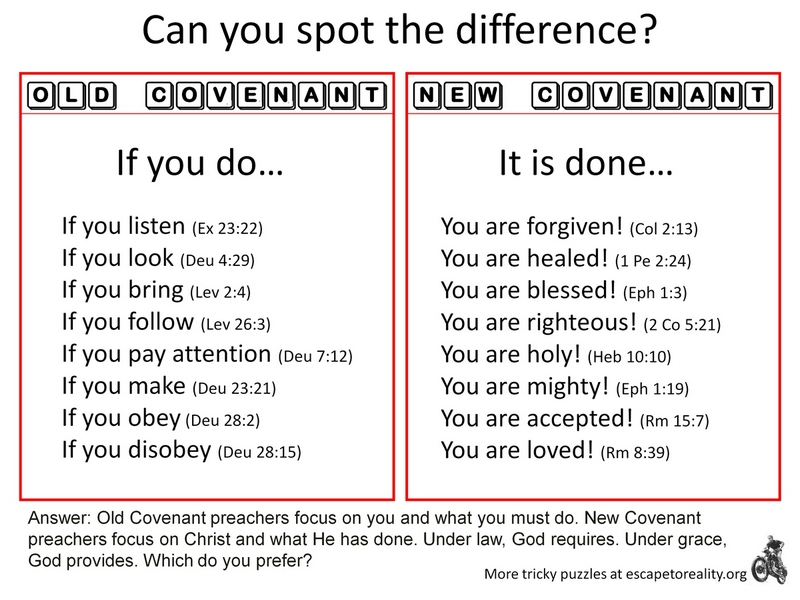
WHAT MAKES THE NEW COVENANT NEW?

ARE YOU GETTING ALL THAT JESUS PAID FOR?

Posted on April 29, 2015 by Paul Ellis // 67 Comments

lisa_and_burns

There’s a classic scene in The Simpsons where 8-year-old Lisa is offered a large check.

Monty Burns has made a $120 million from an idea that Lisa gave him, and he wants to thank her by giving her a ten percent cut. Since the money represents ill-gotten gains from harvesting the sea, Lisa says no.

Lisa apologizes to her dad for not taking the money. Homer replies, “I understand. But we really could’ve used that $12,000.”

When Lisa explains that ten percent of $120 million is a great deal more than $12,000, Homer has a heart attack.

Homer’s reaction makes me think of those folks who don’t appreciate all that Jesus has done for us. Because they don’t know what makes the new covenant new, they assign a low value to grace.

It’s only worth $12,000. It’s a nice gift, but hardly enough to live on.

Then when you tell them that God’s gift is worth far more than that, they get a great shock.

Do you know what makes the new covenant new? Are you getting all that Jesus paid for?

Elsewhere I have listed the top 12 blessings of the new covenant. The first of these is the complete and total forgiveness of all your sin – past, present and future. Other blessings include the free gift of Christ’s righteousness, holiness, indeed, his very life. All these blessings testify to God’s grace, which is one of six ways the new covenant can be distinguished from the old.

1. IT’S A COVENANT OF GRACE

In the old law-based covenant you reaped what you sow, but in the new we reap what Christ has sown. In the old you did to get, but in the new we get because Christ has done it all.

This is grace and grace declares that all is a gift. Every spiritual blessing is ours in Jesus Christ (Eph 1:3).

2. IT’S A COVENANT OF REST

Under the old it was do, do, do, but in the new it’s done, done, done. Faith is a rest, not a work. Only when we rest in the finished work of Calvary can God begin his good work in us. And as his grace abounds, good works abound (2 Cor 9:8). Good works don’t produce grace, but grace produces good works.

The old covenant was characterized by ceaseless effort in the pursuit of holy demands that could never be met, but the new covenant is rest and peace in the Holy Spirit. Labor to enter his rest.

3. IT’S A COVENANT OF NEW LIFE

Old covenant preaching will make you stupid and harden your heart to the goodness of God (2 Cor 3:14). But new covenant preaching removes the veil and reveals the Lord’s glory. As you behold him you become like him, transformed by the Holy Spirit (2 Cor 3:18).

Under the old the best you could hope for was self-improvement that never lasts. But in the new you become new (2 Cor 5:17) – a brand new person with a new heart and a new spirit.

Born of the Spirit you are no more a prisoner of sin, but a co-heir with Christ.

spot_the_difference

4. IT’S A COVENANT OF UNION

In the old covenant God lived in a temple you could never enter, but in the new you are the temple of the Holy Spirit (1 Cor 3:16). You are one with the Lord and as he is – holy, righteous, perfect forever – so are you in this world (1 John 4:17).

You don’t need more faith, more anointing, or more of God. That’s old covenant thinking. You are complete in Christ (Col 2:10). In the new growth happens as we acknowledge every good thing that is already ours in Christ (Phm 1:6).

5. IT’S A COVENANT THAT CANNOT BE BROKEN

The old covenant was underwritten by your frail promises to God, but the new rests on the “better promises” of God himself (Heb 8:6).

In the old you loved God and forgave others because it was commanded of you, but in the new you love and forgive because he first loved and forgave you.

The old covenant was between God and Israel, but the new covenant is between God the Father and God the Son. God holds up both ends of this arrangement, swears by himself, and gives us his Spirit as a guarantee of what is to come (2 Cor 1:22).

Under the old covenant, you were blessed if you obeyed, but under the new you are blessed because Christ obeyed. Your salvation is eternally secure because it is Jesus who saves and keeps you.

Blackboard old v new

6. IT’S A COVENANT THAT REVEALS YOUR FATHER’S HEART

God gave grace to the first man Adam and called him a son (Luke 3:38), but Adam ran and hid. God gave grace to Abraham, Isaac, and Jacob, but the children of Israel said, “No thanks. We’d rather go our own way.”

At Mt Sinai the children of Israel swapped a covenant based on God’s faithfulness for one based on their own. “We will do whatever you command” (see Ex 19:8). It was the forbidden tree all over again and it broke our Father’s heart.

An old covenant emphasis on rules will cause you to view God as a bookkeeper recording all your sins and a judge condemning your failures. But Jesus says, “God is not like that! He’s your heavenly Father who loves you and holds nothing against you. He yearns for his prodigals to come home.”

📷
A SIMPLE TEST

Many Christians don’t know what makes the new covenant new and as a result they are working to get what they already have. Like Homer Simpson, they’re ignorant of the gift that has been offered.

How can you tell if you are walking in the new covenant?

Ask yourself, am I God’s son, servant, or friend? Is God my judge, employer, or Father? If you don’t see God as your loving Father and yourself as his dearly-beloved child, you have not fully apprehended all that Christ accomplished on your behalf.

In his 1973 book Knowing God, J.I. Packer wrote:

If you want to judge how well a person understands Christianity, find out how much he makes of the thought of being God’s child, and having God as his Father. If this is not the thought that prompts and controls his worship and prayers and his whole outlook on life, it means that he does not understand Christianity very well at all.For everything that Christ taught, everything that makes the New Testament new, and better than the Old, is summed up in the knowledge of the Fatherhood of God. “Father” is the Christian name for God.

Before Jesus, almost no one called God Father. After Jesus, every New Testament writer did. Jesus came to reveal your Father, and this is what makes the new covenant new.

Grace and peace to you from God our Father!

Qu’est-ce qui rend la nouvelle alliance nouvelle ?

RECEVEZ-VOUS TOUT CE QUE JÉSUS A PAYÉ ?

Posté le 29 avril 2015 par Paul Ellis // 67 commentaires

lisa_et_burns

Il y a une scène classique dans les Simpsons où Lisa, 8 ans, se voit proposer un gros chèque.

Monty Burns a gagné 120 millions de dollars grâce à une idée que Lisa lui a donnée, et il veut la remercier en lui donnant une part de dix pour cent. Comme l’argent représente des gains mal acquis provenant de l’exploitation de la mer, Lisa refuse.

Lisa s’excuse auprès de son père de ne pas avoir accepté l’argent. Homer répond : “Je comprends. Mais nous aurions vraiment pu utiliser ces 12 000 dollars.”

Lorsque Lisa explique que dix pour cent de 120 millions de dollars, c’est beaucoup plus que 12 000 $, Homer a une crise cardiaque.

La réaction d’Homer me fait penser à ces gens qui n’apprécient pas tout ce que Jésus a fait pour nous. Parce qu’ils ne savent pas ce qui rend la nouvelle alliance nouvelle, ils attribuent une faible valeur à la grâce.

Elle ne vaut que 12 000 dollars. C’est un beau cadeau, mais à peine suffisant pour vivre.

Alors quand vous leur dites que le don de Dieu vaut bien plus que cela, ils ont un grand choc.

Savez-vous ce qui rend la nouvelle alliance nouvelle ? Recevez-vous tout ce que Jésus a payé ?

Ailleurs, j’ai énuméré les 12 principales bénédictions de la nouvelle alliance. La première d’entre elles est le pardon complet et total de tous vos péchés – passés, présents et futurs. Parmi les autres bénédictions figure le don gratuit de la justice et de la sainteté du Christ, voire de sa vie même. Toutes ces bénédictions témoignent de la grâce de Dieu, qui est l’une des six façons dont la nouvelle alliance peut être distinguée de l’ancienne.

1. C’EST UNE ALLIANCE DE GRÂCE

Dans l’ancienne alliance fondée sur la loi, on récoltait ce que l’on semait, mais dans la nouvelle, nous récoltons ce que le Christ a semé. Dans l’ancienne, on faisait pour obtenir, mais dans la nouvelle, on obtient parce que le Christ a tout fait.

C’est la grâce et la grâce déclare que tout est un don. Toute bénédiction spirituelle est à nous en Jésus-Christ (Eph 1:3).

2. C’EST UNE ALLIANCE DE REPOS

Dans l’ancienne alliance, il fallait faire, faire, faire, mais dans la nouvelle, c’est fait, fait, fait. La foi est un repos, pas un travail. Ce n’est que lorsque nous nous reposons dans l’œuvre achevée du Calvaire que Dieu peut commencer son bon travail en nous. Et comme sa grâce abonde, les bonnes œuvres abondent (2 Cor 9:8). Les bonnes œuvres ne produisent pas la grâce, mais la grâce produit les bonnes œuvres.

L’ancienne alliance était caractérisée par un effort incessant dans la poursuite d’exigences saintes qui ne pouvaient jamais être satisfaites, mais la nouvelle alliance est le repos et la paix dans l’Esprit Saint. Travaillez pour entrer dans son repos.

3. C’EST UNE ALLIANCE DE VIE NOUVELLE

La prédication de l’ancienne alliance vous rendra stupide et endurcira votre cœur à la bonté de Dieu (2 Cor 3:14). Mais la prédication de la nouvelle alliance enlève le voile et révèle la gloire du Seigneur. En le contemplant, vous devenez semblables à lui, transformés par le Saint-Esprit (2 Co 3, 18).

Sous l’ancienne alliance, le mieux que l’on pouvait espérer était une amélioration de soi qui ne dure jamais. Mais dans le nouveau, tu deviens nouveau (2 Co 5,17) – une personne toute neuve avec un cœur nouveau et un esprit nouveau.

Né de l’Esprit, vous n’êtes plus prisonnier du péché, mais cohéritier du Christ.

repérer_la_différence

4. C’EST UNE ALLIANCE D’UNION

Dans l’ancienne alliance, Dieu vivait dans un temple dans lequel vous ne pouviez jamais entrer, mais dans la nouvelle, vous êtes le temple du Saint-Esprit (1 Co 3,16). Vous ne faites qu’un avec le Seigneur et comme il est – saint, juste, parfait pour toujours – vous êtes aussi dans ce monde (1 Jean 4:17).

Vous n’avez pas besoin de plus de foi, plus d’onction, ou plus de Dieu. C’est la pensée de l’ancienne alliance. Vous êtes complets en Christ (Col 2:10). Dans la nouvelle croissance se produit lorsque nous reconnaissons chaque bonne chose qui est déjà nôtre en Christ (Phm 1:6).

5. C’EST UNE ALLIANCE QUI NE PEUT ÊTRE ROMPUE

L’ancienne alliance était fondée sur vos fragiles promesses à Dieu, mais la nouvelle repose sur les “meilleures promesses” de Dieu lui-même (He 8,6).

Dans l’ancienne alliance, vous aimiez Dieu et pardonniez aux autres parce qu’il vous l’avait ordonné, mais dans la nouvelle, vous aimez et pardonnez parce qu’il vous a d’abord aimé et pardonné.

L’ancienne alliance était entre Dieu et Israël, mais la nouvelle alliance est entre Dieu le Père et Dieu le Fils. Dieu tient les deux bouts de cette alliance, jure par lui-même et nous donne son Esprit comme garantie de ce qui est à venir (2 Co 1,22).

Sous l’ancienne alliance, vous étiez béni si vous obéissiez, mais sous la nouvelle, vous êtes béni parce que le Christ a obéi. Votre salut est assuré pour l’éternité car c’est Jésus qui vous sauve et vous garde.

Tableau noir : ancienne et nouvelle alliance

6. C’EST UNE ALLIANCE QUI RÉVÈLE LE CŒUR DE VOTRE PÈRE

Dieu a fait grâce au premier homme, Adam, et l’a appelé fils (Luc 3:38), mais Adam s’est enfui et s’est caché. Dieu a fait grâce à Abraham, Isaac et Jacob, mais les enfants d’Israël ont dit : “Non merci. Nous préférons suivre notre propre chemin”.

Au mont Sinaï, les enfants d’Israël ont échangé une alliance basée sur la fidélité de Dieu contre une alliance basée sur la leur. “Nous ferons tout ce que tu ordonneras” (voir Ex 19, 8). C’était la répétition de l’arbre interdit et cela a brisé le cœur de notre Père.

L’importance accordée aux règles par l’ancienne alliance vous amènera à considérer Dieu comme un comptable qui enregistre tous vos péchés et un juge qui condamne vos échecs. Mais Jésus dit : “Dieu n’est pas comme ça ! C’est votre Père céleste qui vous aime et ne vous en veut pas. Il se languit du retour de ses prodigues à la maison. “

📷

UN TEST SIMPLE

De nombreux chrétiens ne savent pas ce qui fait la nouveauté de la nouvelle alliance et, par conséquent, ils s’efforcent d’obtenir ce qu’ils ont déjà. Comme Homer Simpson, ils sont ignorants du cadeau qui leur a été offert.

Comment pouvez-vous savoir si vous marchez dans la nouvelle alliance ?

Demandez-vous si je suis le fils, le serviteur ou l’ami de Dieu. Dieu est-il mon juge, mon employeur ou mon Père ? Si vous ne voyez pas Dieu comme votre Père aimant et vous-même comme son enfant bien-aimé, vous n’avez pas pleinement appréhendé tout ce que le Christ a accompli en votre nom.

Dans son livre Knowing God, publié en 1973, J.I. Packer écrit :

Si vous voulez juger de la compréhension du christianisme par une personne, voyez ce qu’elle fait de la pensée d’être l’enfant de Dieu et d’avoir Dieu comme Père. En effet, tout ce que le Christ a enseigné, tout ce qui rend le Nouveau Testament nouveau et meilleur que l’Ancien, se résume à la connaissance de la paternité de Dieu. “Père” est le nom chrétien de Dieu.

Avant Jésus, presque personne n’appelait Dieu Père. Après Jésus, tous les auteurs du Nouveau Testament l’ont fait. Jésus est venu révéler votre Père, et c’est ce qui rend la nouvelle alliance nouvelle.

Grâce et paix à vous de la part de Dieu notre Père !

TRAE PROBLEMAS EL SENOR??

¿Trae problemas el Señor? (Job 42:11)
Posted on febrero 1, 2017 by Paul Ellis // 132 Comments


Algunos lectores me han pedido mi opinión sobre este pasaje “problemático”:

Todos los hermanos y hermanas (de Job) y todos los que le habían conocido antes vinieron y comieron con él en su casa. Lo consolaron y lo reconfortaron por todos los problemas que el Señor le había causado, y cada uno le dio una pieza de plata y un anillo de oro. (Job 42:11, NVI)

Otras traducciones dicen que el Señor trajo la adversidad o el mal sobre Job. Esto es claramente una referencia a la gran pérdida que sufrió Job: perdió la salud, la riqueza y los hijos. Y como todo el mundo sabe, Dios estaba detrás del sufrimiento de Job. Fue el Señor quien mató a sus hijos.

Excepto que no lo hizo.

Dios no era ni remotamente responsable del sufrimiento que experimentó Job.

Como hemos visto en nuestra serie sobre Job, Dios no le dio permiso al diablo para que se ensañara con Job. Y la noción de que Dios nos roba -que da y quita- dice más de la visión distorsionada que Job tiene de Dios que del verdadero carácter de un Dios bueno que da sin revocación.

¿A quién escuchas?
Hay algunos personajes fascinantes en la historia de Job. Hay tres amigos incómodos que agobian a Job con consejos inútiles. Está el joven Elihú, que es la voz solitaria de la sabiduría. Y, en el capítulo final, tenemos un cameo de los hermanos, hermanas y antiguos amigos de Job.

Si pudiera hacer una pregunta a los hermanos de Job, sería la siguiente: ¿Dónde estabais, pavos? Cuando tu hermano estaba pasando por un infierno, ¿dónde estabas tú?

Cuando él estaba enterrando a tus sobrinas y sobrinos, ¿dónde estabas tú?

Los hermanos de Job son los hombres y mujeres invisibles de la historia. No se les menciona hasta el final. Cuando Job se vuelve el doble de próspero que antes, entonces aparecen. Aparecen en su mansión para sentarse a su mesa y comer su comida.

Lo único que hay que saber sobre los hermanos de Job es que eran tan engañosos o poco fiables como un arroyo desértico (Job 6:15). Eran amigos que comían la comida de Job, pero desaparecían a la primera señal de problemas.

Entonces, ¿por qué les hacemos caso?

Pensar que Dios mata a los niños o envía el mal porque lo dicen los hermanos de Job es el colmo de la insensatez. ¿Por qué confiar en lo que dice de Dios una persona que no es de fiar?

Payasos shakesperianos
Hay algo cómico en estos bufones y en su confusa teología. Imagínate la escena: Los hermanos de Job están sentados en una mansión rodeados de las bendiciones de Dios. Están literalmente festejando con la provisión del Señor, pero entre bocado y bocado se lamentan de la maldad de Dios que quita y mata.

¿Lo ven? Es ridículo. Son personajes cómicos al final de un largo drama.

O si eso es demasiado desenfadado para ti, los hermanos de Job son la personificación de la mala religión. No están cuando Job sufre, llaman a su puerta en cuanto se hace rico y pintan cuadros malvados de un Dios bueno.

En cualquier caso, no deberías hacerles caso.

“Caramba Paul, no lo sé. Está en la Biblia”.

Igual que la esclavitud y la poligamia.

Tomar las escrituras fuera de contexto es fatal y Jesús provee el mejor contexto cuando se trata de entender el carácter de Dios. ¿Te imaginas a Jesús robándole a Job, enfermándolo y matando a sus hijos? Si no está en el Hijo no está en el Padre.

Dios es bueno todo el tiempo
Escucha a hombres malos hablar del Señor, y te llevarás una mala imagen.

Contrario a lo que los hermanos de Job dijeron, y algunos todavía dicen, Dios no trajo mal o problemas sobre Job. Un Dios que hace el mal tiene tanto sentido como una antorcha que brilla en la oscuridad.

Si estás pasando por tiempos difíciles, no escuches a los hermanos de Job. Escucha a Isaías que dijo esto

Pero ahora, así dice el Señor, tu Creador… “No temas, porque te he redimido; te he llamado por tu nombre; ¡eres mío! Cuando pases por las aguas, yo estaré contigo; y por los ríos, no te desbordarán. Cuando pases por el fuego, no te abrasarás, ni te quemará la llama. (Isaías 43:1-2)

O escucha a Pablo

Bendito sea el Dios y Padre de nuestro Señor Jesucristo, Padre de misericordias y Dios de toda consolación, que nos consuela en todas nuestras tribulaciones (2 Co 1:3-4)

O escucha a David

Aunque camine por el valle de sombra de muerte, no temo ningún mal, porque tú estás conmigo… Ciertamente la bondad y la misericordia me seguirán todos los días de mi vida, y habitaré en la casa del Señor para siempre. (Sal 23:4,6)

Si estás atravesando tiempos difíciles, ten cuidado a quién escuchas. No te alimentes del mal informe de hombres malvados o ignorantes, sino aliméntate de Jesús:

Yo soy la resurrección y la vida; el que cree en mí vivirá (Juan 11:25)

La verdadera historia de Job no es cómo Dios hace el mal, sino cómo un Dios bueno toma los líos de nuestras vidas rotas y los hace hermosos.

Es una historia de gracia y redención, y por la gracia de Dios puede ser tu historia también.

Does the Lord Bring Trouble? (Job 42:11)

Does the Lord Bring Trouble? (Job 42:11)

Posted on February 1, 2017 by Paul Ellis // 132 Comments

mh0742, Jan Steen, 'Soo voer gesongen, soo na gepepen'

A few readers have asked for my thoughts on this “troublesome” passage:

All (Job’s) brothers and sisters and everyone who had known him before came and ate with him in his house. They comforted and consoled him over all the trouble the Lord had brought on him, and each one gave him a piece of silver and a gold ring. (Job 42:11, NIV)

Other translations say the Lord brought adversity or evil upon Job. This is clearly a reference to the great loss that Job suffered – he lost his health, wealth and children. And as everybody knows, God was behind Job’s suffering. It was the Lord who killed his kids.

Except he didn’t.

God wasn’t remotely responsible for the suffering Job experienced.

As we have seen in our series on Job, God did not give the devil permission to have a crack at Job. And the notion that God robs us – that he gives and takes away – says more about Job’s distorted view of God than the true character of a good God who gives without revocation.

Who are you listening to?

There are some fascinating characters in the story of Job. There are three comfortless friends who burden Job with useless advice. There’s young Elihu, who is the lone voice of wisdom. And in the final chapter we get a cameo from Job’s brothers, sisters, and former friends.

If I could ask Job’s siblings one question, it would be this: Where were you turkeys? When your brother was going through hell, where were you?

When he was burying your nieces and nephews where were you?!

Job’s siblings are the invisible men and women of the story. There’s no mention of them until the very end. When Job becomes twice as prosperous as before, then they show up. They rock up at his mansion to sit at his table and eat his food.

The one thing you need to know about Job’s brothers is that they were as deceitful or unreliable as a desert stream (Job 6:15). They were fair-weather friends who ate Job’s food but disappeared at the first sign of trouble.

So why are we listening to them?

To think God kills children or sends evil because Job’s brothers said so is the height of foolishness. Why would you trust what an untrustworthy person says about God?

Shakespearian clowns

There is something comical about these jokers and their muddled theology. Picture the scene: Job’s brothers are sitting in a mansion surrounded by the blessings of God. They are literally feasting on the Lord’s provision, yet in between mouthfuls they bemoan the evil of God who takes and kills.

Do you see? It’s ludicrous. They are comedic characters at the end of a long drama.

Or if that’s too lighthearted for you, Job’s brothers are the personification of bad religion. They’re not around when Job’s hurting, they knock on his door as soon as he’s rich, and they paint evil pictures of a good God.

Either way, you shouldn’t heed them.

“Gee Paul, I don’t know. It’s in the Bible.”

So are slavery and polygamy.

Taking scripture out of context is fatal and Jesus provides the best context when it comes to understanding the character of God. Can you imagine Jesus robbing Job, making him sick, and killing his kids? If it’s not in the Son it’s not in the Father.

God is all the time good

Listen to bad men talk about the Lord, and you will get bad picture.

Contrary to what Job’s siblings said, and some still say, God did not bring evil or trouble upon Job. A God who does evil makes as much sense as a torch that shines dark.

If you are going through tough times, don’t listen to Job’s brothers. Listen to Isaiah who said this:

But now, thus says the Lord, your Creator … “Do not fear, for I have redeemed you; I have called you by name; you are mine! When you pass through the waters, I will be with you; and through the rivers, they will not overflow you. When you walk through the fire, you will not be scorched, nor will the flame burn you. (Isa 43:1-2)

Or listen to Paul:

Blessed be the God and Father of our Lord Jesus Christ, the Father of mercies and God of all comfort, who comforts us in all our affliction (2 Cor 1:3-4)

Or listen to David:

Even though I walk through the valley of the shadow of death, I fear no evil, for you are with me… Surely goodness and lovingkindness will follow me all the days of my life, and I will dwell in the house of the Lord forever. (Psa 23:4,6)

If you are going through hard times, take care who you listen to. Don’t feed upon the evil report of evil or ignorant men, but feed upon Jesus:

I am the resurrection and the life; he who believes in me will live (John 11:25)

The true story of Job is not how God does evil, but how a good God takes the messes of our broken lives and makes them beautiful.

It’s a story of grace and redemption, and by the grace of God it can be your story too.

Some Notes on Pauls 1st letter to the Corinthians

1 Corinthians 16:1

Now concerning the collection for the saints, as I directed the churches of Galatia, so do you also.

Quoted from Paul Ellis Grace Commentaries »

« The collection for the saints. Paul urged several churches to raise funds for the starving Christians in Jerusalem (1 Cor. 16:3, Rom. 15:26). »

My comments : « This was not to build a minsitry but to save lives so that they could be ministered to.

This was not collecting to build a new temple, building, cathedral or chuch. Nor was it raising money to buy more air time on the internet or publish more books and videos to get the Gospel over the world. It was simply COMPASSION »

1 Corinthians 16:2

On the first day of every week each one of you is to put aside and save, as he may prosper, so that no collections be made when I come.

« (a) He may prosper. We give out of the abundance given to us. The idea that God is a divine slot machine who pays back those who gift first would have been repulsive to Paul (see entry for 2 Cor. 9:8). » Paul Ellis

2 Corinthians 9:8

And God is able to make all grace abound to you, so that always having all sufficiency in everything, you may have an abundance for every good deed;

« (a) Grace abound. The original word for abound (perisseuō) means overflowing as in “more than you need.” It’s the same word used to describe the leftovers that remained after Jesus fed the 5000 (Matt. 14:20). When it comes to grace, God is generous to the point of lavish wastefulness. See also the entry for Rom. 5:20.

Romans 5:20

The Law came in so that the transgression would increase; but where sin increased, grace abounded all the more,

Grace abounded. These words fail to capture the full magnitude of God’s grace. The original word for abounded is the same word Paul uses in Romans 5:17 – the one that means super-abundant – except here he adds the prefix huper or hyper, which means over, above, and beyond (huperperisseuō). If you think God’s grace is super-abundant to the point of superfluous excess, you are halfway there. And if you think his grace is hyper, you’re getting warmer but still not quite there. In Biblical terms, God’s grace is literally hyper-super-abundant.

Throughout his epistles, Paul uses a variety of big words to describe God’s hyper-super-grace. The meaning of these words is not always clear in English, but read the original language and you will find Paul writing about the lavish wastefulness of God’s grace (2 Cor. 9:8) and how God’s supply of grace is super-abundant to the point of being excessive (Rom. 5:17, 1 Tim. 1:14).

We lack scales for measuring God’s grace, but God’s grace is comparable in magnitude to his wisdom (see entry for Eph. 1:7). God is as gracious as he is wise. But then says, “No, there really is nothing we can compare with God’s grace” (see Eph. 2:7).

In describing grace, Paul used three words: huper-ballō (Eph. 2:7, 2 Cor. 9:14), huper-perisseuō (Rom. 5:20), and huper-pleonazō (1 Tim. 1:14). You do not need to speak Greek to recognize the common element in these words. It’s the prefix huper or hyper which means over, above, and beyond. To put it in context, Paul also uses hyper-words for describing God’s power and love (Eph. 1:19, 3:19). God’s grace is as great as his power. It’s as limitless as his love.

Paul was the first to use the word hyper when describing God’s grace, but he was hardly the only one to describe God’s grace as extreme and over-the-top. John spoke of receiving grace upon grace from fullness of God’s supply (John 1:16). Saying God is full of grace, is like saying the ocean is full of waves. “Grace upon grace” means God can bless you with wave after wave of grace and never run out.

Peter wrote about the grace that comes from “the God of all grace” (1 Pet. 5:10) and prayed that his grace would be yours to the “fullest measure” or in increasing abundance (1 Pet. 1:2). Just as you can’t travel to the edge of the universe, you will never find the limit of God’s grace.

James, one of the most misunderstood writers in the New Testament, had a wonderful grasp of grace. He spoke of a God who gives and gives, which is a picture of unending grace (Jas. 1:17). “God gives us more grace” (Jas. 4:6). The original word for more in this passage is derived from the Greek word megas. God gives us mega-grace. James is literally saying that God gives us “exceedingly, great, high, large, loud, and mighty grace!”

Further reading: “Who are the hypergrace preachers?”

To suggest that God’s grace is less than hyper is unbiblical, even blasphemous. It’s like saying God is good but he’s not that good, he’s wise but not that wise. Diminish grace and you diminish God. Get your understanding of grace from Christian magazines, and you can be forgiven for thinking that hypergrace is bad, modern, and unbiblical. But read the Bible and you will see that hypergrace is a small word for describing an extraordinary reality: The One who sits upon the throne of grace is exceedingly rich in grace and he has poured out his measureless grace upon you!

Grace abounded all the more. God’s grace is greater than your sin, his best is better than your worst. God is for you; who can be against you (Rom. 8:31)? God justifies you; who can condemn you (Rom. 8:33)? Nothing in this life – not your sins or your shortcomings – can separate you from his love (Rom. 8:38-39).

And this is why I do not believe in the worlds view of Karma. We give a little of our money, our time, or our life. But never enough! That is Ok because God does not believe in Karma He believes in Mercy and Grace. And He will give you more than you earned. More than you deserve and a lot more. He gave His Son for free. That breaks all the laws of Karma with Mercy. «  Paul Ellis

CONTINUE READING CORINTHIANS 16

« Paul had written of the Power of God and have to love each other in Corinthians 12-14 and in 15 Paul gave the real motive to live. We live our life as if we are Eternal because we are. We have the victory over death!  AND NOW Paul is directing the practical ways to build this Kingdom of God on earh. » My comments

1 Corinthians 16:2

On the first day of every week each one of you is to put aside and save, as he may prosper, so that no collections be made when I come.

« The word prosper in Greek means « to grant a prosperous and expeditious journey, to lead by a direct and easy way: » and more generally « to grant a successful issue, to cause to prosper » Literally to lead in a good way. » my comments

« God always leads us into a prosperous journey.

(a) He may prosper. We give out of the abundance given to us. The idea that God is a divine slot machine who pays back those who gift first would have been repulsive to Paul (see entry for 2 Cor. 9:8). »Paul Ellis

« The fact that we equate prosperity with Mammon or more money show where we put our trust. Money cannot make you prosper, BUT GOD CAN. » My comments

« (b) No collections. Money was a delicate subject between Paul and the Corinthians. Although he had planted the church, the Corinthians had not supported Paul financially. This led to an uncomfortable conversations and unnecessary drama (see 1 Cor. 9:4-6). Paul had no interest in taking up a special offering when he was in town. » Paul Ellis

« Even today it is a delicate subject in the richest countries of the West. We love money and hold it with clenched fists. WHen you see some one spend there money, it shows where there heart really is » My Comments

:Perhaps we like the Corinthians believe,  yet  we still are walking and believing in the flesh.

1 Corinthians 16:3

When I arrive, whomever you may approve, I will send them with letters to carry your gift to Jerusalem;

  • « Whomever you may approve. No doubt Paul could be trusted to carry the Corinthian funds to Jerusalem, but since the Corinthians were funny about money he wisely suggested they deliver their own gift.

Sad that they could trust Paul to teach the Gospel but not trust him with money

(b) Your gift to Jerusalem. The saints in Jerusalem were suffering on account of the great famine foretold by Agabus (Acts 11:27-28). According to the Jewish historian, Josephus, many people in Jerusalem died “for want of what was necessary to procure food.” In other words, food was available, but it was prohibitively expensive. In this hour of great need Paul collected money from the Gentile churches to support the starving saints. » Paul Ellis

« You cannot eat money. But money can buy food. It is sad state we have fallen into that we need to me in complicity with Banks, economy controled by unbelievers and God haters  to buy lunch. But this is not Gods plan, it is the enemies world after all.

Yet God gives more grace. He can work through this world to bring Grace to those who need it and that it whay the Body of Christ is in the world. We are the Light to the world. Since Christianity came into the world it is a lot less dark than it should be!

I personanlly pray to give to the greatest need. I rather give some money that will save a life to hear the Gospel another day, than invest in some programs to teach the « true » Word of GOd to dying people. » My comments

1Co 16:3

And when I come, whomsoever ye shall approve by your letters, them will I send to bring your liberality unto Jerusalem.

« The word « liberality » was the word GRACE in the original text. The believers had received abundant Grace from God and so they could give and share the Grace where needed. That is how God’s communism works. Because He first gave we can give. Because he first loved we can love with the same love. But we do not need fear or guns to force us to share! No coercion only motivated by love. That is true Communism

Unfortunately inspite of all the Bible taught in the West, we still worship the almighty dollar, owned by Caesar or the IRS. We still do not get what love means. So we take and do not give. And so the rich tell us to share what we do not have and they call it Communism. But without the Love of Christ there is no Community therefore there is no Communism only a Lie. We, who believe in Christ,  deal in the economy of Grace and not just working for pay. » My comments

1Co 16:4

And if it be meet that I go also, they shall go with me.

1Co 16:5

Now I will come unto you, when I shall pass through Macedonia: for I do pass through Macedonia.

1 Corinthians 16:6

and perhaps I will stay with you, or even spend the winter, so that you may send me on my way wherever I may go.

« Send me on my way. Having spent much of chapter 9 asserting and renouncing his right to financial support (1 Cor. 9:14–15), Paul finishes his letter by suggesting the Corinthians could help fund him on future visits (see also Rom. 15:24, 2 Cor. 1:16). » Paul Ellis

« The great apostle Paul was no Tele-evangelist with glass catherdrals and jets. Not was he on a crusade from the Pope to pillage the poor. He worked and he worked a regular job making tents. As he traveled he had a profession to earn his life. He may have been a Pharisee of pharisee living off the peoples poverty. But that was before Christ knocked him off his high horse on the road to Damascus. For Paul preaching was his life and not his income.

It was natural,  that natural men could not understand. All they knew was working for earthly rewards. But Paul wanted to save souls because he believed He had the reward! » My comments

Co 16:8

But I will tarry at Ephesus until Pentecost.

1Co 16:9

For a great door and effectual is opened unto me, and there are many adversaries.

« Why didn’t Paul go to Corinth immediately? Because he sees that God had given opportunity now in Ephesus. Paul wisely relied not only on his own desires, but also on God’s open doors. Paul knew the secret of directed service. » Paul Ellis

« God gave him a grand opportunity to preach the Gospel; but he was not to expect that either Satan or wicked men would leave him unmolested.  When we set out to destroy the Devil Kingdom and free poor souls, the devil will concentrate his fight on that person. If you are in a skirmish with an enemy infantry logically you will take out the machine gun nest and snippers first. We as soldiers for Christ are firing bullet of Good news and love into the darkness! The devil will do his best to resist, but God gives more grace to win. If we are doing Gods work nothing will stop us. Not even death.

We can not open doors but God can. And we must follow Gods wisdom as to where the opportunities are opened. If it was not for God speaking to Peter the door of life would never be opened to the Gentiles. » My COmments

Act 14:27

And when they were come, and had gathered the church together, they rehearsed all that God had done with them, and how he had opened the door of faith unto the Gentiles.

2Co 2:12

Furthermore, when I came to Troas to preach Christ’s gospel, and a door was opened unto me of the Lord,

« A door was opened to me by the Lord: Paul was interested in ministering where God opened doors. The only way our work for God will be blessed is when it is directed service.

We must pray and be following God to see the doors God opens for us to preach the Gospel. He opens the doors and directs where we should minister. »My comments.

Col 4:3

Withal praying also for us, that God would open unto us a door of utterance, to speak the mystery of Christ, for which I am also in bonds:

Ffffffffffffffffffffffffffffff

Notes du 22 janvier sur la lettre aux Corinthiens

1 Corinthiens 16:1

En ce qui concerne la collecte pour les saints, faites de même, comme je l’ai fait pour les églises de Galatie.

Cité par Paul Ellis Grace Commentaries “

” La collecte pour les saints. Paul a exhorté plusieurs églises à collecter des fonds pour les chrétiens affamés de Jérusalem (1 Cor. 16:3, Rom. 15:26). “

Mes commentaires : ” Il ne s’agissait pas de construire un minsitère mais de sauver des vies pour qu’elles puissent être servies.

Il ne s’agissait pas de collecter pour construire un nouveau temple, bâtiment, cathédrale ou église. Il ne s’agissait pas non plus de collecter des fonds pour acheter plus de temps d’antenne sur Internet ou publier plus de livres et de vidéos pour diffuser l’Evangile dans le monde. C’était simplement de la COMPASSION “

1 Corinthiens 16:2

Le premier jour de chaque semaine, chacun de vous doit mettre de côté et épargner, selon qu’il peut prospérer, afin qu’il n’y ait pas de recouvrement lorsque je viendrai.

“(a) Il peut prospérer. Nous donnons à partir de l’abondance qui nous est donnée. L’idée que Dieu est une machine à sous divine qui rembourse ceux qui donnent en premier aurait été répugnante pour Paul (voir l’entrée pour 2 Cor. 9:8). “Paul Ellis

2 Corinthiens 9:8

Et Dieu peut vous faire abonder toute grâce, afin que, disposant toujours de toute suffisance en tout, vous ayez une abondance pour toute bonne action ;

“(a) La grâce abonde. Le mot original pour abonder (perisseuō) signifie déborder comme dans “plus que ce dont vous avez besoin”. C’est le même mot utilisé pour décrire les restes qui sont restés après que Jésus ait nourri les 5000 (Matt. 14:20). Quand il s’agit de la grâce, Dieu est généreux au point de gaspiller les restes. Voir aussi l’entrée pour Rom. 5:20.

Romains 5:20

La loi est venue pour que la transgression augmente ; mais là où le péché a augmenté, la grâce a surabondé,

La grâce a surabondé. Ces mots ne parviennent pas à saisir toute l’ampleur de la grâce de Dieu. Le mot original pour abonder est le même que Paul utilise dans Romains 5:17 – celui qui signifie surabondant – sauf qu’ici il ajoute le préfixe huper ou hyper, qui signifie sur, au-dessus et au-delà (huperperisseuō). Si vous pensez que la grâce de Dieu est super-abondante jusqu’à l’excès superflu, vous êtes à mi-chemin. Et si vous pensez que sa grâce est hyper, vous vous réchauffez mais vous n’y êtes pas encore tout à fait. En termes bibliques, la grâce de Dieu est littéralement hyper-super-abondante.

Tout au long de ses épîtres, Paul utilise une variété de grands mots pour décrire l’hyper-super-grâce de Dieu. La signification de ces mots n’est pas toujours claire en anglais, mais lisez la langue originale et vous verrez que Paul écrit sur le gaspillage somptueux de la grâce de Dieu (2 Cor. 9:8) et sur la manière dont la grâce de Dieu est surabondante au point d’être excessive (Rom. 5:17, 1 Tim. 1:14).

Nous n’avons pas d’échelle pour mesurer la grâce de Dieu, mais la grâce de Dieu est comparable en magnitude à sa sagesse (voir l’entrée pour Eph. 1:7). Dieu est aussi gracieux qu’il est sage. Mais ensuite, il dit : “Non, il n’y a vraiment rien que nous puissions comparer à la grâce de Dieu” (voir Eph. 2:7).

Pour décrire la grâce, Paul utilise trois mots : huper-ballō (Eph. 2:7, 2 Cor. 9:14), huper-perisseuō (Rom. 5:20), et huper-pleonazō (1 Tim. 1:14). Il n’est pas nécessaire de parler grec pour reconnaître l’élément commun à ces mots. Il s’agit du préfixe huper ou hyper qui signifie au-delà, au-dessus et au-delà. Pour le mettre en contexte, Paul utilise également des hyper-mots pour décrire la puissance et l’amour de Dieu (Eph. 1:19, 3:19). La grâce de Dieu est aussi grande que sa puissance. Elle est aussi illimitée que son amour.

Paul a été le premier à utiliser le mot “hyper” pour décrire la grâce de Dieu, mais il n’était pas le seul à décrire la grâce de Dieu comme extrême et démesurée. Jean a parlé de recevoir grâce sur grâce de la plénitude de l’approvisionnement de Dieu (Jean 1:16). Dire que Dieu est plein de grâce, c’est comme dire que l’océan est plein de vagues. “Grâce sur grâce” signifie que Dieu peut vous bénir avec une vague après l’autre de grâce et ne jamais en manquer.

Pierre a écrit au sujet de la grâce qui vient du “Dieu de toute grâce” (1 Pierre 5:10) et a prié pour que sa grâce soit la vôtre dans “toute sa mesure” ou dans une abondance croissante (1 Pierre 1:2). Tout comme vous ne pouvez pas voyager jusqu’aux confins de l’univers, vous ne trouverez jamais la limite de la grâce de Dieu.

Jacques, l’un des auteurs les plus incompris du Nouveau Testament, avait une merveilleuse compréhension de la grâce. Il a parlé d’un Dieu qui donne et donne, ce qui est une image de la grâce sans fin (Jas. 1:17). “Dieu nous donne encore plus de grâce” (Jas. 4:6). Le mot original pour plus dans ce passage est dérivé du mot grec megas. Dieu nous donne une méga-gâce. Jacques dit littéralement que Dieu nous donne ” une grâce excessive, grande, élevée, large, bruyante et puissante ! “.

Lecture complémentaire : “Qui sont les prédicateurs de l’hypergrâce ?”

Suggérer que la grâce de Dieu est moins qu’hyper est non biblique, voire blasphématoire. C’est comme dire que Dieu est bon mais pas si bon, qu’il est sage mais pas si sage. Diminuez la grâce et vous diminuez Dieu. Si vous tirez votre compréhension de la grâce de magazines chrétiens, vous pouvez être pardonné de penser que l’hypergracie est mauvaise, moderne et non biblique. Mais lisez la Bible et vous verrez que l’hypergrâce est un petit mot pour décrire une réalité extraordinaire : Celui qui est assis sur le trône de la grâce est extrêmement riche en grâce et il a déversé sur vous sa grâce sans mesure !

La grâce a abondé d’autant plus. La grâce de Dieu est plus grande que ton péché, son meilleur est meilleur que ton pire. Dieu est pour vous ; qui peut être contre vous (Rom. 8:31) ? Dieu vous justifie ; qui peut vous condamner (Rom. 8:33) ? Rien dans cette vie – ni vos péchés ni vos défauts – ne peut vous séparer de son amour (Rom. 8:38-39).

Et c’est pourquoi je ne crois pas à la vision mondiale du karma. Nous donnons un peu de notre argent, de notre temps ou de notre vie. Mais jamais assez ! C’est normal, car Dieu ne croit pas au karma, il croit à la miséricorde et à la grâce. Et il vous donnera plus que ce que vous avez gagné. Plus que ce que vous méritez et bien plus encore. Il a donné son fils gratuitement. Cela brise toutes les lois du karma avec la miséricorde. “Paul Ellis

” Paul avait écrit de la puissance de Dieu et doivent s’aimer les uns les autres dans Corinthiens 12-14 et dans 15 Paul a donné le vrai motif de vivre. Nous vivons notre vie comme si nous étions éternels parce que nous le sommes. Nous avons la victoire sur la mort ! ET MAINTENANT Paul dirige les moyens pratiques pour construire ce Royaume de Dieu sur la terre. “Mes commentaires

1 Corinthiens 16:2

Le premier jour de chaque semaine, chacun de vous doit mettre de côté et épargner, selon sa prospérité, afin qu’il n’y ait pas de recouvrement lorsque je viendrai.

” Le mot prospérer en grec signifie ” accorder un voyage prospère et expéditif, conduire par un chemin direct et facile : ” et plus généralement ” accorder une issue heureuse, faire prospérer ” Littéralement conduire dans une bonne voie. “mes commentaires

” Dieu nous conduit toujours dans un voyage prospère.

(a) Il peut prospérer. Nous donnons à partir de l’abondance qui nous est donnée. L’idée que Dieu est une machine à sous divine qui rembourse ceux qui donnent en premier aurait été répugnante pour Paul (voir l’entrée pour 2 Cor. 9:8). “Paul Ellis

” Le fait que nous assimilions la prospérité à Mammon ou à plus d’argent montre où nous mettons notre confiance. L’argent ne peut pas vous faire prospérer, MAIS DIEU LE PEUT. ” Mes commentaires

” (b) Pas de collecte. L’argent était un sujet délicat entre Paul et les Corinthiens. Bien qu’il ait implanté l’église, les Corinthiens n’avaient pas soutenu Paul financièrement. Cela a conduit à des conversations inconfortables et à un drame inutile (voir 1 Cor. 9:4-6). Paul n’avait aucun intérêt à accepter une offrande spéciale lorsqu’il était en ville. “Paul Ellis

” Aujourd’hui encore, c’est un sujet délicat dans les pays les plus riches de l’Occident. Nous aimons l’argent et le tenons les poings serrés. Quand vous voyez quelqu’un dépenser son argent, cela montre où est vraiment son cœur ” Mes commentaires

Nous croyons peut-être comme les Corinthiens, mais nous marchons et croyons encore dans la chair.

1 Corinthiens 16:3

A mon arrivée, les personnes que tu approuveras, je les enverrai avec des lettres pour porter ton cadeau à Jérusalem ;

(a) ” Ceux que tu approuveras. Il ne fait aucun doute qu’on pouvait faire confiance à Paul pour porter les fonds des Corinthiens à Jérusalem, mais comme les Corinthiens ne sont pas doués pour l’argent, il leur a sagement suggéré de porter leur propre don.

Il est triste qu’ils aient pu faire confiance à Paul pour enseigner l’Évangile mais pas pour l’argent.

(b) Votre don à Jérusalem. Les saints de Jérusalem souffraient à cause de la grande famine annoncée par Agabus (Actes 11:27-28). Selon l’historien juif Josèphe, de nombreux habitants de Jérusalem sont morts “faute de ce qui était nécessaire pour se procurer de la nourriture”. En d’autres termes, la nourriture était disponible, mais son prix était prohibitif. En cette heure de grand besoin, Paul a collecté de l’argent auprès des églises païennes pour soutenir les saints affamés. ” Paul Ellis

” L’argent ne se mange pas. Mais l’argent peut acheter de la nourriture. Il est triste de constater que nous sommes tombés dans un état où nous avons besoin de la complicité des banques, de l’économie contrôlée par les incroyants et ceux qui détestent Dieu pour acheter le déjeuner. Mais ce n’est pas le plan de Dieu, c’est le monde des ennemis après tout.

Pourtant, Dieu donne plus de grâce. Il peut travailler à travers ce monde pour apporter la grâce à ceux qui en ont besoin et c’est pourquoi le Corps du Christ est dans le monde. Nous sommes la lumière du monde. Depuis que le christianisme est entré dans le monde, il est beaucoup moins sombre qu’il ne devrait l’être !

Je prie personnellement pour donner à ceux qui en ont le plus besoin. Je préfère donner de l’argent qui sauvera une vie pour qu’elle entende l’Evangile un autre jour, plutôt que d’investir dans des programmes pour enseigner la ” vraie ” Parole de Dieu à des personnes mourantes. “Mes commentaires

1Co 16:3

Quand je serai venu, j’enverrai à Jérusalem ceux que vous aurez approuvés par vos lettres, pour porter votre libéralité.

” Le mot ” libéralité ” était le mot GRACE dans le texte original. Les croyants avaient reçu une Grâce abondante de Dieu et ils pouvaient donc donner et partager la Grâce là où elle était nécessaire. C’est ainsi que fonctionne le communisme de Dieu. Parce qu’il a d’abord donné, nous pouvons donner. Parce qu’il a d’abord aimé, nous pouvons aimer avec le même amour. Mais nous n’avons pas besoin de la peur ou des armes pour nous forcer à partager ! Pas de coercition, seulement l’amour. Voilà le vrai communisme.

Malheureusement, en dépit de tout ce que la Bible a enseigné en Occident, nous adorons toujours le dollar tout-puissant, propriété de César ou du fisc. Nous ne comprenons toujours pas ce que signifie l’amour. Donc nous prenons et ne donnons pas. Et donc les riches nous disent de partager ce que nous n’avons pas et ils appellent cela le communisme. Mais sans l’amour du Christ, il n’y a pas de communauté, donc il n’y a pas de communisme, seulement un mensonge. Nous, qui croyons en Christ, nous nous occupons de l’économie de la grâce et pas seulement du travail rémunéré. “Mes commentaires

1Co 16:4

Et s’il faut que je parte aussi, ils partiront avec moi.

1Co 16:5

J’irai vers vous, quand j’aurai traversé la Macédoine ; car je traverse la Macédoine.

1 Corinthiens 16:6

et peut-être que je resterai chez vous, ou même que je passerai l’hiver, afin que vous me renvoyiez en quelque lieu que j’aille.

” M’envoyer sur mon chemin. Après avoir passé une grande partie du chapitre 9 à affirmer et à renoncer à son droit à un soutien financier (1 Cor. 9:14-15), Paul termine sa lettre en suggérant aux Corinthiens de l’aider à financer ses futures visites (voir aussi Rom. 15:24, 2 Cor. 1:16). “Paul Ellis

” Le grand apôtre Paul n’était pas un télé-évangéliste avec des cathédrales de verre et des jets. Il n’était pas en croisade du Pape pour piller les pauvres. Il travaillait et il avait un emploi régulier pour fabriquer des tentes. En voyageant, il avait un métier pour gagner sa vie. Il a peut-être été un pharisien de pharisiens vivant de la pauvreté des gens. Mais c’était avant que le Christ ne le fasse descendre de ses grands chevaux sur le chemin de Damas. Pour Paul, prêcher était sa vie et non son revenu.

C’était naturel, mais les hommes naturels ne pouvaient pas comprendre. Tout ce qu’ils connaissaient, c’était le travail pour des récompenses terrestres. Mais Paul voulait sauver des âmes parce qu’il croyait qu’il avait la récompense ! “Mes commentaires

Co 16:8

Mais je resterai à Ephèse jusqu’à la Pentecôte.

1Co 16:9

Car une porte grande et efficace m’est ouverte, et il y a beaucoup d’adversaires.

” Pourquoi Paul n’est-il pas allé à Corinthe immédiatement ? Parce qu’il voit que Dieu avait donné une opportunité maintenant à Ephèse. Paul s’est sagement appuyé non seulement sur ses propres désirs, mais aussi sur les portes ouvertes de Dieu. Paul connaissait le secret du service dirigé. ” Paul Ellis

” Dieu lui a donné une grande opportunité de prêcher l’Évangile ; mais il ne devait pas s’attendre à ce que Satan ou les hommes méchants le laissent sans surveillance. Lorsque nous nous mettons en route pour détruire le royaume du diable et libérer les pauvres âmes, le diable concentrera son combat sur cette personne. Si vous êtes dans une escarmouche avec une infanterie ennemie, logiquement vous allez d’abord vous occuper du nid de mitrailleuses et des snippers. En tant que soldats du Christ, nous tirons des balles de Bonne Nouvelle et d’amour dans les ténèbres ! Le diable fera de son mieux pour résister, mais Dieu donne plus de grâce pour gagner. Si nous faisons le travail de Dieu, rien ne nous arrêtera. Pas même la mort.

Nous ne pouvons pas ouvrir les portes, mais Dieu le peut. Et nous devons suivre la sagesse de Dieu pour savoir où les opportunités sont ouvertes. Si Dieu n’avait pas parlé à Pierre, la porte de la vie ne se serait jamais ouverte aux païens. “Mes commentaires

Actes 14:27

Lorsqu’ils furent arrivés et qu’ils eurent rassemblé l’Église, ils racontèrent tout ce que Dieu avait fait avec eux, et comment il avait ouvert aux païens la porte de la foi.

2Co 2:12

En outre, lorsque je suis venu à Troas pour prêcher l’Évangile du Christ, une porte m’a été ouverte par le Seigneur,

” Une porte m’a été ouverte par le Seigneur : Paul était intéressé à exercer son ministère là où Dieu ouvrait des portes. La seule façon dont notre travail pour Dieu sera béni est lorsqu’il s’agit d’un service dirigé.

Nous devons prier et suivre Dieu pour voir les portes qu’il ouvre pour que nous prêchions l’Évangile. Il ouvre les portes et dirige où nous devons exercer notre ministère. “Mes commentaires.

Col 4:3

Je prie aussi pour nous, afin que Dieu nous ouvre la porte de la parole, pour annoncer le mystère de Christ, pour lequel je suis aussi dans les liens :

SSSSSSSSSSSSSSSSSSSSsssssss

1 Corintios 16:1

En cuanto a la colecta para los santos, como lo indiqué a las iglesias de Galacia, así también háganlo ustedes.

Citado de Paul Ellis Grace Commentaries “

” La colecta para los santos. Pablo instó a varias iglesias a recaudar fondos para los cristianos hambrientos de Jerusalén (1 Co. 16:3, Ro. 15:26). “

Mis comentarios : ” Esto no era para construir una minsiteria sino para salvar vidas para que pudieran ser ministradas.

Esto no era recaudar para construir un nuevo templo, edificio, catedral o iglesia. Tampoco era recaudar dinero para comprar más tiempo de emisión en Internet o publicar más libros y vídeos para llevar el Evangelio por todo el mundo. Era simplemente COMPASIÓN”.

1 Corintios 16:2

El primer día de cada semana, cada uno de vosotros aparte y ahorre, según le vaya bien, para que no se hagan colectas cuando yo venga.

“(a) Puede prosperar. Damos de la abundancia que se nos ha dado. La idea de que Dios es una máquina tragaperras divina que devuelve el dinero a los que dan primero habría sido repulsiva para Pablo (véase la entrada de 2 Cor. 9:8). “Pablo Ellis

2 Corintios 9:8

Y poderoso es Dios para hacer que abunde en vosotros toda gracia, a fin de que, teniendo siempre en todo lo suficiente, os sobre para toda buena obra;

“(a) La gracia abunda. La palabra original para abundar (perisseuō) significa rebosar como en “más de lo que necesitas”. Es la misma palabra usada para describir las sobras que quedaron después de que Jesús alimentó a los 5000 (Mat. 14:20). Cuando se trata de la gracia, Dios es generoso hasta el punto del derroche. Ver también la entrada de Romanos 5:20.

Romanos 5:20

La Ley entró para que la transgresión aumentase; pero donde el pecado aumentó, sobreabundó la gracia,

La gracia abundó. Estas palabras no logran captar toda la magnitud de la gracia de Dios. La palabra original para abundó es la misma que Pablo usa en Romanos 5:17 -la que significa superabundante- excepto que aquí añade el prefijo huper o hyper, que significa sobre, por encima y más allá (huperperisseuō). Si piensas que la gracia de Dios es superabundante hasta el punto del exceso superfluo, estás a mitad de camino. Y si piensas que su gracia es hiper, te estás calentando pero todavía no has llegado. En términos bíblicos, la gracia de Dios es literalmente hiper-superabundante.

A lo largo de sus epístolas, Pablo utiliza una variedad de grandes palabras para describir la hiper-super-gracia de Dios. El significado de estas palabras no siempre está claro en español, pero si leemos el idioma original, veremos que Pablo escribe sobre el derroche de la gracia de Dios (2 Co. 9:8) y sobre cómo el suministro de la gracia de Dios es superabundante hasta el punto de ser excesivo (Ro. 5:17, 1 Ti. 1:14).

Nos faltan escalas para medir la gracia de Dios, pero la gracia de Dios es comparable en magnitud a su sabiduría (ver entrada para Ef. 1:7). Dios es tan misericordioso como sabio. Pero luego dice: “No, en realidad no hay nada que podamos comparar con la gracia de Dios” (véase Ef. 2:7).

Al describir la gracia, Pablo utilizó tres palabras: huper-ballō (Ef. 2:7, 2 Cor. 9:14), huper-perisseuō (Rom. 5:20) y huper-pleonazō (1 Tim. 1:14). No hace falta hablar griego para reconocer el elemento común de estas palabras. Es el prefijo huper o hyper, que significa sobre, por encima y más allá. Para ponerlo en contexto, Pablo también utiliza hiperpalabras para describir el poder y el amor de Dios (Ef. 1:19, 3:19). La gracia de Dios es tan grande como su poder. Es tan ilimitada como su amor.

Pablo fue el primero en utilizar la palabra hiper al describir la gracia de Dios, pero no fue el único en describir la gracia de Dios como extrema y desbordante. Juan habló de recibir gracia sobre gracia de la plenitud del suministro de Dios (Juan 1:16). Decir que Dios está lleno de gracia, es como decir que el océano está lleno de olas. “Gracia sobre gracia” significa que Dios puede bendecirte con ola tras ola de gracia y que nunca se acabará.

Pedro escribió acerca de la gracia que viene del “Dios de toda gracia” (1 Ped. 5:10) y oró para que su gracia fuera tuya “en toda la medida” o en abundancia creciente (1 Ped. 1:2). Del mismo modo que no puedes viajar hasta el confín del universo, nunca encontrarás el límite de la gracia de Dios.

Santiago, uno de los escritores más incomprendidos del Nuevo Testamento, tenía una maravillosa comprensión de la gracia. Habló de un Dios que da y da, que es una imagen de la gracia sin fin (Sant. 1:17). “Dios nos da más gracia” (Sant. 4:6). La palabra original para más en este pasaje se deriva de la palabra griega megas. Dios nos da mega-gracia. Santiago está diciendo literalmente que Dios nos da “¡una gracia excesiva, grande, elevada, grande, ruidosa y poderosa!”.

Lectura adicional: “¿Quiénes son los predicadores de la hipergracia?”

Sugerir que la gracia de Dios es menos que hipergracia es antibíblico, incluso blasfemo. Es como decir que Dios es bueno pero no es tan bueno, que es sabio pero no tanto. Disminuye la gracia y disminuyes a Dios. Obtén tu entendimiento de la gracia de revistas cristianas, y puedes ser perdonado por pensar que la hipergracia es mala, moderna y antibíblica. Pero lea la Biblia y verá que hipergracia es una palabra pequeña para describir una realidad extraordinaria: El que se sienta en el trono de la gracia es sumamente rico en gracia y ha derramado sobre ti su gracia sin medida.

La gracia abundó sobremanera. La gracia de Dios es mayor que tu pecado, su mejor es mejor que tu peor. Dios está por ti; ¿quién puede estar contra ti (Rom. 8:31)? Dios te justifica; ¿quién puede condenarte (Rom. 8:33)? Nada en esta vida -ni tus pecados ni tus defectos- puede separarte de su amor (Rom. 8:38-39).

Y esta es la razón por la que no creo en la visión mundana del Karma. Damos un poco de nuestro dinero, nuestro tiempo o nuestra vida. Pero nunca lo suficiente. Eso esta bien porque Dios no cree en el Karma, el cree en la Misericordia y la Gracia. Y Él te dará más de lo que has ganado. Más de lo que mereces y mucho más. El dio a su Hijo gratis. Eso rompe todas las leyes del Karma con Misericordia. ” Paul Ellis

CONTINUAR LEYENDO CORINTIOS 16

” Pablo había escrito del Poder de Dios y tenemos que amarnos unos a otros en Corintios 12-14 y en 15 Pablo dio el verdadero motivo para vivir. Vivimos nuestra vida como si fuéramos Eternos porque lo somos. ¡Tenemos la victoria sobre la muerte!  Y AHORA Pablo esta dirigiendo las maneras practicas para construir este Reino de Dios en earh. “Mis comentarios

1 Corintios 16:2

El primer día de cada semana cada uno de vosotros aparte y ahorre, según le vaya bien, para que no se hagan colectas cuando yo venga.

” La palabra prosperar en griego significa ” conceder un viaje próspero y expedito, conducir por un camino directo y fácil: ” y más generalmente ” conceder un éxito, hacer prosperar ” Literalmente conducir por buen camino. “Mis comentarios

” Dios siempre nos conduce a un viaje próspero.

(a) Puede prosperar. Damos de la abundancia que se nos da. La idea de que Dios es una máquina tragaperras divina que devuelve el dinero a quienes dan primero le habría repugnado a Pablo (véase la entrada correspondiente a 2 Cor. 9:8). “Paul Ellis

” El hecho de que equiparamos la prosperidad con Mammon o mas dinero muestra donde ponemos nuestra confianza. El dinero no puede hacerte prosperar, PERO DIOS SI PUEDE. ” Mis comentarios

” (b) No hay cobros. El dinero era un tema delicado entre Pablo y los corintios. Aunque él había plantado la iglesia, los corintios no habían apoyado financieramente a Pablo. Esto llevó a una conversación incómoda y a un drama innecesario (ver 1 Cor. 9:4-6). Pablo no tenía ningún interés en recoger una ofrenda especial cuando estaba en la ciudad. ” Pablo Ellis

” Aún hoy es un tema delicado en los países más ricos de Occidente. Amamos el dinero y lo guardamos con los puños cerrados. Cuando ves a alguien gastar su dinero, muestra donde esta realmente su corazon” Mis Comentarios

:Tal vez nosotros como los corintios creemos, sin embargo seguimos caminando y creyendo en la carne.

1 Corintios 16:3

Cuando yo llegue, a quienes ustedes aprueben, los enviaré con cartas para que lleven su ofrenda a Jerusalén;

(a) “A quien tú quieras. Sin duda se podía confiar en Pablo para llevar los fondos corintios a Jerusalén, pero como los corintios eran raros con el dinero, sabiamente sugirió que entregaran su propia ofrenda.

Es triste que pudieran confiar en Pablo para enseñar el Evangelio pero no confiarle el dinero.

(b) Su donativo a Jerusalén. Los santos en Jerusalén estaban sufriendo a causa de la gran hambruna predicha por Agabo (Hechos 11:27-28). Según el historiador judío, Josefo, mucha gente en Jerusalén murió “por falta de lo necesario para procurarse comida.” En otras palabras, la comida estaba disponible, pero era prohibitivamente cara. En esta hora de gran necesidad, Pablo recogió dinero de las iglesias gentiles para apoyar a los santos hambrientos. “Pablo Ellis

” No se puede comer dinero. Pero el dinero puede comprar comida. Es triste el estado en que hemos caído que necesitamos en complicidad con los Bancos, la economía controlada por los incrédulos y los que odian a Dios para comprar el almuerzo. Pero este no es el plan de Dios, es el mundo de los enemigos después de todo.

Sin embargo, Dios da más gracia. El puede trabajar a través de este mundo para traer Gracia a aquellos que la necesitan y es por eso que el Cuerpo de Cristo está en el mundo. Somos la Luz para el mundo. Desde que el Cristianismo vino al mundo es mucho menos oscuro de lo que debería ser.

Yo personalmente rezo para dar a los más necesitados. Prefiero dar un poco de dinero que salvará una vida para escuchar el Evangelio otro día, que invertir en algunos programas para enseñar la “verdadera” Palabra de Dios a los moribundos. “Mis comentarios

1Co 16:3

Y cuando yo venga, a los que aprobéis por vuestras cartas, a ésos enviaré para que lleven vuestra liberalidad a Jerusalén.

” La palabra “liberalidad” era la palabra GRACIA en el texto original. Los creyentes habían recibido abundante Gracia de Dios y por eso podían dar y compartir la Gracia donde fuera necesario. Así es como funciona el comunismo de Dios. Porque El primero dio nosotros podemos dar. Porque Él amó primero podemos amar con el mismo amor. Pero no necesitamos miedo o armas para forzarnos a compartir. No hay coerción, sólo amor. Ese es el verdadero comunismo.

Desgraciadamente, a pesar de todo lo que la Biblia enseña en Occidente, seguimos adorando al todopoderoso dólar, propiedad del César o de Hacienda. Todavía no entendemos lo que significa el amor. Así que tomamos y no damos. Y entonces los ricos nos dicen que compartamos lo que no tenemos y lo llaman Comunismo. Pero sin el Amor de Cristo no hay Comunidad por lo tanto no hay Comunismo solo una Mentira. Nosotros, los que creemos en Cristo, tratamos en la economía de la Gracia y no solo trabajando por un sueldo. “Mis comentarios

1Co 16:4

Y si fuere necesario que yo también vaya, ellos irán conmigo.

1Co 16:5

Ahora iré a vosotros, cuando pase por Macedonia; porque yo paso por Macedonia.

1Co 16:6

y tal vez me quede con vosotros, o aun pase el invierno, para que me enviéis a dondequiera que vaya.

” Enviadme. Tras pasar gran parte del capítulo 9 afirmando y renunciando a su derecho a recibir ayuda económica (1 Cor. 9:14-15), Pablo termina su carta sugiriendo a los corintios que le ayuden a financiarse en futuras visitas (véanse también Rom. 15:24, 2 Cor. 1:16). “Paul Ellis

” El gran apóstol Pablo no era un teleevangelista con catapultas de cristal y jets. No estaba en una cruzada del Papa para saquear a los pobres. Trabajaba y tenía un trabajo fijo haciendo tiendas. Mientras viajaba tenía una profesión para ganarse la vida. Pudo haber sido un fariseo de fariseos viviendo de la pobreza de la gente. Pero eso fue antes de que Cristo lo derribara de su caballo en el camino a Damasco. Para Pablo predicar era su vida y no sus ingresos.

Era algo natural, que los hombres naturales no podían entender. Todo lo que conocían era trabajar por recompensas terrenales. Pero Pablo quería salvar almas porque creía que Él tenía la recompensa. “Mis comentarios

Co 16:8

Pero yo me quedaré en Éfeso hasta Pentecostés.

1Co 16:9

Porque se me ha abierto una puerta grande y eficaz, y hay muchos adversarios.

” ¿Por qué Pablo no fue a Corinto inmediatamente? Porque ve que Dios le había dado la oportunidad ahora en Éfeso. Pablo sabiamente confió no sólo en sus propios deseos, sino también en las puertas abiertas de Dios. Pablo conocía el secreto del servicio dirigido. ” Pablo Ellis

” Dios le dio una gran oportunidad de predicar el Evangelio; pero no debía esperar que ni Satanás ni los hombres malvados lo dejaran tranquilo.  Cuando nos proponemos destruir el Reino del Diablo y liberar a las pobres almas, el diablo concentrará su lucha en esa persona. Si usted esta en una escaramuza con una infanteria enemiga logicamente usted sacara el nido de ametralladoras y los francotiradores primero. Nosotros como soldados de Cristo estamos disparando balas de buenas nuevas y amor en la oscuridad. El diablo hará todo lo posible para resistir, pero Dios da más gracia para ganar. Si estamos haciendo el trabajo de Dios nada nos detendrá. Ni siquiera la muerte.

Nosotros no podemos abrir puertas, pero Dios sí. Y debemos seguir la sabiduria de Dios en cuanto a donde se abren las oportunidades. Si no fuera por Dios hablando a Pedro la puerta de la vida nunca se hubiera abierto a los Gentiles. “Mis comentarios

Hechos 14:27

Cuando llegaron y reunieron a la iglesia, contaron todo lo que Dios había hecho con ellos, y cómo había abierto la puerta de la fe a los gentiles.

2Co 2:12

Además, cuando llegué a Troas para predicar el evangelio de Cristo, se me abrió una puerta del Señor,

” Una puerta me fue abierta por el Señor: Pablo estaba interesado en ministrar donde Dios abriera puertas. La única manera en que nuestro trabajo para Dios será bendecido es cuando es un servicio dirigido.

Debemos orar y estar siguiendo a Dios para ver las puertas que Dios abre para que prediquemos el Evangelio. El abre las puertas y dirige donde debemos ministrar. “Mis comentarios.

Col 4:3

Orando también por nosotros, para que Dios nos abra la puerta de la palabra, a fin de anunciar el misterio de Cristo, por el cual yo también estoy preso:

what kind of salutation is this?

1Co 16:20

All the brethren greet you. Greet ye one another with an holy kiss.1Co 16:21

The salutation of me Paul with mine own hand.

1Co 16:22

If any man love not the Lord Jesus Christ, let him be Anathema Maranatha.

1Co 16:23

The grace of our Lord Jesus Christ be with you.

1Co 16:24

My love be with you all in Christ Jesus. Amen

These are the closing words of the Apostle Paul to the Corinthians in letter one.

And these are the closing words in his second letter to them

2Co 13:11

Finally, brethren, farewell. Be perfect, be of good comfort, be of one mind, live in peace; and the God of love and peace shall be with you.

2Co 13:12

Greet one another with an holy kiss.

2Co 13:13

All the saints salute you.

2Co 13:14

The grace of the Lord Jesus Christ, and the love of God, and the communion of the Holy Ghost, be with you all. Amen.

I want to look closer at the verses throught the Love of Christ. Some have taught it is our part to curse and bless. But that is not the way of Love.

Why would Paul curse all those who do not love the Lord Jesus?

In Galatians it seems Paul cursed others again.

Gal 1:8

But though we, or an angel from heaven, preach any other gospel unto you than that which we have preached unto you, let him be accursed.

And he even repeats it for emphasis

Gal 1:9

As we said before, so say I now again, If any man preach any other gospel unto you than that ye have received, let him be accursed.

What did he forget what Jesus taught the sons of Thunder?

Luk 9:54

And when his disciples James and John saw this, they said, Lord, wilt thou that we command fire to come down from heaven, and consume them, even as Elias did?

Luk 9:55

But he turned, and rebuked them, and said, Ye know not what manner of spirit ye are of.

Luk 9:56

For the Son of man is not come to destroy men’s lives, but to save them. And they went to another village.

Even Christians today think we should curse those who are killing Chirsitans. Let the fire of csncer fall on Bill Gates or Fauci. But you are so wrong. You are being like the « Sons of thunder »

Ready to act out of power, and call down the fire of God as Elijah did. This is so old testament thinking! This is before Jesus came to reveal that God really is love by sacrificing Himself. It wa only through sacrifice He became the Lord of ALL! Elijah and the old testament only had glimpses of the greatness of Christ and now He lives in us.

« Don’t you see the spirit we are made off » ? Don’t you see what kind of spirit Christ in you is?

We should overcome all evil by being good to them and pray that they may be saved, not destroyed.

So what was paul really saying when he said « if any love not the Lord let them be cursed »? in the closing words to the first letter to the Corinthians?

And what could Paul have meant in the opening words to the Galatians even twice?

« If any man preach any other gospel unto you than that ye have received, let him be accursed »

Was Paul just having a bad day and wanted to bring some fire down? NO I do not think so at all.

In all these statements Paul appears to be cursing or wishing cursed upon those against the Christ and His Gospel. But look again. The word is not « I curse them » but « Let them be cursed »

It is simply Paul was allowing free will to those who do not want to be blessed. Neither God or Paul wishes any harm, they who reject the Gosple prefer to condemn themselves. And we like God are here to do anything we can to see that they may change and accept the blessings. WHo knows Bill Gates, the old Jewish Pharisee, could turn into the next Apostle Paul right? Saul did.

I see these statements as allowing free will and only saying « let them have what ever they want » It is only stating the truth that those who reject the Gospel for a false one will suffer the many consequences. Not from God or us. But they have enough to deal with have Satan as the enemy of their souls. We are here only to bless not curse.

And those who love not the Lord are missing our on the real blessing. The further ww are away from the Light the deeper we go into darkness. That is a statement of fact not a wish on my part! I wish all men would be saved and love Jesus when He returns. When people refuse to eat and drink they wlll die, But it is not the food or drink doing it! It is the absence of it! When we leave the warmth of God and HIs household we enter coldness. But it is not the fire of God that destroys us it is the absence of Gods fire that freezes our hearts to death..

Quel genre de salutation est-ce là ?

1Co 16:20

Tous les frères vous saluent. Saluez-vous les uns les autres par un saint baiser.1Co 16:21

Le salut de moi Paul avec ma propre main.

1Co 16:22

Si quelqu’un n’aime pas le Seigneur Jésus-Christ, qu’il soit Anathema Maranatha.

1Co 16:23

La grâce de notre Seigneur Jésus-Christ soit avec vous.

1Co 16:24

Que mon amour soit avec vous tous en Jésus-Christ. Amen

Ce sont les derniers mots de l’apôtre Paul aux Corinthiens dans la première lettre.

Et ce sont les derniers mots de la deuxième lettre qu’il leur a adressée.

2Co 13:11

Enfin, frères, adieu. Soyez parfaits, rassurez-vous, soyez unis d’esprit, vivez dans la paix, et le Dieu d’amour et de paix sera avec vous.

2Co 13:12

Saluez-vous les uns les autres par un saint baiser.

2Co 13:13

Tous les saints vous saluent.

2Co 13:14

La grâce du Seigneur Jésus-Christ, l’amour de Dieu, et la communion du Saint-Esprit, soient avec vous tous. Amen.

Je veux regarder de plus près ces versets à travers l’amour du Christ. Certains ont enseigné que c’est à nous de maudire et de bénir. Mais ce n’est pas la voie de l’Amour.

Pourquoi Paul maudirait-il tous ceux qui n’aiment pas le Seigneur Jésus ?

En Galates, il semble que Paul ait encore maudit les autres.

Gal 1:8

Mais si nous-mêmes, ou si un ange du ciel, vous annonçait un autre évangile que celui que nous vous avons prêché, qu’il soit maudit.

Et il le répète même pour l’accentuer

Gal 1:9

Comme nous l’avons dit auparavant, je le répète maintenant, si quelqu’un vous annonce un autre évangile que celui que vous avez reçu, qu’il soit anéanti.

A-t-il oublié ce que Jésus a enseigné aux fils de Tonnerre ?

Luc 9:54

Et quand ses disciples Jacques et Jean virent cela, ils dirent : Seigneur, veux-tu que nous ordonnions au feu de descendre du ciel et de les consumer, comme l’a fait Élie ?

Luc 9:55

Mais il se retourna, les réprimanda, et dit : Vous ne savez pas de quel esprit vous êtes.

Luc 9:56

Car le Fils de l’homme n’est pas venu pour détruire la vie des hommes, mais pour les sauver. Et ils allèrent dans un autre village.

Même les chrétiens d’aujourd’hui pensent que nous devrions maudire ceux qui tuent les Chirsitains. Que le feu du csncer tombe sur Bill Gates ou Fauci. Mais vous avez tort. Vous êtes comme les ” Fils du tonnerre “.

Prêts à agir par excès de pouvoir, et à appeler le feu de Dieu comme Elijah l’a fait. C’est la pensée de l’ancien testament ! C’était avant que Jésus ne vienne révéler que Dieu est vraiment amour en se sacrifiant. Ce n’est que par le sacrifice qu’Il est devenu le Seigneur de TOUS ! Elie et l’ancien testament n’ont eu que des aperçus de la grandeur de Christ et maintenant Il vit en nous.

” Ne vois-tu pas l’esprit dont nous sommes faits ” ? Ne voyez-vous pas de quel genre d’esprit est Christ en vous ?

Nous devrions surmonter tout mal en étant bons envers eux et prier pour qu’ils soient sauvés et non détruits.

Alors, que disait vraiment Paul quand il a dit “si quelqu’un n’aime pas le Seigneur, qu’il soit maudit” ? dans les derniers mots de la première lettre aux Corinthiens ?

Et qu’a pu vouloir dire Paul dans les premiers mots adressés aux Galates, même deux fois ?

” Si quelqu’un vous prêche un autre évangile que celui que vous avez reçu, qu’il soit maudit “.

Paul était-il simplement dans un mauvais jour et voulait-il faire retomber le feu ? NON, je ne le pense pas du tout.

Dans toutes ces déclarations, Paul semble maudire ou souhaiter la malédiction de ceux qui s’opposent au Christ et à son Évangile. Mais regardez à nouveau. Le mot n’est pas ” Je les maudis ” mais ” Qu’ils soient maudits “.

Il s’agit simplement pour Paul de laisser le libre arbitre à ceux qui ne veulent pas être bénis. Ni Dieu ni Paul ne veulent de mal, ceux qui rejettent l’Evangile préfèrent se condamner eux-mêmes. Et nous, comme Dieu, sommes là pour faire tout ce que nous pouvons pour qu’ils changent et acceptent les bénédictions. Qui sait que Bill Gates, le vieux pharisien juif, pourrait devenir le prochain apôtre Paul, n’est-ce pas ? Saul l’a fait.

Je considère que ces déclarations autorisent le libre arbitre et disent seulement “laissez-les avoir ce qu’ils veulent”. Elles ne font qu’énoncer la vérité, à savoir que ceux qui rejettent l’Évangile pour un faux en subiront les nombreuses conséquences. Pas de la part de Dieu ou de nous. Mais ils ont assez à faire avec Satan comme ennemi de leurs âmes. Nous sommes ici uniquement pour bénir et non pour maudire.

Et ceux qui n’aiment pas le Seigneur manquent la vraie bénédiction. Plus nous nous éloignons de la lumière, plus nous nous enfonçons dans les ténèbres. C’est une déclaration de fait et non un souhait de ma part ! Je souhaite que tous les hommes soient sauvés et aiment Jésus quand il reviendra. Quand les gens refusent de manger et de boire, ils meurent, mais ce n’est pas la nourriture ou la boisson qui le fait ! C’est l’absence de nourriture ou de boisson ! Lorsque nous quittons la chaleur de Dieu et de Sa maison, nous entrons dans la froideur. Mais ce n’est pas le feu de Dieu qui nous détruit, c’est l’absence du feu de Dieu qui gèle nos cœurs jusqu’à la mort….

¿qué clase de saludo es éste?

1Co 16:20

Os saludan todos los hermanos. Saludaos los unos a los otros con ósculo santo.1Co 16:21

El saludo de mí Pablo con mi propia mano.

1Co 16:22

Si alguno no ama al Señor Jesucristo, sea Anatema Maranatha.

1Co 16:23

La gracia de nuestro Señor Jesucristo sea con vosotros.

1Co 16:24

Mi amor sea con todos vosotros en Cristo Jesús. Amén

Estas son las palabras finales del apóstol Pablo a los corintios en la primera carta.

Y estas son las palabras finales de su segunda carta a ellos

2Cor 13,11

Por lo demás, hermanos, adiós. Sed perfectos, tened buen ánimo, sed unánimes, vivid en paz; y el Dios del amor y de la paz estará con vosotros.

2Co 13:12

Saludaos unos a otros con ósculo santo.

2Co 13:13

Os saludan todos los santos.

2Co 13:14

La gracia del Señor Jesucristo, el amor de Dios y la comunión del Espíritu Santo sean con todos vosotros. Amén.

Quiero mirar más de cerca los versículos a través del Amor de Cristo. Algunos han enseñado que es nuestra parte maldecir y bendecir. Pero ese no es el camino del Amor.

¿Por qué maldeciría Pablo a todos aquellos que no aman al Señor Jesús?

En Gálatas parece que Pablo maldijo a otros otra vez.

Gálatas 1:8

Mas si aun nosotros, o un ángel del cielo, os anunciare otro evangelio diferente del que os hemos anunciado, sea anatema.

Y aun lo repite para enfatizar

Gal 1:9

Como antes hemos dicho, ahora lo repito: Si alguno os predica otro evangelio diferente del que habéis recibido, sea anatema.

¿Qué olvidó lo que Jesús enseñó a los hijos del Trueno?

Luk 9:54

Viendo esto sus discípulos Santiago y Juan, dijeron: Señor, ¿quieres que mandemos descender fuego del cielo y los consuma, como hizo Elías?

Luc 9:55

Pero él, volviéndose, los reprendió, diciendo: No sabéis de qué espíritu sois.

Luc 9:56

Porque el Hijo del hombre no ha venido para quitar la vida a los hombres, sino para salvarla. Y se fueron a otra aldea.

Hasta los cristianos de hoy piensan que debemos maldecir a los que matan chirsitanos. Que el fuego del csncer caiga sobre Bill Gates o Fauci. Pero estáis muy equivocados. Eres como los “Hijos del Trueno”.

Listos para actuar fuera del poder, y llamar al fuego de Dios como lo hizo Elías. Esto es tan del viejo testamento. Esto es antes de que Jesús viniera a revelar que Dios realmente es amor sacrificándose a sí mismo. ¡Fue solo a traves del sacrificio que El se convirtio en el Senor de TODO! Elias y el antiguo testamento solo tenian vislumbres de la grandeza de Cristo y ahora El vive en nosotros.

” ¿No ves el espíritu del que estamos hechos? ¿No ves de qué espíritu está hecho Cristo en ti?

Debemos vencer todo mal siendo buenos con ellos y orar para que sean salvados, no destruidos.

Entonces, ¿qué estaba diciendo realmente Pablo cuando dijo “si alguno no ama al Señor, que sea maldito” en las palabras finales de la primera carta a los Corintios?

¿Y qué podría haber querido decir Pablo en las palabras de apertura a los Gálatas incluso dos veces?” Si alguno os predica otro evangelio diferente del que habéis recibido, sea anatema”.

¿Estaba Pablo teniendo un mal día y quería echar leña al fuego? NO, no lo creo en absoluto.

En todas estas declaraciones Pablo parece estar maldiciendo o deseando maldición sobre aquellos en contra de Cristo y Su Evangelio. Pero mira otra vez. La palabra no es “Yo los maldigo” sino “Que sean maldecidos”.

Es simplemente que Pablo estaba permitiendo el libre albedrío a aquellos que no quieren ser bendecidos. Ni Dios ni Pablo desean ningun mal, ellos que rechazan el Gosple prefieren condenarse a si mismos. Y nosotros como Dios estamos para hacer todo lo posible para que cambien y acepten las bendiciones. ¿Quien sabe que Bill Gates, el viejo fariseo judio, podria convertirse en el proximo Apostol Pablo verdad? Saulo lo hizo.

Veo estas declaraciones como permitir el libre albedrío y sólo decir “que tengan lo que quieran” Es sólo decir la verdad de que aquellos que rechazan el Evangelio por uno falso sufrirán las muchas consecuencias. Ni de Dios ni de nosotros. Pero ellos ya tienen suficiente con Satanás como enemigo de sus almas. Estamos aquí sólo para bendecir no maldecir.

Y aquellos que no aman al Señor se están perdiendo la verdadera bendición. Cuanto más nos alejamos de la Luz, más nos adentramos en las tinieblas. Esta es una afirmacion de hecho, no un deseo de mi parte. Deseo que todos los hombres sean salvos y amen a Jesús cuando El regrese. Cuando la gente se niega a comer y beber moriran, pero no es la comida o la bebida lo que lo hace. Es la ausencia de ellos. Cuando dejamos el calor de Dios y Su casa entramos en la frialdad. Pero no es el fuego de Dios lo que nos destruye, es la ausencia del fuego de Dios lo que congela nuestros corazones hasta la muerte…

THE NEW SPROUT VICTORY IN CHRIST

1Co 15:42

So also is the resurrection of the dead. It is sown in corruption; it is raised in incorruption:

1Co 15:43

It is sown in dishonour; it is raised in glory: it is sown in weakness; it is raised in power:

1Co 15:44

It is sown a natural body; it is raised a spiritual body. There is a natural body, and there is a spiritual body.

(1 Corinthians 15:42-44) Comparison of the two kinds of bodies.

So also is the resurrection of the dead. The body is sown in corruption, it is raised in incorruption. It is sown in dishonor, it is raised in glory. It is sown in weakness, it is raised in power. It is sown a natural body, it is raised a spiritual body. There is a natural body, and there is a spiritual body.

a. So also is the resurrection of the dead: It’s hard to understand what our resurrection bodies will be like, so Paul will use contrast to help us, giving four contrasts between our present body and our future resurrection body. On all counts, the resurrection body wins!

Incorruption triumphs over corruption.

Glory triumphs over dishonor.

Power triumphs over weakness.

Spiritual triumphs over natural.

b. Raised in incorruption… raised in glory… raised in power: Our resurrection body will be glorious!

1 Corinthians 15:45

So also it is written, “The first MAN, Adam, BECAME A LIVING SOUL.” The last Adam became a life-giving spirit.

God took man from the dust and breathed life into Him making him a living soul. Gen 2:7 חַי נֶפֶשׁ Chai Nephesh

(a) The first man. Adam gave birth to a race of enslaved people, captive to sin and death.

(b) The last Adam. Jesus is contrasted with the first man, Adam. Adam was “a type of him who was to come” (Rom. 5:14). Just as first Adam’s offense had consequences that affected us all, last Adam’s obedience affects us all.

The first perfect man, Adam, gave us one kind of body. The second perfect man, Jesus the last Adam, can give us another kind of body. He is a life-giving spirit.

This is why we must be born of both water and the spirit (John 3:5). You have to be born before you can be born again. “The flesh profits nothing; the Spirit who gives life” (John 6:63). Only the sons and daughters of Adam can become sons and daughters of God.

We have all borne the image of the first Adam, and those who put their trust in the last Adam will also bear His resurrection image. From the first Adam, we all are made of dust, but from the last Adam we can be made heavenly. For believers, the promise is sure: we shall also bear the image of the heavenly Man.

Philippians 3:21 repeats Paul’s theme: Who will transform our lowly body that it may be conformed to His glorious body, according to the working by which He is able even to subdue all things to Himself.

1 Corinthians 15:47

The first man is from the earth, earthy; the second man is from heaven.

From heaven. On numerous occasions, Jesus told his disciples that he was not from earth but had come or been sent from heaven (see entry for John 6:38). Because of Adam, humanity was on death row. (Romans 6 calls it living under the condemnation of sin and death.) But Jesus was not from Adam’s fallen line. Jesus was born outside the prison. Only a free man can ransom a slave.

1 Corinthians 15:50

Now I say this, brethren, that flesh and blood cannot inherit the kingdom of God; nor does the perishable inherit the imperishable.

Flesh and blood cannot inherit the kingdom of God. In other words, you must be born again (John 3:6–7).

Someone once said, “You can be a good sinner or a bad sinner, but you still need to get saved.” That which is born of the flesh is flesh, and that which is born of the Spirit is spirit (John 3:6). We all need to be born of the Spirit. We all need to be born again (John 3:7).

“Flesh and blood cannot inherit the kingdom of God: Paul is not saying, “material things cannot inherit the kingdom of God,” because Jesus’ resurrection body was a material body. Flesh and blood, in this context, means “our present bodies.” Jesus’ resurrection body was not a “pure spirit” body, but a material body described as flesh and bones (Luke 24:39) instead of flesh and blood. This may seem like a small distinction to us, but it must be an important distinction to God.” David Guzak

Nor does corruption inherit incorruption: The word corruption does not mean moral or ethical corruption, but physical, material corruption. These bodies which are subject to disease, injury, and one day decay, are unsuited for heaven. Corruption can’t inherit incorruption.

1Co 15:54

When the perishable puts on the imperishable, and the mortal puts on immortality, then shall come to pass the saying that is written:

“Death is swallowed up in victory

Death is swallowed up in victory: A resurrected body is not a resuscitated corpse. It is a new order of life that will never die again. Death is defeated by resurrection.

Freud was wrong when he said: “And finally there is the painful riddle of death, for which no remedy at all has yet been found, nor probably ever will be.” Compare that with Paul’s triumphant declaration, “Death is swallowed up in victory”! Glad I don’t believe in Freudian Psychologists!

O Death, where is your sting? O Hades, where is your victory? Paul, knowing death is a defeated enemy because of Jesus’ work, can almost taunt death, and mock it. Death has no power over the person found in Jesus Christ.

So we who really believe the hope of the resurrection and stare death in the face and say bring it on, do your worst, I am not afraid of you!

Expiring saints have often said that their last beds have been the best they have ever slept upon.” (Spurgeon)

For those who are not in Jesus Christ, death still has its sting. “The sting of death lay in this, that we had sinned and were summoned to appear before the God whom we had offended. This is the sting of death to you, unconverted ones, not that you are dying, but that after death is the judgment, and that you must stand before the Judge of the quick and dead to receive a sentence for the sins which you have committed in your body against him.” (Spurgeon)

1 Corinthians 15:57

but thanks be to God, who gives us the victory through our Lord Jesus Christ.

Gives us the victory. Victory is a gift to receive rather than something to strive for. Paul is encouraging us to go for it because we can’t lose. Because Christ has overcome the world, you are an overcomer (1 John 5:4). Indeed, we are more than conquerors through him who loved us (Rom. 8:37).

Spiritual warfare for the Christian is less about shouting at the devil and more about believing that Jesus is Lord over whatever situation we face. Unbelief says we must engage the enemy and fight for the victory, but faith declares that Jesus has already won. Unbelief cowers before the name of the adversary, whether it’s disease, debt, or depression. But faith exalts the Name that is above every name.

1 Corinthians 15:58

Therefore, my beloved brethren, be steadfast, immovable, always abounding in the work of the Lord, knowing that your toil is not in vain in the Lord.

(a) My beloved brethren. See entry for Rom. 1:7.

(b) Be steadfast, immovable. Standing firm is not something we do to get the victory; it is something we can do because in Christ we have the victory (see previous verse). Hope is the anchor of our souls!

(c) Your toil is not in vain. Your labor will receive an eternal reward. See entry for 1 Cor. 3:14. We want to bring in the sheave and have many people to bring with us to the Kingdom.

This is Paul’s version of the don’t-store-up-treasure-where-moth-and-rust-corrupt speech. Every day we build. We either spend our lives in fleshly pursuits that bring no lasting pleasure, or we invest in people and reap eternal rewards. “Each one must be careful how he builds,” said Paul (1 Cor. 3:10). Life is a precious gift to be spent wisely.

And it is short.

Prospecting and Digging for the True treasures