Union

Union

God made you so that you could participate in the overflowing love and life found within the Godhead. You were created to love and be loved and to share his divine life in spiritual union.

Manmade religion says you have to work hard before you can draw near to God and if you sin he will cast you aside, but the gospel of grace declares that one with the Lord, you are as holy and righteous as he is and your future is eternally secure. Our union with the Lord is intimate, unbreakable and the means by which we experience the abundant life that flows from the fullness of his love.

Union in the Bible

The word union does not appear in many English Bibles, but our union with the Lord is mentioned hundreds of times in scripture. It is found in the phrases like “God with us,” “Christ in you,” “in Christ,” “with Christ,” “with him,” and “in him” (see entry for Matt. 1:23). It’s in numerous promises (“I am with you always”) and word pictures (“I am the vine, you are the branches”). And union is implied in the word fellowship.

The word that is usually translated as fellowship (koinonia, 2842) literally means partnership, community (or common unity) or communion (or common union). Koinonia is not a verb in the sense of having fellowship after church. It is a noun that describes the common union believers have with each other and the Lord.

Union is more than relationship for it describes the mystical connection that all believers share with God the Father (Eph. 2:181 John 1:2-32:15), God the Son (1 Cor. 1:910:16), and God the Holy Spirit (2 Cor. 13:14Php. 2:11 John 4:13). Our union also joins us to the church or the body of Christ (1 John 1:7). Koinonia-fellowship is about living fully out of our connection with Christ and his body with our hearts “knit together in love” (Col. 2:2).

Pictures of union

Spiritual union is such an alien concept to the natural mind that the Bible provides us with pictures to help us grasp it. In the New Testament, our union with the Lord is portrayed as a vine and its branches (John 15:5), a building or temple (see entry for 2 Cor. 6:16), a treasure in a jar of clay (2 Cor. 4:7), a new man (Eph. 2:15), a marriage (2 Cor. 11:2Eph. 5:24-25Rev. 19:721:922:17), a city (Heb. 11:1012:2213:14Rev 3:1221:2), and a family or household (Matt. 12:50Mark 3:35John 11:522 Cor. 6:18Eph. 2:19Gal. 3:266:101 Pet. 4:17). The union metaphor which appears most often in the New Testament is that of the body of Christ of which every believer is a member (see entry for 1 Cor. 12:27; see also Rom. 12:451 Cor. 6:1510:1712:12-1822-25 , Eph. 3:64:44:15-165:2330Col 1:182:193:15).

One thing these pictures have in common is the theme of total dependence. A branch is nothing without the vine, and a toe cannot exist without the body. Our union reminds us that we are totally dependent on the Lord. He is the source of our life (Gal. 2:20Eph. 2:5Col. 3:4). Apart from him we can do nothing, but in him we truly live and move and have our being.

Words of union

Several phrases in scripture refer to our union with the Lord. These include; in Christ Jesus, with Christ, with him, and in him.

In Christ Jesus: We are alive to God and have eternal life in Christ Jesus (Rom. 6:1123). The grace and kindness of God are found in Christ Jesus (1 Cor. 1:4Eph. 2:7) and his forgiveness is found in Christ Jesus (Eph. 4:32). There is no condemnation for those who are in Christ Jesus (Rom. 8:1), we are justified in Christ (Gal. 2:17), and our salvation is in Christ Jesus (2 Tim. 2:10). Nothing can separate us from the love of God that is in Christ Jesus (Rom. 8:39). We have freedom and are sanctified in Christ Jesus (1 Cor. 1:2Gal. 2:4). We are seated in heavenly places in Christ Jesus (Eph. 2:6). The peace, faith and love of God are found in Christ Jesus (Php. 4:71 Tim. 1:14). In Christ we are brand new creatures (2 Cor. 5:17). We are complete in Christ (Col. 1:28) and blessed with every blessing in Christ (Eph. 1:3). All the glory goes to God. It is because of him that you are in Christ Jesus (1 Cor. 1:30).

With Christ: The believer has been crucified with Christ (Rom. 6:8Gal. 2:20Col. 2:203:3), been raised and made alive with Christ (Rom. 6:8Eph. 2:5Col. 3:1), is a co-heir with Christ (Rom. 8:17), clothed with Christ (Gal. 3:27), and hidden with Christ in God (Col. 3:3).

With him: The believer has been crucified with him, buried with him, raised with him in order to live with him and reign with him (Rom. 6:4-82 Cor. 13:4Eph. 2:6Col. 2:12-132 Tim. 2:11-12).

In him: When you believed the good news about Jesus, you were sealed in him (Eph. 1:13). All the blessings of heaven are found in him (Eph. 1:3), and in him we have redemption, forgiveness, and righteousness (2 Cor. 5:21Eph. 1:7). All the promises of God are yes in him (2 Cor. 1:20), and in him you have been made complete (Col. 2:10). In him we live and move and have our being (Acts 17:28).

The promise of union

Jesus prayed for his disciples “that they may be one as we are one” (John 17:11). Then he prayed for those who would come after them, “that all of them may be one, Father, just as you are in me and I am in you” (John 17:21). Jesus’ prayer is answered whenever someone turns to the Lord in faith and is sealed in him by the Holy Spirit (Eph. 1:13). Once upon a time, you were apart from the Lord and lacking the Spirit of God (Rom. 8:91 Cor. 2:14-15). But the moment you responded in faith to the gospel, you were placed in Christ and you received the Holy Spirit. “God has brought you into union with Christ Jesus” (1 Cor. 1:30, GNB).

The believer has been crucified with Christ (Rom. 6:8Gal. 2:20Col. 2:203:32 Tim. 2:11), raised and made alive with Christ (Rom. 6:8Eph. 2:5Col. 3:1), is a joint heir with Christ (Rom. 8:17), is clothed with Christ (Gal. 3:27), and now reigns with Christ (Eph. 2:62 Tim. 2:12). Truly the believer is hidden with Christ in God (Col. 3:3).

There are no stages to union with Christ; you are either in Christ or you need to be. The Christian life is not about trying to get closer to the Lord, but learning to walk in the union we already have. “As you have therefore received Christ, [even] Jesus the Lord, [so] walk (regulate your lives and conduct yourselves) in union with and conformity to him” (Col. 2:6, AMP). We are able to walk with the Lord when we know our union is intimate, unbreakable, and blessed.

An intimate union

Union with Christ is the number one reason why we have it better than those who lived before the cross. Back then they wrote love songs about yearning and absence. “I opened to my beloved, but my beloved was gone” (Song 5:6) “As the deer pants for the water, so my soul pants for you, O God” (Ps. 42:1). “One thing I ask of the Lord, this is what I seek: that I may dwell in the house of the Lord all the days of my life” (Ps. 27:4). But the good news of union declares that you are the house of the Lord (2 Cor. 6:16Heb. 3:6). You can dwell in the house of the Lord as long as you like. In fact, it’s going to be quite impossible for you to dwell anywhere else.

“I am in My Father, and you in Me, and I in you” (John 14:20). You are in Christ and he is in you. One with the Lord, you are as close as you ever will be. If you don’t feel close, renew your mind and ask the Holy Spirit to reveal the truth of God’s word to you. Intimacy is not something we ever need long for. (He is already with us.) We don’t have to beg God to rend the heavens and come down. (He already did.) And we never have to fear that he might abandon us as orphans. (He promised he wouldn’t.) The good news declares that now and forever more, you are in intimate union with the Lord (Eph. 2:13).

An unbreakable union

“Surely I am with you always” (Matt. 28:20). Jesus said the Father, Son and the Holy Spirit abide or make their home with us (John 14:16–1723). You are not a motel room for the Lord. You are the temple of the Holy Spirit and he will never leave you (Heb. 13:5).

“The one who joins himself to the Lord is one spirit with him” (1 Cor. 6:17). The original word for joins (kollao, G2853) means to glue or cement together. You have been cemented to the Lord by the Holy Spirit. You are stuck with him for good.

“We have become united with him” (Rom. 6:5). The original word for united (sumphutos, 4854) means planted together. This is just about the strongest word for union you could possibly think of. It means being “born together with” or “of joint origin.” The closest English word is connate which means individual parts that are united to form a single whole. The best illustration of a connate union is the one Jesus gave us—a vine and a branch, two parts that combine to make an indivisible whole. Vines and branches cannot be understood in isolation. A vine that has no branches is not much of a vine, and a branch that is not part of a vine is not a branch.

What does this connate or unbreakable union mean for us? One with the Lord, we are as holy and righteous as he is (1 Cor. 1:30). His future is our future and in him we are eternally secure. Since Christ cannot deny or disown himself, Christ cannot disown you (2 Tim. 2:13).

A blessed union

Paul prayed that we would have “a deeper understanding of every blessing which we have in our life in union with Christ” (Phm. 1:6, GNB). There are many blessings which come to us through our union in Christ. These blessings include: love (Rom. 8:391 Tim. 1:141 John 3:17), forgiveness (Eph. 1:74:32), reconciliation (2 Cor. 5:19), salvation (Eph. 1:132 Tim. 2:10), the gift of no condemnation (Rom. 8:1), freedom (Gal. 2:4), eternal life (Rom. 6:23, 2 Tim: 1:1, 1 John 3:155:20), peace (Php. 4:7), sanctification (1 Cor. 1:230Php. 1:14:212 Tim. 1:9), righteousness (1 Cor. 1:302 Cor. 5:21Php. 3:9), authority (Eph. 2:6), new life (Eph. 2:5), an inheritance (Eph. 1:10-11), strength (Eph. 6:10), and provision (Php. 4:19. Indeed, every blessing is ours in Christ (Eph. 1:3). In him we are complete (Col. 2:10). Truly we are “privileged to be in union with Christ, who is in union with God” (1 Cor. 3:23, MSG).

C.S. Lewis once said that grace separates Christianity from every other religion. The grace of God is certainly special, but it is hardly the only thing that makes Christianity unique. How about union? No other religion dares to propose the intimacy, fruitfulness, and security that flow from our union with the Lord. “In union with Christ you have become rich in all things…” (1 Cor. 1:5, GNB).


IL EST RESSUSCITÉ

IL EST RESSUSCITÉ
Peu importe comment vous l’appelez : ….. Pâques, l’Aïd, ou le jour des lapins. Il est ressuscité de la tombe. Il a vaincu la mort pour ceux qui croient en lui…… Je crois,…
Rien de ce que vous pouvez dire ou faire ne peut changer le fait qu’Il vit dans mon âme et que je me dirige vers un endroit meilleur chaque jour.
Je ne suis pas seul mais avec une famille de croyants et nous attendons le dernier chapitre de cette vie éternelle. Oui, après la mort, nous rirons tous, parce qu’il est ressuscité.
Il est ressuscité, nous sommes aussi ressuscités. Nous avons une nouvelle vie différente de celle d’avant, NOUS AVONS ÉTÉ CHANGÉS DE MORT À VIVANT !
Une vie qui ne craint plus la mort et qui ne peut pas être contrôlée par les menaces que la Mort nous envoie. Non, nous allons au Paradis et dans un monde où la mort n’existe plus. Nous traversons un royaume mort où la peur et la mort sont reines, mais nous en sortons avec beaucoup de monde.
Nous ne célébrons pas seulement le printemps, les fleurs ou même les lapins qui prennent vie chaque année, mais bien plus. Nous célébrons leur Créateur. Nous célébrons le tombeau ouvert. Et rien de ce que vous pouvez faire ne peut plus nous garder enfermés dans la peur ! Nous sommes vivants et libres ! Vraiment vivants et nous ne nous soucions pas de ce que disent les gouvernements ou les serviteurs des systèmes mondiaux. Rien ne peut changer le fait :
Il est ressuscité et Il a dit
Jésus lui dit : “Je suis la résurrection et la vie. Celui qui croit en moi vivra, même s’il meurt” (Jean 11:25).
Alors Joyeuses Pâques à tous mes chrétiens européens qui s’appuient sur des dieux païens de la fertilité tels que “Ēostre” (“déesse anglo-saxonne de l’aube” ou peut-être Ishtar, déesse de la fertilité, de l’amour, du sexe et de la guerre).
Alors Joyeuse Pâque à tous mes frères juifs car Il était notre agneau de Pâque. Joyeuses Paques à toute ma famille francophone.
Frohe Ostern à toute ma famille allemande ! счастливая Пасха à mes frères et soeurs russes ! feliz pascua à mes frères espagnols ! felice pasqua à mon côté italien. Eid Fash Saeid à tous les frères arabes en Christ ! Appelez cela comme vous voulez mais croyez simplement que Jésus est ressuscité !
Et nous sommes ressuscités avec Lui et nous sommes tous UNE famille qui rentre à la maison.

HE IS RISEN

No matter what you call it…..Easter, Eid, or Bunny day. He is Risen from the grave. He conquered death for those who believe in Him…… I believe,..

So nothing you can say or do can change the fact I have Him living in my soul and I am heading to a better place every single day.

I am not alone but with a family of believers and we are waiting for the final chapter of this eternal life. Yes after death has reared his ugly death we shall all laugh, Because

He IS RISEN we are Risen as well. We have a new life different from before, WE HAVE BEEN CHANGED FROM DEAD TO ALIVE!

A life that does no longer fear death and cannot be controled by the threats that M r Death will throw at us. No we are going to Paradise and a world where death is no more. We are passing through a dead kingdom where fear and death is King but we are bringing many many many with us, out of it.

We are celebrating not just spring, or flowers or even bunnies the come to life every year but more. We are celebrating their Creator. We are Celebrating the Open Tomb. And nothing you can do can keep us sealed in fear anymore! We are alive and free! Really alive and do not care what the government or servants of the world systems say. Nothing can change the fact:

He is Risen and He said

Jesus said to her, “I am the resurrection and the life. The one who believes in me will live, even though they die; John 11:25 NIV

So Happy Easter to all my european Christians leaning on pagan fertility gods such as “Ēostre (“Anglo-Saxon goddess (of the dawn” Or perhaps Ishtar Goddess of A goddess of fertilitylovesex and war

So Happy Passover to all my Jewish brethren because He was our Passover lamb. Joyuese Paques to all my French speaking family.

Frohe Ostern to all my German family! счастливая Пасха to my Russian brothers and sisters! feliz pascua to my Spanish brothers! felice pasqua to my Italian side. Eid Fash Saeid to all the Arab brothers in Christ! Call it what you will but just believe that Jesus is RISEN!!

And we are RIsen with Him and we are all ONE Family heading home.


Qu’a vu le Grand Prêtre ?

Qu’a vu le Grand Prêtre ?
Matthieu 26:64
Posté le 18 février 2017 par Paul Ellis // 20 commentaires

sanhédrin
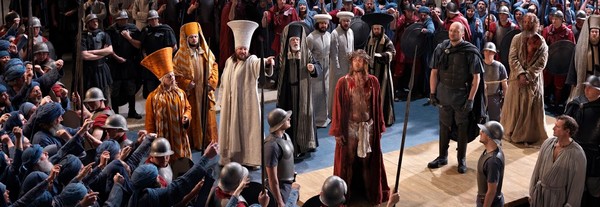
La nuit où il a été trahi, une confrontation dramatique a eu lieu entre Jésus et le sanhédrin. Imaginez la scène : Caïphe, le grand prêtre, est à la pêche aux preuves qu’ils peuvent utiliser contre le Seigneur. De nombreux faux témoins se présentent, mais leurs mensonges sont transparents et inutiles.

Finalement, quelqu’un dit : “J’ai entendu cet homme dire qu’il pouvait détruire le temple et le reconstruire en trois jours.” Caïphe se frotte les mains par anticipation.

“C’est une affirmation sérieuse, Jésus. Que réponds-tu ?”

Jésus ne dit rien.

Caïphe en a assez. Il sait qu’ils ne peuvent pas faire tenir leurs accusations. En désespoir de cause, il agite le doigt vers Jésus et dit : “Je t’ordonne de nous dire si tu es le Fils de Dieu.” Jésus brise enfin son silence :

” Vous l’avez dit “, répond Jésus. “Mais je vous dis à tous : Désormais, vous verrez le Fils de l’homme assis à la droite du Puissant et venant sur les nuées du ciel. ” (Matthieu 26:64, NIV)

Et ce qui se passe ensuite ne peut être décrit que comme un dysfonctionnement de la garde-robe auto-infligé. Caïphe déchire sa robe, crie “Blasphème ! Blasphème ! ” et Jésus est comme mort.

“Vous verrez”, dit Jésus. Mais qu’a vu exactement Caïphe et quand l’a-t-il vu ? Et pourquoi était-il si furieux de l’apprendre ?

Réponse n° 1 : un retour
“Jésus faisait référence à la seconde venue”, dit le futuriste. “Le jour du jugement dernier, lorsque le Fils de l’homme reviendra en puissance, des hommes comme Caïphe regarderont en arrière avec regret. Ce jour-là, les bien-pensants diront : “Quels idiots nous étions d’écarter Jésus !”

Cette interprétation n’est pas mauvaise, car elle rend compte de la situation dans laquelle se trouvent Caïphe et le Sanhédrin. Mais c’est une interprétation imparfaite car Jésus dit qu’ils le verront assis, et non pas venir. Et ils le verront “à partir de maintenant”, et non dans un avenir lointain.

Réponse n° 2 : un jugement
“Jésus faisait référence à la destruction de Jérusalem”, dit le prétériste. “Après avoir menacé les pharisiens en Matthieu 23 et prophétisé la destruction du temple en Matthieu 24, il pointe vers l’an 70 de notre ère où la vengeance divine sera dispensée par les mains des Romains.”

Cette interprétation présente de nombreux problèmes, dont le moindre n’est pas qu’elle contredit l’Évangile, qu’elle confond la vengeance humaine avec la vengeance divine et qu’elle dépeint Dieu comme incohérent sur le plan de l’alliance.

Dans la prophétie, Jésus est assis à la droite de Dieu ; il ne vient pas en jugement. L’expression “venir sur les nuages” est une référence de l’Ancien Testament à l’ascension. Cela n’a donc rien à voir avec un jugement imminent ou futur.

Mais le plus gros problème avec l’interprétation de 70 ans après J.-C. est que Caïphe et les vieux du Sanhédrin seront morts depuis longtemps avant que cela ne se produise. Ils ne seront pas là pour le voir, alors que Jésus a dit qu’ils le verraient. “Vous verrez.” Alors à quoi Jésus faisait-il référence ?

Réponse n° 3 : un roi
Jésus parlait de son couronnement imminent.

Jésus a dit au Sanhédrin qu’il était le Fils de Dieu. Ils ont ri avec mépris, mais Jésus a dit : “Vous verrez.” Cette prophétie s’est réalisée presque immédiatement. Considérez ce qu’ils ont vu le jour suivant, qui était le jour de la mort du Christ.

Ils ont vu les ténèbres couvrir la terre, et le voile du temple se déchirer de haut en bas. Ils ont vécu un tremblement de terre qui fendait la roche et des tombeaux qui s’ouvraient (Matthieu 27:45, 51). Moins de 24 heures après que le Christ ait dit “vous verrez”, ils ont assisté à une démonstration massive de puissance surnaturelle.

Et ce n’était que le début.

Le troisième matin, il y eut un autre tremblement de terre. La pierre qui gardait le tombeau a été roulée par un ange, et les soldats romains coriaces ont fléchi de peur (Matthieu 28:2-4).

Les nouvelles qui parvenaient au Sanhédrin devaient être difficiles à gérer. Non seulement des saints morts erraient dans les rues de Jérusalem (Matthieu 27:52), mais Jésus lui-même avait été vu en divers endroits.

Que se passait-il ? Jésus était-il ressuscité des morts ? Était-ce le signe promis par Jonas (Matthieu 12.39-40) ?

Quelques semaines plus tard, ils entendirent le tumulte de la Pentecôte. Des pêcheurs illettrés annonçaient les merveilles de Dieu dans une multitude de langues (Actes 2:8). Comment cela était-il possible ? L’un des pêcheurs a même déclaré que Jésus était assis à la droite de Dieu (Actes 2:34).

Était-ce vrai, se demandaient-ils ? Les paroles de Jésus s’étaient-elles réalisées ?

Puis un homme handicapé fut guéri sur le pas de leur porte. Le Sanhédrin a convoqué les hommes qui l’avaient fait et s’est rendu compte que Pierre et Jean ” avaient été avec Jésus ” (Actes 4, 13).

Vous vous souvenez de Jésus, celui que nous avons crucifié le mois dernier.

Vous verrez
Ils ont essayé de tuer cette chose dans l’œuf – ce mouvement, cette lame de fond, ce sentiment tenace qu’ils avaient eu tort – mais Jésus ne voulait pas rester mort.

On leur a amené un de ses disciples qui a dit : ” Je vois le ciel ouvert et le Fils de l’homme debout à la droite de Dieu ” (Actes 7, 56).

La miséricorde ! Ce sont les mêmes mots que Jésus avait prononcés dans l’intimité de leur tribunal. Comment Etienne pouvait-il savoir cela ?

What did the High Priest See?

What did the High Priest See?

MATTHEW 26:64

Posted on February 18, 2017 by Paul Ellis // 20 Comments

sanhedrin

On the night he was betrayed, there was a dramatic confrontation between Jesus and the Sanhedrin. Picture the scene: Caiaphas, the high priest is fishing for evidence they can use against the Lord. Many false witnesses come forward but their lies are transparent and useless.

Finally someone says, “I heard this man say he could destroy the temple and rebuild it in three days.” Caiaphas rubs his hands in anticipation.

“This is a serious claim, Jesus. How do you respond?”

Jesus says nothing.

Caiaphas is fed up. He knows they can’t make their charges stick. In desperation he wags his finger at Jesus and says, “I command you to tell us if you are the Son of God.” Jesus finally breaks his silence:

“You have said so,” Jesus replied. “But I say to all of you: From now on you will see the Son of Man sitting at the right hand of the Mighty One and coming on the clouds of heaven.” (Matthew 26:64, NIV)

And what happens next can only be described as a self-inflicted wardrobe malfunction. Caiaphas rips his robes, yells “Blasphemy! Blasphemy!” and Jesus is as good as dead.

“You will see,” said Jesus. But what exactly did Caiaphas see and when did he see it? And why was he so mad to hear about it?

ANSWER #1: A RETURN

“Jesus was referring to the Second Coming,” says the futurist. “On Judgment Day, when the Son of Man returns in power, men like Caiaphas will look back with regret. On that day the self-righteous will say, ‘What fools we were to dismiss Jesus.’”

This isn’t a bad interpretation for it captures the situation facing Caiaphas and the Sanhedrin. But it’s an imperfect one for Jesus says they will see him sitting, not coming. And they will see it “from now on,” not in the distant future.

ANSWER #2: A JUDGMENT

“Jesus was referring to the destruction of Jerusalem,” says the preterist. “Having threatened the Pharisees in Matthew 23 and prophesied the destruction of the temple in Matthew 24, he’s pointing ahead to AD70 when divine vengeance will be dispensed at the hands of the Romans.”

There are numerous problems with this interpretation not the least of which is that it contradicts the gospel, it confuses human vengeance with divine vengeance, and it portrays God as covenantally inconsistent.

In the prophecy Jesus is sitting at the right hand of God; he’s not coming in judgment. The phrase “coming on the clouds” is an Old Testament reference to the ascension. So this has nothing to do with either an imminent or future judgment.

But the biggest problem with the AD70 interpretation is that Caiaphas and the old men of the Sanhedrin will be long dead before it happens. They won’t be around to see it, yet Jesus said they would. “You will see.” So what was Jesus referring to?

ANSWER #3: A KING

Jesus was talking about his imminent coronation.

Jesus told the Sanhedrin that he was the Son of God. They laughed in scorn, but Jesus said, “You will see.” This prophecy came to pass almost immediately. Consider what they saw the following day, which was the day of Christ’s death.

They saw darkness covering the land, and the temple veil torn from top to bottom. They experienced a rock-splitting earthquake and tombs breaking open (Matthew 27:45, 51). Within 24 hours of Christ saying “you will see,” they witnessed a massive demonstration of supernatural power.

And that was only the beginning.

On the third morning, there was another earthquake. The stone guarding the tomb was rolled away by an angel, and tough Roman soldiers wilted with fear (Matthew 28:2–4).

The news feeding into the Sanhedrin would have been tough to deal with. Not only were dead saints wandering the streets of Jerusalem (Matthew 27:52), but Jesus himself had been seen in various places.

What was going on? Had Jesus risen from the dead? Was this the promised sign of Jonah (Matthew 12:39–40)?

A few weeks later they heard the uproar of Pentecost. Illiterate fishermen were declaring God’s wonders in a variety of languages (Acts 2:8). How was this possible? One of the fishermen even said Jesus was sitting at the right hand of God (Acts 2:34).

Was it true, they wondered? Had Jesus’ words come to pass?

Then a disabled man was healed on their doorstep. The Sanhedrin summoned the men who did it and realized that Peter and John “had been with Jesus” (Acts 4:13).

You remember Jesus, the guy we crucified last month.

YOU WILL SEE

They tried to nip this thing in the bud – this movement, this groundswell, this gnawing sense that they had been wrong – but Jesus wouldn’t stay dead.

One of his followers was brought to them and he said, “I see heaven open and the Son of Man standing at the right hand of God” (Acts 7:56).

Mercy! These were the same words Jesus had uttered in the privacy of their court. How could Stephen know this?

Then one of their own, a Pharisee of Pharisees called Saul, encountered the Lord and turned into a completely different person. He wrote letters about Jesus sitting at the right hand of God (Ephesians 1:20, Colossians 3:1, Hebrews 1:13).

The prophecy had been fulfilled. Everything Jesus said had come true.

“You will see,” said Jesus, and they did see – numerous tokens of Christ’s victory; piles of proof

Éphésiens 4:4-5

Éphésiens 4:4-5
Il y a un seul corps et un seul Esprit, comme aussi vous avez été appelés dans une seule espérance de votre vocation ; un seul Seigneur, une seule foi, un seul baptême,

(a) Un seul corps. Le corps du Christ est l’Eglise, dont le Christ est la tête (Eph. 5:23). “Nous qui sommes plusieurs, nous formons un seul corps dans le Christ” (Rom. 12:5).

(b) L’Esprit unique est le Saint-Esprit, alias l’Esprit du Christ (Rom. 8:9) et l’Esprit de grâce (Héb. 10:29). “Car c’est par un seul Esprit que nous avons tous été baptisés pour former un seul corps” (1 Cor. 12:13).

(c) Un seul Seigneur. Jésus-Christ est le Seigneur des seigneurs (1 Tim. 6:15).

Lorsque Jésus marchait sur la terre, il était connu comme Jésus de Nazareth ou le Fils de l’homme. Mais après son ascension au ciel, il a reçu un nouveau nom au-dessus de tout nom, et ce nom est Seigneur (Php. 2:9-11). Le jour de la Pentecôte, Pierre s’est levé et a prêché le nouveau nom du Seigneur. “Dieu l’a fait à la fois Seigneur et Christ” (Ac 2, 36). Vers la fin du premier siècle, une pression croissante s’exerce pour que l’on désigne l’empereur romain comme un seigneur. Mais en Asie, les saints ont refusé d’appeler qui que ce soit Seigneur sauf Jésus (voir l’entrée pour Apocalypse 3, 8).

(d) Une seule foi. Le corps du Christ est caractérisé par la foi ou la croyance ou la persuasion que Jésus est Seigneur. La foi n’est pas un simple assentiment intellectuel ; c’est vivre de la révélation que Jésus est réellement Seigneur avec tout ce que cela implique.

(e) Un seul baptême. Plusieurs types de baptême sont mentionnés dans l’Écriture, notamment : Le baptême de repentance de Jean (Actes 19:3-4), le baptême d’eau fait au nom de Jésus (Actes 10:48, 19:5), le baptême du Saint-Esprit (Actes 11:16), le baptême de souffrance de Jésus (Matt. 20:22), et le baptême pour les morts (1 Cor. 15:29). Puisqu’il y a différents baptêmes, pourquoi Paul dit-il qu’il n’y en a qu’un seul ? Il fait référence au baptême que reçoit chaque croyant lorsqu’il est placé dans le corps du Christ par le Saint-Esprit (1 Cor. 12:12-13).

Au moment où vous êtes venu à Jésus, vous avez été baptisé ou placé en lui par l’Esprit. Être baptisé signifie être plongé ou immergé. Pour utiliser un mot obscur, il s’agit d’être embaumé. Baptiser quelque chose, c’est l’enterrer dans la terre ou l’enfoncer dans l’eau. C’est ce qui se produit lorsqu’un navire sombre dans une tempête ou qu’un skieur est frappé par une avalanche. Être baptisé ou emporté est un événement dramatique et catastrophique et cela vous est arrivé (Rom. 6:3).

Votre ancien moi avait des problèmes que vous ne pouviez pas résoudre. La solution du Saint-Esprit a été de baptiser ou d’enterrer votre vieille nature dans le sol avec Jésus. C’est ce que signifie être baptisé dans sa mort. Mais le Saint-Esprit ne vous a pas laissé en terre. Tout comme il a ressuscité Jésus, il vous a ressuscité (Rom. 6:6-7). Grâce à ce seul baptême, tu es maintenant libéré du péché et libre de vivre en Christ.

Lecture complémentaire : “Quel est le baptême qui sauve ?”

Éphésiens 4:6
un seul Dieu et Père de tous, qui est au-dessus de tous, par tous et en tous.

Voir l’entrée pour Eph. 3:14.

Éphésiens 4:7
Mais à chacun de nous, la grâce a été donnée selon la mesure du don du Christ.

La grâce a été donnée. La grâce de Dieu est un don (Eph.3:7). Vous ne pouvez pas la gagner par vos bonnes œuvres et votre excellence morale (Rom. 11:6, Gal. 2:21). Vous ne pouvez la recevoir que par la foi (Gal. 5:4).

Éphésiens 4:22
que, en ce qui concerne votre ancienne manière de vivre, vous mettiez de côté le vieux moi, qui se corrompt selon les convoitises de la tromperie,

Déposez le vieux moi. Notre vieux moi a été crucifié avec le Christ (Rom. 6:6), alors pourquoi sommes-nous exhortés à mettre de côté le vieux moi (Col. 3:9) ? Parce que de nombreux chrétiens, ignorant qu’ils sont morts avec le Christ, essaient de réformer leur ancien moi. C’est une cause perdue. Notre chair ne peut pas être améliorée. Ce dont nous avons besoin et ce que le Christ nous offre, c’est une toute nouvelle vie, sa vie. Voir l’entrée pour la nouvelle vie.

La vie surnaturelle et abondante que nous sommes appelés à vivre ne peut être reçue que par la foi et expérimentée en marchant dans l’esprit. C’est pourquoi les auteurs du Nouveau Testament nous exhortent à nous défaire des vieilles habitudes de la chair et à revêtir les nouvelles habitudes de l’esprit (Ep 4, 22-24). Nous ne nous dépouillons pas et ne nous revêtons pas pour devenir spirituels ; nous le faisons parce que nous sommes spirituels. Toute personne qui naît de nouveau est née de l’esprit (Jean 3:7-8). Puisque nous sommes déjà dans l’esprit, marchons selon l’esprit (Gal 5:25).

Éphésiens 4:23
et que vous soyez renouvelés dans l’esprit de votre intelligence,

Soyez renouvelés dans l’esprit de votre intelligence. Changez votre façon de penser.

Le jour où vous êtes né de nouveau, beaucoup de choses ont changé, mais votre façon de penser n’a probablement pas changé. Si vous aimiez le chocolat et conduisiez imprudemment avant d’être sauvé, alors vous aimiez probablement le chocolat et conduisiez imprudemment après avoir été sauvé. C’est pourquoi les Écritures nous exhortent à nous défaire de l’ancien et à revêtir le nouveau, à être renouvelés dans l’esprit de nos pensées.

Ce que vous faites suit ce que vous pensez et ce que vous pensez suit ce que vous croyez. Renouvelez votre pensée afin que vos pensées s’alignent sur ce que Dieu dit de vous.

Éphésiens 4:24
et revêtez-vous du moi nouveau, qui, à la ressemblance de Dieu, a été créé dans la justice et la sainteté de la vérité.

(a) Revêtez-vous du nouveau moi. Vous êtes juste et saint, alors agissez comme tel. Voyez vous comme Dieu vous voit. Soyez ce que vous êtes vraiment.

Revêtir l’homme nouveau, c’est être renouvelé dans l’esprit de votre intelligence (voir le verset précédent). C’est choisir de marcher selon la nouvelle voie de l’esprit au lieu des anciennes voies de la chair. Nous n’abandonnons pas et ne revêtons pas pour devenir spirituels ; nous le faisons parce que nous sommes spirituels. Toute personne qui naît de nouveau est née de l’esprit (Jean 3:7-8). Puisque nous sommes déjà dans l’esprit, marchons selon l’esprit (Gal 5:25).

(b) Créés dans la justice. Vous avez été transformé en une toute nouvelle personne, aussi juste et sainte que Jésus.

Jésus a été fait péché à notre place, afin que nous devenions en lui la justice de Dieu (2 Cor. 5:21). Jésus n’a pas été fait péché parce qu’il était pécheur et vous n’avez pas été rendu juste parce que vous avez agi avec droiture. C’est Dieu qui a tout fait. Au moment où vous avez mis votre foi en Jésus, vous avez été estampillé juste pour toute l’éternité. À un moment donné, tu étais injuste, mais tu as été lavé, sanctifié et déclaré juste au nom du Seigneur (1 Cor. 6:9-11).

Qu’est-ce que cela signifie d’être juste ? Cela signifie que vous avez subi une rénovation complète, un renouvellement par le Saint-Esprit, une reconstruction totale. Vous avez été redressé. Vous n’êtes plus la personne tordue que vous étiez. Alors qu’en Adam, vous aviez des inclinations qui vous conduisaient vers le péché, quels que soient vos efforts pour l’éviter, en Christ, vous êtes enclin à marcher droit et vrai. Votre désir est de plaire au Seigneur. Ce n’est pas que vous soyez incapable de pécher. C’est simplement que le péché ne vous attire plus. Lorsque vous péchez, cela vous dérange – “Je voudrais ne pas avoir fait cela” – ce qui prouve que ce type de comportement est contraire à votre nouvelle nature.

Voir l’entrée pour la Justice.

Traduit avec http://www.DeepL.com/Translator (version gratuite)

Traduit avec http://www.DeepL.com/Translator (version gratuite)

Ephesians 4:4-5

Ephesians 4:4-5

There is one body and one Spirit, just as also you were called in one hope of your calling; one Lord, one faith, one baptism,

(a) One body. The body of Christ is the Church, of which Christ is the head (Eph. 5:23). “We who are many are one body in Christ” (Rom. 12:5).

(b) The one Spirit is the Holy Spirit a.k.a. the Spirit of Christ (Rom. 8:9) and the Spirit of Grace (Heb. 10:29). “For by one Spirit we were all baptized into one body” (1 Cor. 12:13).

(c) One Lord. Jesus Christ is the Lord of lords (1 Tim. 6:15).

When Jesus walked the earth he was known as Jesus of Nazareth or the Son of Man. But after he ascended to heaven he was given a new name above every name, and that name is Lord (Php. 2:9–11). On the Day of Pentecost, Peter stood up and preached the new name of the Lord. “God has made him both Lord and Christ” (Acts 2: 36). Towards the end of the first century, there was growing pressure to refer to the Roman emperor as lord. But in Asia, the saints refused to call anyone Lord but Jesus (see entry for Rev. 3:8).

(d) One faith. The body of Christ is characterized by the faith or belief or persuasion that Jesus is Lord. Faith is not merely intellectual assent; it is living from the revelation that Jesus really is Lord with all that implies.

(e) One baptism. Several types of baptism are mentioned in scripture including: John’s baptism of repentance (Acts 19:3–4), water baptism done in Jesus’ name (Acts 10:4819:5), Holy Spirit baptism (Act 11:16), Jesus’ baptism of suffering (Matt. 20:22), and baptism for the dead (1 Cor. 15:29). Since there are different baptisms, why does Paul say there is only one? He is referring to the baptism that happens to every believer when they are put into the body of Christ by the Holy Spirit (1 Cor. 12:12–13).

The moment you came to Jesus, you were baptized or placed in him by the Spirit. To be baptized means to be dipped or immersed. To use an obscure word, it is to be whelmed. To whelm something is to bury it in dirt or sink it in water. It is what happens when a ship goes down in a storm or a skier is hit with an avalanche. To be baptized or whelmed is a dramatic and catastrophic event and it happened to you (Rom. 6:3).

Your old self had issues that you could never resolve. The Holy Spirit’s solution was to whelm or bury your old nature in the ground with Jesus. This is what it means to be baptized into his death. But the Holy Spirit didn’t leave you in the ground. Just as he raised Jesus, he raised you (Rom. 6:6–7). Because of that one baptism you are now free from sin and free to live in Christ.

Further reading: “What is the baptism that saves?


Ephesians 4:6

one God and Father of all who is over all and through all and in all.

See entry for Eph. 3:14.


Ephesians 4:7

But to each one of us grace was given according to the measure of Christ’s gift.

Grace was given. The grace of God is a gift (Eph.3:7). You cannot earn it through your good works and moral excellence (Rom. 11:6Gal. 2:21). You can only receive it through faith (Gal. 5:4).


Ephesians 4:22

that, in reference to your former manner of life, you lay aside the old self, which is being corrupted in accordance with the lusts of deceit,

Lay aside the old self. Our old self was crucified with Christ (Rom. 6:6), so why are we exhorted to lay the old self aside (Col. 3:9)? Because many Christians, unaware that they died with Christ, are trying to reform their old selves. It’s a lost cause. Our flesh cannot be improved. What we need and what Christ offers is a brand new life; his life. See entry for New Life.

The supernatural and abundant life that we’re called to live can only be received by faith and experienced by walking in the spirit. This is why the New Testament writers admonish us to put off the old ways of the flesh and put on the new ways of the spirit (Eph 4:22-24). We don’t put off and put on to become spiritual; we do this because we are spiritual. Everyone who is born again is born of the spirit (John 3:7-8). Since we are already in the spirit, let us walk after the spirit (Gal 5:25).


Ephesians 4:23

and that you be renewed in the spirit of your mind,

Be renewed in the spirit of your mind. Change the way you think.

On the day you were born again, a lot of things changed, but your way of thinking probably did not change. If you liked chocolate and drove recklessly before you were saved, then you probably liked chocolate and drove recklessly after you were saved. This is why the scriptures exhort us to put off the old and put on the new and be renewed in the spirit of our minds.

What you do follows what you think and what you think follows what you believe. Renew your thinking so that your thoughts align with what God says about you.


Ephesians 4:24

and put on the new self, which in the likeness of God has been created in righteousness and holiness of the truth.

(a) Put on the new self. You are righteous and holy, so act like it. See yourself as God sees you. Be who you truly are.

To put on the new man is to be renewed in the spirit of your mind (see previous verse). It is choosing to walk in the new way of the spirit instead of the old ways of the flesh. We don’t put off and put on to become spiritual; we do this because we are spiritual. Everyone who is born again is born of the spirit (John 3:7-8). Since we are already in the spirit, let us walk after the spirit (Gal 5:25).

(b) Created in righteousness. You have been made into a brand new person, as righteous and holy as Jesus.

Jesus was made to be sin on our behalf, so that we might become the righteousness of God in him (2 Cor. 5:21). Jesus was not made sin because he was a sinner and you were not made righteous because you acted righteously. God did it all. The moment you put your faith in Jesus, you were stamped righteous for all eternity. At one time you were unrighteous, but you were washed, you were sanctified, and you were declared righteous in the name of the Lord (1 Cor. 6:9–11).

What does it mean to be righteous? It means you have had a complete renovation, a Holy Spirit renewal, an entire rebuild. You have been straightened out. You are no longer the crooked person you used to be. While in Adam you had inclinations that led you towards sin no matter how hard you tried to avoid it, in Christ you are inclined to walk straight and true. Your desire is to please the Lord. It’s not that you are incapable of sinning. It’s just that sinning no longer appeals. When you sin it bothers you—“I wish I hadn’t done that”—testifying that this sort of behavior is contrary to your new nature.

See entry for Righteousness.

YOU’VE GOT SLAVES

How our ignorance and apathy enslaves millions.

8 minute read

DOWN

Slavery was abolished in the U.S. on December 6, 1865 by signing the 13th Amendment into law. While many would argue1 that slavery was just redefined and is still alive and well in America, the majority view slavery as a thing of the past. While people may disagree on how to define slavery in the United States, around the world in other countries there is no question. Despite being illegal in every nation, there are 30-46 million slaves in the world today. Modern slavery is a multibillion-dollar industry with estimates of up to $35 billion generated annually. It should be a haunting prospect that some of those slaves work for you.

WOE TO THE RICH

You may not feel like you are rich, but if you live in the United States, you probably are84% of the world’s population lives below the poverty line set by the U.S., 71% lives off of less than $10 a day. Almost half of the world’s population lives off less than $2.50 a day. Quickly think about how much per day you spend on your mortgage or rent, your food, entertainment, utilities, etc. If you consider how the majority of the world lives, if you live off significantly more money than $10 a day, you are rich.

Now that you know that you are rich, listen to what James, the brother of Jesus, has to say to you:

Now listen, you rich people, weep and wail because of the misery that is coming on you.
James 5:1

Many teachings of the New Testament warn of the dangers of being rich (Luke 1:52-536:2516:13Mark 10:23-25Matthew 6:19-2116:261 Timothy 6:9-11). Prosperity Gospel preachers avoid James 5 like the plague. Most American Christians would rather skip over James 5 or brush it off as not applying to them. Regardless, James plainly says, “weep and wail becomes of the misery that is coming on you.” Surely he cannot be talking about most American Christians?

YOUR TREASURE

Your wealth has rotted, and moths have eaten your clothes.
James 5:2

Here James is poetically building off his warning in verse one. He is also likely referencing Luke’s Gospel (12:33) where he says, Sell your possessions and give to the poor. Provide purses for yourselves that will not wear out, a treasure in heaven that will never fail, where no thief comes near and no moth destroys.” James is warning those of us who do not sell our possessions and give to the poor.

Your gold and silver are corroded. Their corrosion will testify against you and eat your flesh like fire. You have hoarded wealth in the last days.
James 5:3

The term “last days” refer to the time after Jesus. We currently live in the last days, as all Christians have since the time of Christ. James is bringing sharp rebuke against those who have wealth but do not use it to help those less fortunate. In referencing “the last days” he is calling attention to the fact that we have received the teachings of Jesustherefore to ignore them will bring harsher judgment.

YOUR WORKERS

Look! The wages you failed to pay the workers who mowed your fields are crying out against you. The cries of the harvesters have reached the ears of the Lord Almighty.
James 5:4

Agriculture was the main source of economic prosperity in the Palestine region during the first century. The lower class would often be in the fields working for those who were more wealthy and owned the land. Here in verse four, James is calling out the rich for not paying their workers, claiming that God hears their cries. This theme of reversal is all over the New Testament.

He has brought down rulers from their thrones but has lifted up the humble. He has filled the hungry with good things but has sent the rich away empty.
Luke 1:52-53

We don’t have fields though. We don’t have workers that we aren’t paying. Or do we?

Clothes Shopping

YOUR SLAVES

Ever get excited about that shirt from Forever 21 (or somewhere else) that was only $5? Or maybe you’ve felt like you hit the jackpot the day after Halloween because all the candy went from cheap to really cheap?  If we were actually to uncover the disturbing secrets behind “cheap”, we’d come to see that cheap is very expensive.  Slavery looks a lot like 50% offBlack FridayBuy One—Get One Free, or anything that seems like a “steal”, because that’s exactly what it is: a steal. You’re stealing from the laborers. We may not hear their cries but the Lord does.

The reason you can pay $5 for that shirt and companies can still make a profit, is because the one who made it for you was paid pennies or nothing.  If it doesn’t cost you, it costs someone else.

Cheap is expensive.

If you aren’t paying attention when you buy things like clothing, purses, beauty products, leather goods, electronics, coffee, chocolate, you name it: your slaves have probably made it.

Whether it’s…

  • children in sweatshops or in the cotton or cocoa fields working 12 hour days in the the hot sun
  • grown men in prison (often imprisoned unjustly for petty crimes and taken advantage of) assemble products for Victoria’s Secret (that was her secret)
  • women trafficked from their homes to other cities or countries where they’re enslaved in garment factories for pennies all the while being physically and verbally abused
  • illegal immigrant families, 2nd and 3rd generations working illegally but willfully employed by powerful companies because they know they can get them for dirt cheap labor and threaten them with deportation

…it’s safe to say, slavery has many different faces. Even with such amounts of injustice there are things we can do to combat it. We just have to wake up first.

FATTENED CALVES

You have lived on earth in luxury and self-indulgence. You have fattened yourselves in the day of slaughter.
James 5:5

Generally speaking, it is unlikely that we will get fat while also being generous when there are starving people in the world. A loving, other-orientated heart posture doesn’t usually allow for self-indulgence when others are starving and suffering. Luke 6:25 says, “Woe to you who are well fed now, for you will go hungry.” Ezekiel (16:49) claims that Sodom was destroyed because its people were “arrogant, overfed and unconcerned; they did not help the poor and needy.”

Many of us do live in “luxury and self-indulgence.” It is our luxury and self-indulgence that causes us to repeatedly shop without considering the true cost to laborers and slaves who suffer so we can buy more. James warns that many of us are merely fattening ourselves for the slaughter. It doesn’t have to be this way though.

APATHY KILLS

Many will learn about the injustices of slave labor and how they contribute and still be unconcerned. It is precisely this apathy that perpetuates the problem. Followers of Jesus have to step up their game and educate themselves and others about the problem of slavery and then stop supporting those industries. There is a lot we can do and consider.

Unless you’re able to find the word ‘fairtrade’ printed somewhere on a product, there is no guarantee the product was made fairly or ethically. Even then, unfortunately, slavery is like an onion with so many layers. For example, you may have clothing that was sewn ethically (which could be considered a fairtrade product), but perhaps the cotton was picked by a 3-year-old, and washed and prepared by teenage girls who were trafficked from their city and forced to work for pennies or for free.

While making efforts to reduce how many slaves work for you may seem daunting, for Christ-followers, it is worth the endeavor. Slavery Footprint is a great website that actually helps you get an estimate on how many slaves work for you by assessing all the things you currently possess and actively buy.

PROBLEMS AND SOLUTIONS

Here are two major problems to consider:

1) We are so disconnected from our products and don’t have a clue where or how anything is made.

2) We buy into consumerism which just means more slaves are working for us on a regular basis.

So what can we do?

1) Awareness is key. We cannot solve the problem until we identify it. Learn more about modern-day slavery and how much it affects all of us. Netflix documentaries like True Cost or 13th do an excellent job of revealing all the many facets of modern-day slavery. There are many other resources on the internet to educate yourself.

2) Learn about the products you buy. Research how they were made. Look for information on websites about their supply chain.2 If a company neglects to say anything about their supply chain, it’s very probable that they don’t want you to know, or that ethical labor practices are not a priority to them. Try looking for labels like “Made in the USA” instead of in China, Vietnam, Bangladesh, etc. Look for products that say fairtrade.

3) Buy less. Consumerism makes slaves out of all of us (feeling like we need to always have more, more, more), and the actual slaves making the product. Often we end up buying cheap things that break or wear out easily. Ethically made products usually are more expensive, but they usually will last longer.3 Thinking twice or three times before we buy things will help us reduce slavery and free us from the addiction of consumerism.

4) Buy from organizations that are trying to help people in developing countries grow their businesses. Serrv and 10, 000 Villages are just two examples of many out there making a positive difference.

Look! The wages you failed to pay the workers who mowed your fields are crying out against you. The cries of the harvesters have reached the ears of the Lord Almighty. You have lived on earth in luxury and self-indulgence. You have fattened yourselves in the day of slaughter.
James 5:4-5

James warns us of the fate of those who are apathetic towards the sufferings of those who labor for us. He brings sharp rebuke. We shouldn’t ignore his words. God hears the cries of the slaves that work for us. It is monumentally important that we do as well.

La nouvelle vie

La nouvelle vie

Les Écritures distinguent deux types de vie : la vie du psuche et la vie du zoe, la vie de l’âme et la vie de l’esprit (Jean 12:25). La vie de psuche décrit la vie que nous avons héritée d’Adam, tandis que la vie de zoé vient de Dieu (Jean 5:26).

La psuche-vie est la vie de la chair. C’est vivre avec soi-même comme source et approvisionnement. La zo-vie est parfois appelée la nouvelle vie ou la nouveauté de vie (Rom. 6:4). La zo-vie est aussi connue comme la vie ou la vie éternelle. Lorsque Jésus a dit “Je suis la Vie”, il disait “Je suis la source de la vie nouvelle” (Jean 14:6).

Note : Parfois, zoé-vie est utilisé dans les Écritures pour décrire la vie temporelle d’une personne sur terre (Luc 16:25, 1 Cor. 15:19, 1 Tim. 4:8, Jas. 4:14). Cependant, la plupart du temps, la zo-vie est décrite comme la vie qui vient de Dieu le Père (Jean 5:21, 26, 6:27, Actes 17:28, Héb. 12:9), et qui nous est donnée par Dieu le Fils (Jean 1:4, 5:21, 14:6, Rom. 6:23, 2 Tim. 1:9, 1 Jean 1:2, 1 Jean 5:11-13), et Dieu le Saint-Esprit (Jean 6:63).

L’ancienne vie que nous avons héritée d’Adam est une vie imparfaite qui se termine par la mort (Rom. 5:12) ; la nouvelle vie que nous recevons de Jésus est une vie bénie et abondante qui ne se termine jamais (Rom. 6:23). L’origine détermine la destination. Adam est venu du sol et ceux qui vivent la vie adamique finissent dans le sol (Gen. 2:7, 3:19). En revanche, Jésus est venu du ciel et ceux qui reçoivent sa vie connaissent les bénédictions du ciel maintenant et pour toujours (1 Cor. 15:49).

Pourquoi Jésus est-il venu ?

La réponse à la question “Pourquoi Jésus est-il venu ?” est de nous donner une vie nouvelle ou la vie éternelle (Jean 3:16, 10:28, Rom 6:4, 1 Tim. 1:16). Jésus n’est pas venu principalement pour nous libérer du péché ou pour nous donner une nouvelle nature. Il est venu pour nous donner une nouvelle vie qui inclut ces autres choses. “Je suis venu pour qu’ils aient (zoe) la vie” (Jean 10:10). Lorsque nous prêchons l’Évangile, nous parlons aux gens de la nouvelle vie que Jésus offre à tous (Actes 5:20).

Tout au long de la Bible, nous sommes invités à abandonner l’ancienne vie pour en adopter une nouvelle (Matthieu 16:25, Jean 12:25). C’est ce qu’on appelle naître de nouveau (Jean 3.3, 7, 1 Pierre 1.3, 23), passer de la mort à la vie (Jean 5.24, 1 Jean 3.14), ou être rendu vivant (Ép 2.5, Col 2.13). Nous passons de la mort à la vie nouvelle avec l’aide de l’Esprit Saint. C’est l’Esprit en nous qui marque notre passage de l’ancien au nouveau.

La vie éternelle n’est pas un prolongement sans fin de l’ancienne vie, mais une vie entièrement nouvelle. Ceux qui sont nés de nouveau sont de nouvelles créatures (Gal. 6:15), membres d’une nouvelle famille et d’une nouvelle race et citoyens d’un autre royaume (Eph. 2:19, Php. 3:20).

“Si quelqu’un est en Christ, il est une nouvelle créature” (2 Cor. 5:17). Le mot original pour nouveau (kainos) signifie nouveau en nature. Chrétien, tu n’es pas une version nouvelle et améliorée de ce que tu étais auparavant ; tu es quelque chose de tout à fait nouveau. Tu étais un petit Adam, maintenant tu es un petit Christ, un fils de Dieu. Vous n’êtes pas un pécheur sauvé par la grâce. Tu étais un pécheur, puis tu as été sauvé par la grâce. Maintenant, tu n’es plus un pécheur. Tu es un saint. Un avec le Seigneur, vous êtes aussi juste et saint que lui. “Comme il est, nous sommes aussi dans ce monde” (1 Jean 4:17).

La religion bricolée voudrait vous faire croire que vous êtes un travail en cours, comme s’il y avait un juste milieu entre le saint et le pécheur. Mais il n’y a pas de juste milieu. Vous êtes soit mort ou vivant, perdu ou retrouvé, en Christ ou hors de lui. Soit vous êtes né de nouveau, soit vous avez besoin de l’être.

Vous avez peut-être entendu dire : “Je ne suis pas parfait, je suis simplement pardonné”. Une telle déclaration fait appel à notre chair et s’accorde avec notre expérience, mais elle est une insulte à Celui par le sacrifice duquel nous avons été rendus parfaits pour toujours. Il est vrai que par vous-même, vous n’êtes pas parfaits. Mais vous n’êtes pas seuls. Vous avez été unis au Seigneur, et il n’y a pas de branches impures sur cette vigne sainte.

La lumière et les ténèbres ne peuvent coexister. La perfection et l’imperfection ne peuvent pas non plus coexister. Pour que le Seigneur puisse avoir une quelconque union avec vous, il a dû faire de vous quelque chose que vous n’étiez pas et il l’a fait.

Lorsque vous êtes venu au Christ, vous avez été purifié du péché et vous êtes entré dans une union vitale avec le Seigneur. Vous ne faites plus partie de la race d’Adam. Vous êtes un fils ou une fille du Père éternel. Le Christ est votre vie. Vous vous appuyez sur sa foi et vous êtes enveloppé de son amour. Tes imperfections présentes et passagères sont cachées dans ses perfections éternelles et sublimes.

Quand Dieu te regarde, il ne voit pas seulement qui tu es maintenant, avec tes défauts visibles et ta gloire cachée. Il voit qui vous êtes dans l’éternité. Il voit le vrai vous, et de son point de vue intemporel, vous êtes sans défaut, irréprochable et rayonnant de gloire.

Pour en savoir plus : “Qui pensez-vous être ?”

Qu’y a-t-il de nouveau dans cette nouvelle vie ?

La nouvelle vie est éternelle (Jean 3:16, 5:24, 10:28, 1 Pierre 1:23, Gal. 6:8). Bien que nos corps terrestres puissent vieillir et mourir, nous serons ressuscités et revêtus de l’immortalité (Jean 6:53-54, 1 Cor. 15:22-23, 42-44, 51-54, 2 Cor. 5:2, 2 Tim 1:10).

Cette nouvelle vie est une vie de communion ou d’union avec le Seigneur (Jean 17:3, 1 Jean 1:3). C’est une vie libérée de l’esclavage du péché (Rom. 6:6-7, 22, 8:2), où nous dominons et régnons depuis notre position sûre en Christ (Rom. 5:17, Eph. 2:6). Notre nouvelle vie est caractérisée par un cœur nouveau et un esprit nouveau (Eze. 36:26-27). Vous avez reçu une nouvelle nature avec de nouveaux désirs (2 Pi. 1:4). Votre cœur est incliné vers l’obéissance et vous ne voulez plus pécher (1 Jean 3:6, 9, 24). C’est pourquoi la Bible dit qu’il n’y a pas de pécheurs dans le royaume de Dieu (1 Cor. 6:9-10, Ap. 21:8). Il n’y a que d’anciens pécheurs qui ont été transformés.

En un mot, la nouvelle vie est la vie du Christ (Col. 3:4). C’est Jésus qui vit sa vie à travers vous. Vous vous tenez maintenant sur sa foi (Gal. 2:20), vous êtes rempli de son Esprit (Rom, 8:11), et vous pensez les pensées de son esprit (1 Cor. 2:16).

Que m’est-il arrivé à la croix ?

Dès que vous êtes venu au Christ par la foi, vous avez été enseveli dans sa mort et ressuscité à une vie nouvelle par le Saint-Esprit (Rom. 6:3). Le Nouveau Testament rappelle sans cesse au croyant : “Tu es mort” (Rom. 6:6, 8, Col. 2:20, 3:3, 2 Tim. 2:11). À la croix, vous avez perdu votre péché (Ps. 103:12, Jean 1:29, 2 Jean 2:2) et ce vieux tyran de péché vous a perdu. Vous et vous n’êtes plus l’esclave du péché (Rom. 6:6). Vous pouvez encore lutter contre de vieilles habitudes, mais vous le faites depuis un lieu de liberté (Gal. 5:1). Toute relation que vous auriez pu avoir avec la loi a également été rompue à la croix (Rom. 7:6).

À la croix, vous avez reçu la paix avec Dieu et un pardon complet (2 Cor. 5:19, Col 2:13). Lorsque vous avez été placé en Jésus, vous avez obtenu son acceptation (Eph. 1:6), sa justice (Rom. 1:17), sa sainteté (1 Cor. 1:3) et sa perfection éternelle (Héb. 10:4). Lorsque vous êtes né de nouveau, vous avez été transformé en une nouvelle création, et il est donc évident que vous n’avez plus de nature pécheresse. Vous n’êtes pas une personne le dimanche et une autre le lundi.

Avant la croix, vous pouviez craindre Dieu de loin, mais maintenant vous vous approchez de son trône de grâce avec confiance (Héb. 4:16). Avant la croix, vous avez peut-être imaginé que Dieu était une sorte de juge divin, mais maintenant vous le voyez comme votre Père aimant qui vous a donné les pleins droits de la filiation (Gal 3:26, 1 Jean 3:1). Avant la croix, vous étiez un mendiant vivant des restes de la table du roi. Mais à cause de la croix, tous vos besoins ont été satisfaits selon sa glorieuse richesse dans le Christ Jésus (Php. 4:19).

Le jour où vous êtes né de nouveau, beaucoup de choses ont changé, mais deux choses sont restées inchangées. Premièrement, votre corps physique n’a pas changé. Vous avez peut-être été guéri, mais votre corps est toujours soumis aux effets de la chute, et votre combinaison terrestre continue de vieillir d’année en année. Nous attendons toujours avec impatience la rédemption de notre corps (Rom 8:23).

Deuxièmement, au-delà de la repentance et de la décision de confier votre vie à Jésus, votre façon de penser n’a probablement pas changé. Si vous aimiez le chocolat et conduisiez imprudemment avant d’être sauvé, alors vous avez probablement aimé le chocolat et conduit imprudemment après avoir été sauvé. C’est pourquoi les Écritures nous exhortent à nous défaire du vieux, à revêtir le nouveau et à être renouvelés dans l’esprit de nos pensées (Éph. 4:22-24).

Marcher dans la nouveauté de la vie

C’est une chose d’être rendu nouveau par le Saint-Esprit, c’en est une autre de marcher dans la nouveauté de la vie (Rom. 6:4). Un nouveau-né est aussi humain qu’il ne le sera jamais, mais il doit encore apprendre à marcher et à parler comme un être humain. Il en va de même pour les chrétiens. Au moment où vous êtes venu au Christ, vous êtes devenu une nouvelle personne. En Christ, vous êtes aussi juste et saint que vous ne l’avez jamais été. Mais vous devez encore apprendre à marcher et à parler selon les nouvelles méthodes de l’Esprit.

Prospecting and Digging for the True treasures