Prospecting Minerals

This is my passion too. Digging for minerals. Ever since my father took me to Franklin NJ and News Street Quarry I was hooked on the search for minerals. Crystals are Gods art forms of order.

I was taking a lot of photos in my hotel from previous finds and here I share some of the beauty a camera and the creator can put together.

I finally invested in a better ultraviolet lamp for about 1000 and am happy with it. I have been experimenting with listening to Tangerine Dream while photographing with my older collectibles with Rebel Canon Ti5 with macrolenses and a helicon stacking program.

Then playing with the parameters on the software and the UV lamp I got some nice photos I think:

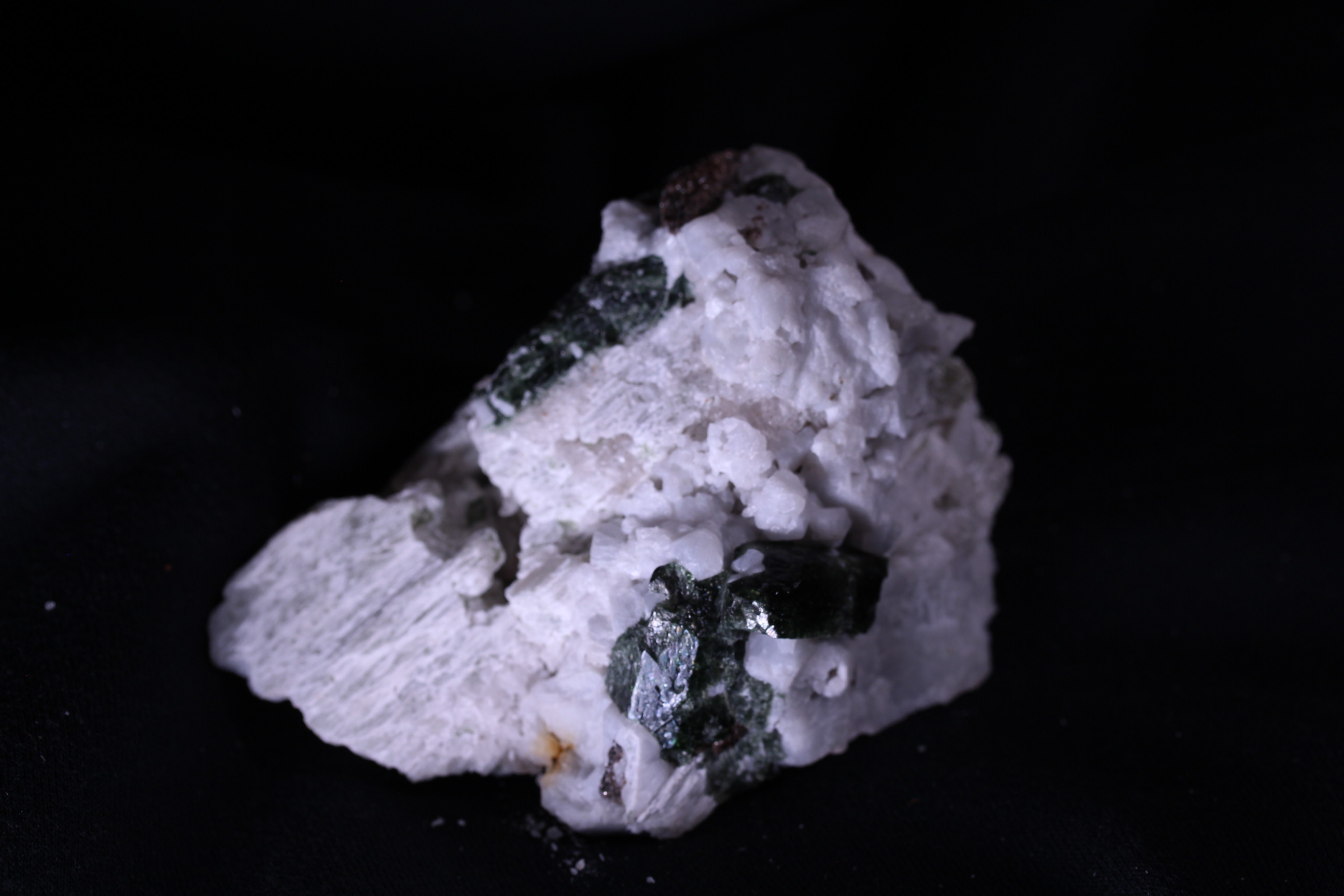
Blue apatite in white calcite from the Mulvany property Pitcairn NY
Same specimen where the apatite fluoresces blue and the calcite reddish
This piece is from Mulvany properties too. There is dark green diopside crystals on the bottom center. THe surrounding matrix is albite a white feldspar. The bottom left is a crystal of wollastonite with woody patterns

Short wave UV of the same specimen.

Beige honey colored pectolite blades in needles of diopside (?) from the LAB mine in Black lake Qc.
Here is the same specimen under Short wave Ultra violet lamp. The pectolite fluoresced strangly blue and orange in the same crystals.

LUST

Romance/Sex = Potent Mind Control

May 7, 2011

love_venus.jpg(Updated Conclusion)

Love is really the love of perfection (God.)  People are not perfect. We have been brainwashed to sublimate our love of God into worship of people, i.e. romance and sex. This is idolatry.

by Henry Makow Ph.D.

“Whopper” no longer refers to a hamburger but to the latest White House Press Release. The masses eat it up, like dogs who welcome their leash.
Kabbalist Jews and Masons, the Illuminati bankers are enslaving humanity in a veiled “world government” tyranny dedicated to Lucifer.

Throughout history they have broken us down by instigating wars, depressions, calamity and corruption. They have also destabilized us by promoting bogus and dysfunctional beliefs.The Protocols of the Elders of Zion state: “We must introduce into their education all those principles which have so brilliantly broken up their order.” (16)

Since the Illuminati bankers dictate fashion through the mass media, it is a simple matter to shape mass psychology and destabilize society.

They simply present behavior like premarital sex, promiscuity, adultery, homosexuality and obscenity as though they were the healthy norm. Monkey see; monkey do.

They promote dysfunction in more subtle ways too.Have you noticed that in TV and movies, there is usually an unrealistic correlation between a person’s physical appearance and their moral status?

The “good guys” are handsome while the “bad guys” are ugly. Beautiful women are rarely portrayed as bad. Thus we are unconsciously indoctrinated to believe that beauty and goodness are identical.

Consequently, most men (and women) pursue feminine beauty as though it were a religion.

This is deliberate. The Illuminati are satanists; they want us to worship false gods: sex, money, fame and power. They want us to worship beautiful women — “goddesses”. Men are indoctrinated to believe the love of a beautiful woman (God) is as good as gets.   

{Here my comments: this is an old trick of Satan. It goes back to Balaam. You know the false prophet that was told of by a donkey. If you cannot use your money to curse Gods chosen then use your money to tempt them to sin by sex.

Num 22:6

Come now therefore, I pray thee, curse me this people; for they are too mighty for me: 

Num 22:18b I cannot go beyond the word of the LORD my God, to do less or more.

Num 25:15 “Moses said to them, “Have you allowed all the women to live? 16 Look, these people, through the counsel of Balaam, caused the Israelites to act treacherously against the LORD in the matter of Peor”

And what was Baal Peor but a demon of the Canaanites

“The god is himself also called “Peor” by abbreviation (Num. xxxi. 16; Josh. xxii. 17). It is commonly held that this form of Ba’al-worship especially called for sensual indulgence. The context seems to favor his view, on account of the shameful licentiousness into which many of the Israelites were there enticed.”

The cultures change but the spiritual forces are the same}

One of the pioneers of “humanism” was the Masonic philosopher August Comte (1798-1857.) He advocated idealizing women as a way of “secularizing” society:

{Compte was certifiablly insane https://en.wikipedia.org/wiki/Auguste_Comte#Life}

“Women must become Goddesses,” he wrote in “System of Positive Polity” (1854). “By substituting goddesses for gods, we sanction the legitimate preeminence of women.” (Vol. 4, P. 446.)

By inflating the importance of women, the Illuminati undermine and destabilize society.

Men and women were intended to worship (i.e. love) God; women to follow their husband’s leadership. By pushing beautiful young women to the top, the whole pyramid is inverted and society is destabilized.

By “God” I mean spiritual ideals like truth, beauty, justice and love.

MORE ONTHE “LOVE/ SEX” MINDSET 

There is universal agreement in Western society that romantic love is the way to happiness. This message is drummed into our heads by about 80% of songs and movies.

srendipity.jpgTake a movie like “Serendipity” for example. The John Cusack character falls for Kate Beckinsdale but then loses touch with her. The whole movie charts his frantic search, and when he does find her, it is presented as the Second Coming of Christ.

The woman has become a surrogate for his own soul. He has lost his soul by loving her, and now he thinks she is going to give it back.   

The reason I harp on this subject is that I was very much a victim of the mass media. I overvalued love/sex/women. The essence of masculinity is power. It is what women want in a man.  But thanks to the free ride women get in the media,men are too in awe to court them; women are too in awe of themselves to follow a man. Neither are able to bond. Neither mature by assuming marital and parental responsibilities. The result: arrested development and an obsession with sex.

Of course sexual attraction (lust) is often mistaken for love. The Illuminati have endowed sexual intercourse with ridiculous religious and psychological expectations. It is the holy sacrament of the bogus religion. The result is that people pathetically mimic the love they crave by having anonymous sex.

The acceptance of anonymous sex has degraded all human relationships to the level of a short cheap thrill. For me, there is no better proof that humanity is in the clutch of satanists. 

Sex has no significance unless it is an expression of love. It is a physical appetite like hunger.  

Couples should not feel pressured to maintain the romantic standard peddled in the media.  A successful lifelong marriage is based on mutual support, companionship, commitment, respect and trust. Sexual attraction is only one of many contributing factors.Two people pledge devotion regardless of their many imperfections.They love the real person, not the ideal one. But the ideal does reside within every soul. We’re all beautiful there. Don’t look for happiness/perfection outside yourself

. Don’t look for anyone to give you yourself. Worship God by uncovering the Truth buried in our souls


Love is really the love of perfection (God.)  People are not perfect. We have been brainwashed to sublimate our love of God into worship of people, i.e. romance and sex. This is idolatry.

People should not love each other in the sense of worship. This misplaced love sabotages and destroys countless lives.

CONCLUSION

Humanity has been hijacked by a satanic cult, the Illuminati, who are Kabbalists and Luciferians. Our civilization is based on a denial of God’s existence and design. In effect, this is tantamount to denying Intelligent Design,(which should be self-evident) and the existence of morality and truth.

God is Consciousness which is the ultimate Reality: Truth, Goodness, Love, Beauty and Justice. That is why we all love and crave these ideals, why we all crave God.

We are radios that tune into this frequency. Obeying God, (faith, true religion) is about entering this consciousness and behaving accordingly. This is our real identity. 

The Illuminati want to substitute their own corrupt self-serving reality. This is why they condition us to self-destructively pursue false gods like romance and sex. Their ultimate motivation is occult, not commercial. They want to stunt our biological and spiritual development, in order to domesticate us.  If you’re a satanic cult,  It’s what you do.  

Union PARTIE II

Union PARTIE II

Un regard plus approfondi sur l’Union en lisant les écritures qui nous sont adressées aujourd’hui

Les paroles de Paul Ellis sur l’Union :

” Dieu vous a créés pour que vous puissiez participer à l’amour et à la vie débordants que l’on trouve dans la divinité. Vous avez été créés pour aimer et être aimés et pour partager sa vie divine dans l’union spirituelle.

Les religions artificielles disent qu’il faut travailler dur avant de pouvoir s’approcher de Dieu et que si vous péchez, il vous rejettera, mais l’évangile de la grâce déclare qu’en étant un avec le Seigneur, vous êtes aussi saint et juste que lui et que votre avenir est assuré pour l’éternité. Notre union avec le Seigneur est intime, incassable et le moyen par lequel nous faisons l’expérience de la vie abondante qui découle de la plénitude de son amour.

L’union dans la Bible

Le mot “union” n’apparaît pas dans de nombreuses Bibles anglaises, mais notre union avec le Seigneur est mentionnée des centaines de fois dans les Écritures. On la trouve dans des expressions comme “Dieu avec nous”, “Christ en vous”, “en Christ”, “avec le Christ”, “avec lui” et “en lui” (voir l’entrée pour Matt. 1:23). Elle est présente dans de nombreuses promesses (“Je suis avec vous tous les jours”) et images (“Je suis la vigne, vous êtes les sarments”). Et l’union est implicite dans le mot communion.

Le mot qui est habituellement traduit par communion (koinonia, 2842) signifie littéralement partenariat, communauté (ou unité commune) ou communion (ou union commune). Koinonia n’est pas un verbe dans le sens d’avoir des relations amicales après l’église. C’est un substantif qui décrit l’union commune des croyants entre eux et avec le Seigneur.

L’union est plus qu’une relation car elle décrit le lien mystique que tous les croyants partagent avec Dieu le Père (Eph. 2:18, 1 Jean 1:2-3, 2:15), Dieu le Fils (1 Cor. 1:9, 10:16), et Dieu le Saint-Esprit (2 Cor. 13:14, Php. 2:1, 1 Jean 4:13). Notre union nous relie également à l’église ou au corps du Christ (1 Jean 1:7). La koinonia – l’amitié – consiste à vivre pleinement de notre lien avec le Christ et son corps, nos cœurs étant “unis dans l’amour” (Col. 2:2). “

Maintenant, je me penche sur les versets auxquels Paul fait référence “

L’union avec Dieu par le Christ grâce au don qu’ils ont fait. C’est le Saint-Esprit. C’est “ma” trinité à laquelle je crois.

2Co 13:14

La grâce du Seigneur Jésus-Christ, et l’amour de Dieu, et la communion du Saint-Esprit, soient avec vous tous. Amen.[f

La grâce est venue lorsque Dieu a donné son Fils au monde dans le péché. Ils ne le méritaient pas, mais Dieu les a aimés. La grâce est venue à cause de l’amour des Pères. Ils ont envoyé le consolateur, le très saint esprit du Christ pour qu’il habite en nous. Ainsi, nous partageons tous pleinement cet esprit en nous et nous partageons pleinement le fait d’être en Christ. Le Christ en nous et nous en Christ par la grâce de notre Seigneur !

Phl 2:1

S’il y a donc quelque consolation en Christ, s’il y a quelque réconfort de l’amour, s’il y a quelque communion de l’Esprit, s’il y a quelque entrailles et miséricorde,

Notre union est le partage complet, non pas des écritures, non pas de l’église, non pas d’une race ou d’un pays. Tout cela ne peut prendre la place de l’union “une seule âme”, “un seul esprit” qui vient du fait que Christ vit dans chaque membre de son corps.

Peu importe qu’ils soient en Afrique, en Perse, en Chine ou aux bons vieux États-Unis ! Nous avons cette union qui comble les fossés entre les générations et les distances. C’est l’esprit saint qui nous encourage à aimer tout le monde à mort. Nous avons ce même esprit du Christ qui nous réconforte et c’est parce que nous avons tous exactement le même esprit du Christ en nous.

Lorsque nous réalisons cette vérité, nous pouvons agir comme UN en harmonie en Christ. Mais que s’est-il passé ?

Sola Scriptura n’a jamais été nécessaire dans l’église du premier siècle et ils connaissaient l’amour du Christ. Ils aimaient jusqu’à la mort. Pourquoi ? Lors de la réforme, nous avons quitté l’église contrôlée par l’Empire romain pour nous joindre à une église aussi faible que celle de Luther et de tous ceux qui ont revendiqué “Sola Scriptura” lors des réformes protestantes.

Une seule chose est nécessaire. L’union par l’Esprit “. Sola Spirit” aurait été mieux. Les premiers disciples du Christ n’avaient pas la Bible que nous avons aujourd’hui et ne disposaient que d’un enseignement oral et de quelques lettres ou peut-être de la Torah. Mais ils s’aimaient les uns les autres

Phl 2:2

Accomplissez ma joie, en étant semblables entre vous, en ayant le même amour, en étant d’un même accord, d’un même esprit.

Phl 2:3

Que rien ne se fasse par querelle ou par vanité, mais que, dans la modestie, chacun estime les autres mieux que soi-même.

Phl 2:4

Que chacun ne regarde pas à ses propres affaires, mais que chacun regarde aussi à celles des autres.

Phl 2:5

Ayez en vous cet esprit qui était aussi en Jésus-Christ :

Que s’est-il passé ? Nous avons aujourd’hui plus de 45 000 dénominations ou divisions qui coupent le Corps du Christ en morceaux. Comment cela s’est-il produit ?

Nous avons remplacé l’esprit vivant du Christ par la plus subtile de toutes les idoles…. la Bible ! Ou du moins ce que nous appelons dans chacune de nos divisions ou hérésies “la parole bien divisée”. Sans l’amour du Christ à servir et son esprit qui habite en nous, nous nous séparons et créons notre propre division sur la base de quelques détails que nous tenons dans notre orgueil pour plus vrais que les autres. Nous créons des dénominations pour savoir si les enfants peuvent être baptisés ou les adultes, car nous ne savons pas que c’est l’esprit qui nous baptise et non les rituels ou l’eau seulement.

DANS l’amour, nous pouvons accepter d’être en désaccord sur des détails mineurs. Nous pouvons accepter d’être en désaccord et nous le ferons tous les jours. Nous pouvons permettre au Seigneur lui-même d’interpréter son Écriture et il est le seul à pouvoir diviser correctement toute la parole de Dieu puisqu’il était la Parole en chair et en os.

Toutes les dénominations qui invoquent le Seigneur sont nos frères. En fait, toute l’humanité est notre frère et même nos pires ennemis. Pourquoi ? Pourquoi traiterions-nous tous les hommes comme nos frères et pas seulement nos camarades de la bande patriotique. Pourquoi ? Parce que tous les hommes ont été créés à la même image de Dieu et que c’est l’intention de Dieu que tous soient sauvés ! Tous les hommes sont des amis, mais nous ne sommes pas encore devenus des amis !

L’amour tend ses bras ouverts de bienvenue au monde entier. L’union se fait finalement sur la croix.

1Jo 4:12

Aucun homme n’a jamais vu Dieu. Si nous nous aimons les uns les autres, Dieu habite en nous, et son amour est parfait en nous.

Dieu est esprit. Nous ne voyons pas Dieu à travers de nouvelles révélations et idées, à moins qu’il ne s’agisse de révélations du Christ. Il était le seul moyen de voir Dieu dans la chair ! Regardez la vie qu’il a vécue sur la terre et maintenant la vie qu’il vit dans les lieux célestes avec vous aujourd’hui !

Jn 14:9

Jésus lui dit : Il y a si longtemps que je suis avec toi, et tu ne m’as pas connu, Philippe ? Celui qui m’a vu a vu le Père ; comment dis-tu donc : Montre-nous le Père ?

1Jo 4:13

Nous savons par là que nous demeurons en lui, et que lui demeure en nous, parce qu’il nous a donné de son Esprit.

C’est ainsi que nous pouvons faire l’expérience d’être en Christ. En s’aimant et non en se disputant et en se faisant la guerre sur des différences doctrinales. La fin ou le but de la doctrine est l’amour de Dieu, pas la division et la dispute.

Nous avons cet esprit du Christ qui vit en nous, alors pourquoi l’étouffer et l’attrister en coupant son corps en morceaux ? L’unité est parfaite dans l’amour.

Rom 13:10 ” L’amour ne fait pas de mal au prochain. C’est pourquoi l’amour est l’accomplissement de la loi.”

L’esprit du Christ, notre saint esprit, est le ciment qui nous maintient tous ensemble dans le corps du Christ. Nous ne devons donc pas ignorer ou nier son pouvoir et son potentiel. C’est le pouvoir d’être témoin du corps du Christ. C’est la sève de la vigne qui donne à chaque branche son fruit. Il est le sang et l’âme du corps et le corps du Christ ne peut vivre sans le Saint-Esprit.

Sola Spiritu, pas seulement Sola scriptura ! C’est un mauvais remplacement pour l’unité et l’amour dans l’esprit du Christ. Solo Amor ! Seulement l’amour tel qu’il a été défini par la vie de Jésus et ensuite écrit par les prophètes ! Jésus est le seul interprète de la Parole de Dieu et lorsque nous nous éloignons de cette vérité, nous pouvons nous mordre et nous tuer les uns les autres, même au nom de Dieu !

1Jo 1:7

Mais si nous marchons dans la lumière, comme il est dans la lumière, nous sommes en communion les uns avec les autres, et le sang de Jésus-Christ son Fils nous purifie de tout péché.

C’est cet esprit que nous avons tous en commun dans le Corps du Christ, l’église, l’ekklesia, ceux qui sont appelés par Lui ! Il a fait le chemin pour nous par son sacrifice sur la croix, maintenant nous avons le don versé en nous. Nous pouvons avoir un partage complet avec tous ceux qui le veulent.

Col 2:2

Afin que leurs cœurs soient réconfortés, étant liés par l’amour, et jusqu’à toutes les richesses de la pleine assurance de l’intelligence, jusqu’à la reconnaissance du mystère de Dieu, et du Père, et du Christ ;

C’est une belle façon de dire que nous sommes tous unis les uns aux autres dans le Corps du Christ. C’est une belle façon de dire que nous sommes tous unis les uns aux autres dans le Corps du Christ. Nous pouvons être encouragés à marcher dans l’amour les uns envers les autres et envers le monde par cet esprit. Cet esprit nous a déjà “tricotés ensemble dans l’amour”.

C’est l’amour qui nous a unis ! Ici, en grec, Paul a choisi Sumbibazo comme verbe traduit par “tricoter ensemble”. Ce mot signifie essentiellement “mettre ensemble” et dépend du contexte dans lequel il est utilisé. Il est utilisé comme “mettre ensemble dans son esprit, comparer” mais aussi comme “faire coalescer, joindre ensemble, mettre ensemble”.

C’est ainsi que le Créateur a créé notre corps physique dans le ventre de notre mère. Nos propres corps sont peut-être la meilleure façon de comprendre à quel point nous sommes en union avec notre tête, le Seigneur Christ. Nous devons nous accrocher à notre tête Christ et ne laisser aucun homme la séparer du corps. L’Église sans sa tête est une Église morte.

Col 2:3

En qui sont cachés tous les trésors de la sagesse et de la connaissance.

Col 2:4

Et je dis cela, afin que personne ne vous séduise par des paroles séduisantes.

La manière dont nous pouvons avoir l’unité et l’union nous est montrée chaque jour lorsque nous mangeons, dormons, marchons, aimons et vivons dans le corps qu’il nous a prêté.

Eph 4:16

De qui tout le corps, solidement assemblé et compacté par ce que chaque articulation fournit, selon l’action efficace dans la mesure de chaque partie, fait croître le corps pour son édification dans l’amour.

Chaque articulation, chaque organe, fibre et nerf se développe et s’assemble comme une tapisserie. Chaque partie forme un bel ensemble. Mais tout cela vient de la tête comme de la source et c’est le Christ. Et cela ne fonctionne que dans l’union et l’amour. Toute autre chose n’est que maladie et mort. La séparation des parties du corps ou la séparation des 45 000 dénominations et plus ! Le christianisme n’a pas été formé pour avoir de multiples saveurs mais une seule.

Lorsque nous sommes en harmonie, nous pouvons, comme le corps physique, nous réparer et grandir en un homme ou une femme.

Union PART II

Union PART II

A deeper look at Union reading the scripture written to us today

Paul Ellis’s words on Union :

« God made you so that you could participate in the overflowing love and life found within the Godhead. You were created to love and be loved and to share his divine life in spiritual union.

Manmade religion says you have to work hard before you can draw near to God and if you sin he will cast you aside, but the gospel of grace declares that one with the Lord, you are as holy and righteous as he is and your future is eternally secure. Our union with the Lord is intimate, unbreakable and the means by which we experience the abundant life that flows from the fullness of his love.

Union in the Bible

The word union does not appear in many English Bibles, but our union with the Lord is mentioned hundreds of times in scripture. It is found in the phrases like “God with us,” “Christ in you,” “in Christ,” “with Christ,” “with him,” and “in him” (see entry for Matt. 1:23). It’s in numerous promises (“I am with you always”) and word pictures (“I am the vine, you are the branches”). And union is implied in the word fellowship.

The word that is usually translated as fellowship (koinonia, 2842) literally means partnership, community (or common unity) or communion (or common union). Koinonia is not a verb in the sense of having fellowship after church. It is a noun that describes the common union believers have with each other and the Lord.

Union is more than relationship for it describes the mystical connection that all believers share with God the Father (Eph. 2:18, 1 John 1:2-3, 2:15), God the Son (1 Cor. 1:9, 10:16), and God the Holy Spirit (2 Cor. 13:14, Php. 2:1, 1 John 4:13). Our union also joins us to the church or the body of Christ (1 John 1:7). Koinonia-fellowship is about living fully out of our connection with Christ and his body with our hearts “knit together in love” (Col. 2:2). »

Now here I am looking into the verses Paul refers to »

Union with God through Christ through the gift they gave. That is the holy spirit. That is “my” trinity that I believe.

2Co 13:14

The grace of the Lord Jesus Christ, and the love of God, and the communion of the Holy Ghost, be with you all. Amen.[f

Grace came when God gave His Son to the world in sin. They did not deserve it by God loved them. Grace came because of the Fathers love. They sent the comforter, the very holy spirit of Christ to dwell in us. So we now all fully share this spirit in us and we fully share being in Christ. Christ in us and us in Christ by the Grace of our Lord!

Phl 2:1

If there be therefore any consolation in Christ, if any comfort of love, if any fellowship of the Spirit, if any bowels and mercies,

Our Union is the full sharing not of the scripture, not of church, not of a race or country. All these cannot take the place of the “one sou;” “one mind union” that comes from having Christ living in each member of His body.

No matter if they are in Africa, Persia, China or the Good Ole USA! We have this union that bridges the generation gaps, and distances. It is the holy spirit that encourages us to love everyone to death. We have this same spirit of Christ that comforts us and it is because we all have the exact same spirit of Christ in us.

When we realize this truth we can act like ONE in harmony In Christ. But what happened?

Sola Scriptura was never needed in the first century church and they knew the love of Christ. They did love to the death. Why? IN the reformation we left following the Roman Empire controlled church and joined one just as weak when Luther and all claimed “Sola Scriptura” in the Protestant reformations

One thing is necessary. Union by the Spirit.” Sola Spirit” would have been better. The first disciples of Christ did not have the Bible we have today and only had oral teaching and some letters or perhaps some Torah. But they did love each other

Phl 2:2

Fulfil ye my joy, that ye be likeminded, having the same love, being of one accord, of one mind.

Phl 2:3

Let nothing be done through strife or vainglory; but in lowliness of mind let each esteem other better than themselves.

Phl 2:4

Look not every man on his own things, but every man also on the things of others.

Phl 2:5

Let this mind be in you, which was also in Christ Jesus:

What happened? We have more than 45,000 denominations or divisions cutting the Body of Christ into pieces today. How did this occur?

We replaced the living spirit of Christ with the most subtle of all idols….the Bible! Or at least what we in each of our divisions or heresies call “the rightly divided word” Without the Love of Christ to serve and the His spirit dwelling in us we break off and create our own division based on some details that we in our pride hold truer than the others. We start denominations over whether children can be baptized or adults, since we know not that the spirit is what baptizes us not rituals or water only.

IN love we can agree to disagree on minor details. We can agree to disagree and we will every day. We can allow the Lord Himself interpret His Scripture and He is the only one that can rightly divide the whole word of God since He was the Word in the Flesh.

All denominations that call on the Lord are our brothers. IN fact all mankind our brothers and even our worst enemies. Why? Why would we treat all men as our brothers and not just our fellow patriotic gang. Why/ Because all men were created in the same image of God and it is Gods intention that all be saved! AlL men are friends we just havn’t made into friends YET!

Love holds His open arms of welcome to the whole world. There is union finally on the cross.

1Jo 4:12

No man hath seen God at any time. If we love one another, God dwelleth in us, and his love is perfected in us.

God is spirit. We do not see God through new revelations and ideas, unless they are revelations of Christ. He was the only way to see God in the flesh! Look at the life he lived on the earth and now the life He lives in the heavenly places with you today!

Jhn 14:9

Jesus saith unto him, Have I been so long time with you, and yet hast thou not known me, Philip? he that hath seen me hath seen the Father; and how sayest thou then, Shew us the Father?

1Jo 4:13

Hereby know we that we dwell in him, and he in us, because he hath given us of his Spirit.

This is the way we can experience being in Christ. By loving not arguing with each other and warring with other over doctrinal differences. The end or the purpose of the doctrine is the love of God, not division and stife.

We have this spirit of Christ living in us so why do we squelch and grieve it by cutting His body into pieces.. Unity is perfected in love.

Rom 13:10 “ Love does no harm to a neighbor. Therefore love is the fulfillment of the law.”

The spirit of Christ, our holy spirit, is the glue that holds all of us together in the body of Christ. So we should not ignore or deny its power and potential. It is the power to be witness of the body of Christ. It is the sap in from the Vine that give every branch its fruit. It is the life blood and soul of the Body and the body of Christ cannot live without the holy spirit.

Sola Spiritu not just Sola scriptura! That is a poor replacement for unity and love in the spirit of Christ. Solo Amor! Only the love as it was defined by the life of Jesus and then written down by the prophets! Jesus is the only interpreter of the Word of God and when we stray away from that truth, we may be biting and killing each other even in the name of God!

1Jo 1:7

But if we walk in the light, as he is in the light, we have fellowship one with another, and the blood of Jesus Christ his Son cleanseth us from all sin.

It is this spirit that we all have in common in the Body of Christ, the church, the ekklesia, those who are called by Him! He has made the way for us through His sacrifice on the cross now we have the gift poured into us. We can have full sharing with all those who want it.

Col 2:2

That their hearts might be comforted, being knit together in love, and unto all riches of the full assurance of understanding, to the acknowledgement of the mystery of God, and of the Father, and of Christ;

This is a beautiful way of saying we are all in union with each other in the Body of Christ. We can be encouraged to walk in love with each other and to the world through this spirit. This spirit has already “knit us together in love”

It is love that united us! Here in the Greek Paul chose Sumbibazo as the verb translated “knit together” The word basically means “to put together” and depends on the context it is used in. It is used as “to put together in one’s mind, to compare” But other places “to cause to coalesce, to join together, put together”

Being knit together this way is how the Creator has made our physical bodies in the womb. Our own bodies are perhaps the best way to understand how closely we are in Union with our Head the Lord Christ. We must hang tight with our head Christ and let no man separate it from the body. The Church without its head is a dead church.

Col 2:3

In whom are hid all the treasures of wisdom and knowledge.

Col 2:4

And this I say, lest any man should beguile you with enticing words.

The way we can have unity and union is shown to us everyday as we eat, sleep, walk, love and live in the body He has lent us.

Eph 4:16

From whom the whole body fitly joined together and compacted by that which every joint supplieth, according to the effectual working in the measure of every part, maketh increase of the body unto the edifying of itself in love.

Every joint, every organ, fiber and nerve grows and is put together like a tapestry. Every part makes a beautiful whole. But it all comes from the head as the source and that is Christ. And it only works in Union and in Love. Any thing else is sickness and death. Seperation of the body parts or separation of the 45,000 or more denominations! Christianity was not formed to have multiple flavors but only one.

When we are in harmony we like the physical body, can repair and grow into a man or woman.

Seen by 1

Like

Comment

A deeper look at Union part 1

Union PART II

A deeper look at Union reading the scripture written to us today

Paul Ellis’s words on Union :

« God made you so that you could participate in the overflowing love and life found within the Godhead. You were created to love and be loved and to share his divine life in spiritual union.

Manmade religion says you have to work hard before you can draw near to God and if you sin he will cast you aside, but the gospel of grace declares that one with the Lord, you are as holy and righteous as he is and your future is eternally secure. Our union with the Lord is intimate, unbreakable and the means by which we experience the abundant life that flows from the fullness of his love.

Union in the Bible

The word union does not appear in many English Bibles, but our union with the Lord is mentioned hundreds of times in scripture. It is found in the phrases like “God with us,” “Christ in you,” “in Christ,” “with Christ,” “with him,” and “in him” (see entry for Matt. 1:23). It’s in numerous promises (“I am with you always”) and word pictures (“I am the vine, you are the branches”). And union is implied in the word fellowship.

The word that is usually translated as fellowship (koinonia, 2842) literally means partnership, community (or common unity) or communion (or common union). Koinonia is not a verb in the sense of having fellowship after church. It is a noun that describes the common union believers have with each other and the Lord.

Union is more than relationship for it describes the mystical connection that all believers share with God the Father (Eph. 2:18, 1 John 1:2-3, 2:15), God the Son (1 Cor. 1:9, 10:16), and God the Holy Spirit (2 Cor. 13:14, Php. 2:1, 1 John 4:13). Our union also joins us to the church or the body of Christ (1 John 1:7). Koinonia-fellowship is about living fully out of our connection with Christ and his body with our hearts “knit together in love” (Col. 2:2). »

Now here I am looking into the verses Paul refers to »

Union with God through Christ through the gift they gave. That is the holy spirit. That is “my” trinity that I believe.

2Co 13:14

The grace of the Lord Jesus Christ, and the love of God, and the communion of the Holy Ghost, be with you all. Amen.[f

Grace came when God gave His Son to the world in sin. They did not deserve it by God loved them. Grace came because of the Fathers love. They sent the comforter, the very holy spirit of Christ to dwell in us. So we now all fully share this spirit in us and we fully share being in Christ. Christ in us and us in Christ by the Grace of our Lord!

Phl 2:1

If there be therefore any consolation in Christ, if any comfort of love, if any fellowship of the Spirit, if any bowels and mercies,

Our Union is the full sharing not of the scripture, not of church, not of a race or country. All these cannot take the place of the “one sou;” “one mind union” that comes from having Christ living in each member of His body.

No matter if they are in Africa, Persia, China or the Good Ole USA! We have this union that bridges the generation gaps, and distances. It is the holy spirit that encourages us to love everyone to death. We have this same spirit of Christ that comforts us and it is because we all have the exact same spirit of Christ in us.

When we realize this truth we can act like ONE in harmony In Christ. But what happened?

Sola Scriptura was never needed in the first century church and they knew the love of Christ. They did love to the death. Why? IN the reformation we left following the Roman Empire controlled church and joined one just as weak when Luther and all claimed “Sola Scriptura” in the Protestant reformations

One thing is necessary. Union by the Spirit.” Sola Spirit” would have been better. The first disciples of Christ did not have the Bible we have today and only had oral teaching and some letters or perhaps some Torah. But they did love each other

Phl 2:2

Fulfil ye my joy, that ye be likeminded, having the same love, being of one accord, of one mind.

Phl 2:3

Let nothing be done through strife or vainglory; but in lowliness of mind let each esteem other better than themselves.

Phl 2:4

Look not every man on his own things, but every man also on the things of others.

Phl 2:5

Let this mind be in you, which was also in Christ Jesus:

What happened? We have more than 45,000 denominations or divisions cutting the Body of Christ into pieces today. How did this occur?

We replaced the living spirit of Christ with the most subtle of all idols….the Bible! Or at least what we in each of our divisions or heresies call “the rightly divided word” Without the Love of Christ to serve and the His spirit dwelling in us we break off and create our own division based on some details that we in our pride hold truer than the others. We start denominations over whether children can be baptized or adults, since we know not that the spirit is what baptizes us not rituals or water only.

IN love we can agree to disagree on minor details. We can agree to disagree and we will every day. We can allow the Lord Himself interpret His Scripture and He is the only one that can rightly divide the whole word of God since He was the Word in the Flesh.

All denominations that call on the Lord are our brothers. IN fact all mankind our brothers and even our worst enemies. Why? Why would we treat all men as our brothers and not just our fellow patriotic gang. Why/ Because all men were created in the same image of God and it is Gods intention that all be saved! AlL men are friends we just havn’t made into friends YET!

Love holds His open arms of welcome to the whole world. There is union finally on the cross.

1Jo 4:12

No man hath seen God at any time. If we love one another, God dwelleth in us, and his love is perfected in us.

God is spirit. We do not see God through new revelations and ideas, unless they are revelations of Christ. He was the only way to see God in the flesh! Look at the life he lived on the earth and now the life He lives in the heavenly places with you today!

Jhn 14:9

Jesus saith unto him, Have I been so long time with you, and yet hast thou not known me, Philip? he that hath seen me hath seen the Father; and how sayest thou then, Shew us the Father?

1Jo 4:13

Hereby know we that we dwell in him, and he in us, because he hath given us of his Spirit.

This is the way we can experience being in Christ. By loving not arguing with each other and warring with other over doctrinal differences. The end or the purpose of the doctrine is the love of God, not division and stife.

We have this spirit of Christ living in us so why do we squelch and grieve it by cutting His body into pieces.. Unity is perfected in love.

Rom 13:10 “ Love does no harm to a neighbor. Therefore love is the fulfillment of the law.”

The spirit of Christ, our holy spirit, is the glue that holds all of us together in the body of Christ. So we should not ignore or deny its power and potential. It is the power to be witness of the body of Christ. It is the sap in from the Vine that give every branch its fruit. It is the life blood and soul of the Body and the body of Christ cannot live without the holy spirit.

Sola Spiritu not just Sola scriptura! That is a poor replacement for unity and love in the spirit of Christ. Solo Amor! Only the love as it was defined by the life of Jesus and then written down by the prophets! Jesus is the only interpreter of the Word of God and when we stray away from that truth, we may be biting and killing each other even in the name of God!

1Jo 1:7

But if we walk in the light, as he is in the light, we have fellowship one with another, and the blood of Jesus Christ his Son cleanseth us from all sin.

It is this spirit that we all have in common in the Body of Christ, the church, the ekklesia, those who are called by Him! He has made the way for us through His sacrifice on the cross now we have the gift poured into us. We can have full sharing with all those who want it.

Col 2:2

That their hearts might be comforted, being knit together in love, and unto all riches of the full assurance of understanding, to the acknowledgement of the mystery of God, and of the Father, and of Christ;

This is a beautiful way of saying we are all in union with each other in the Body of Christ. We can be encouraged to walk in love with each other and to the world through this spirit. This spirit has already “knit us together in love”

It is love that united us! Here in the Greek Paul chose Sumbibazo as the verb translated “knit together” The word basically means “to put together” and depends on the context it is used in. It is used as “to put together in one’s mind, to compare” But other places “to cause to coalesce, to join together, put together”

Being knit together this way is how the Creator has made our physical bodies in the womb. Our own bodies are perhaps the best way to understand how closely we are in Union with our Head the Lord Christ. We must hang tight with our head Christ and let no man separate it from the body. The Church without its head is a dead church.

Col 2:3

In whom are hid all the treasures of wisdom and knowledge.

Col 2:4

And this I say, lest any man should beguile you with enticing words.

The way we can have unity and union is shown to us everyday as we eat, sleep, walk, love and live in the body He has lent us.

Eph 4:16

From whom the whole body fitly joined together and compacted by that which every joint supplieth, according to the effectual working in the measure of every part, maketh increase of the body unto the edifying of itself in love.

Every joint, every organ, fiber and nerve grows and is put together like a tapestry. Every part makes a beautiful whole. But it all comes from the head as the source and that is Christ. And it only works in Union and in Love. Any thing else is sickness and death. Seperation of the body parts or separation of the 45,000 or more denominations! Christianity was not formed to have multiple flavors but only one.

When we are in harmony we like the physical body, can repair and grow into a man or woman.

Like

Comment

Un regard approfondi sur l’Union part I

Union

Un regard approfondi sur l’Union en lisant les écritures qui nous sont adressées aujourd’hui.

Les mots de Paul Ellis sur l’Union :

” Dieu vous a créés pour que vous puissiez participer à l’amour et à la vie débordants que l’on trouve dans la divinité. Vous avez été créés pour aimer et être aimés et pour partager sa vie divine dans l’union spirituelle.

Les religions artificielles disent qu’il faut travailler dur avant de pouvoir s’approcher de Dieu et que si vous péchez, il vous rejettera, mais l’évangile de la grâce déclare qu’en étant un avec le Seigneur, vous êtes aussi saint et juste que lui et que votre avenir est assuré pour l’éternité. Notre union avec le Seigneur est intime, incassable et le moyen par lequel nous faisons l’expérience de la vie abondante qui découle de la plénitude de son amour.

L’union dans la Bible

Le mot “union” n’apparaît pas dans de nombreuses Bibles anglaises, mais notre union avec le Seigneur est mentionnée des centaines de fois dans les Écritures. On la trouve dans des expressions comme “Dieu avec nous”, “Christ en vous”, “en Christ”, “avec le Christ”, “avec lui” et “en lui” (voir l’entrée pour Matt. 1:23). Elle est présente dans de nombreuses promesses (“Je suis avec vous tous les jours”) et images (“Je suis la vigne, vous êtes les sarments”). Et l’union est implicite dans le mot communion.

Le mot qui est habituellement traduit par communion (koinonia, 2842) signifie littéralement partenariat, communauté (ou unité commune) ou communion (ou union commune). Koinonia n’est pas un verbe dans le sens d’avoir des relations amicales après l’église. C’est un substantif qui décrit l’union commune des croyants entre eux et avec le Seigneur.

L’union est plus qu’une relation car elle décrit le lien mystique que tous les croyants partagent avec Dieu le Père (Eph. 2:18, 1 Jean 1:2-3, 2:15), Dieu le Fils (1 Cor. 1:9, 10:16), et Dieu le Saint-Esprit (2 Cor. 13:14, Php. 2:1, 1 Jean 4:13). Notre union nous relie également à l’église ou au corps du Christ (1 Jean 1:7). La koinonia – l’amitié – consiste à vivre pleinement de notre lien avec le Christ et son corps, nos cœurs étant “unis dans l’amour” (Col. 2:2). “

Maintenant, je me penche sur les versets auxquels Paul se réfère “

Eph 2:18

Car c’est par lui que nous avons accès au Père, par un seul et même Esprit.

S’il n’avait pas envoyé le Consolateur, qui est le don du Saint-Esprit, comment aurions-nous pu être unis ? Le Père est venu vivre dans son fils Jésus et Jésus-Christ a élu domicile dans le cœur de tous ceux qui ont confiance en lui. Maintenant nous avons un lien avec le père qui est incassable.

1 Jean 1 :1-3

” 1Jo 1:1

” Ce qui était dès le commencement, ce que nous avons entendu, ce que nous avons vu de nos yeux, ce que nous avons contemplé et que nos mains ont touché, c’est ce que nous proclamons au sujet de la Parole de vie.

1Jo 1:2

La vie est apparue ; nous l’avons vue et nous en rendons témoignage, et nous vous annonçons la vie éternelle, qui était auprès du Père et qui nous est apparue.

1Jean 1:3

Nous vous annonçons ce que nous avons vu et entendu, afin que vous aussi soyez en communion avec nous. Et notre communion est avec le Père et avec son Fils, Jésus-Christ. “

Nous sommes en union et en relation indéfectible avec notre Grand Frère, Jésus et notre Dieu Père éternellement ! Rien ne peut nous séparer de leur amour ! Nous sommes dans leur famille.

Nous pouvons cependant nous laisser aller et nous séparer, si nous le voulons, mais seulement par notre propre choix. Mais puisque nous sommes scellés par le Saint-Esprit, l’Esprit nous convaincra toujours et nous ramènera à Dieu. Nous pouvons essayer de quitter le Saint-Esprit mais il ne nous quittera jamais.

Lorsque nous quittons son amour, il est triste. Pourquoi notre rupture de communion fraternelle dérange-t-elle Dieu ? Pas parce qu’il a besoin d’un autre petit pétale de rose dans son jardin ou d’un autre esclave pour faire son travail ! Mais un Père qui connaît tous vos cheveux veut simplement le meilleur pour vous ! Même la plupart des pères terrestres veulent cela pour leurs propres enfants. Dieu n’est pas égoïste, ni irritable, il est pur amour. Lorsque nous nous détournons de l’amour de Dieu pour des idoles ou tout ce qui est de ce monde en dehors de Dieu, nous perdons. Il veut que nous soyons bénis.

1Jo 2:15

N’aimez pas le monde ni rien de ce monde. Si quelqu’un aime le monde, l’amour du Père[fn] n’est pas en lui.

1Jean 2:16

Car tout ce qui est dans le monde – la convoitise de la chair, la convoitise des yeux, l’orgueil de la vie – ne vient pas du Père, mais du monde.

Le monde, c’est-à-dire le Kosmos en grec, est l’ordre. Mais depuis qu’Adam a cessé d’aimer Dieu et a commencé à travailler sur ses propres systèmes de ce qui est bien et mal, nous avons un ordre différent. Un système mondial sans l’amour de Dieu et un système mourant. Ce Kosmos ou monde n’est pas ce que Dieu avait prévu ou créé au début. Et comme Dieu l’avait prévenu dans la Genèse, prendre cette voie (manger le fruit) conduirait à la mort. Non seulement pour l’homme, mais aussi pour toute la création divine.

Nous vivons dans un monde temporaire et un ersatz. Le monde réel sera restauré et nous y vivrons pour toujours.

1Jo 2:17

Le monde et ses désirs passent, mais celui qui fait la volonté de Dieu vit pour toujours.

Le corps et la chair seront éliminés d’une manière ou d’une autre. Notre être physique mourra mais pas l’homme intérieur qui est le Christ. Le noyau et l’enveloppe doivent mourir. Le vase d’argile sera brisé.

Lui, le trésor intérieur, est éternel et l’homme intérieur, notre Christ intérieur, fera toujours la volonté de Dieu. Nos corps brisés ne le peuvent pas car ils sont trop faibles. Mais l’Esprit en nous est fort ! Il fera la volonté de Dieu et vivra pour toujours ! L’esprit nous rappelle donc de marcher par l’esprit, d’aimer Dieu et de ne pas nous laisser distraire par les choses brillantes et sexy du monde. Nous avons du travail à faire ! Le travail de Dieu ! Mais si la chair est trop faible, elle aussi disparaîtra. Mais pas notre véritable homme intérieur.

Eph 1:3

Loué soit le Dieu et Père de notre Seigneur Jésus-Christ, qui nous a bénis dans les royaumes célestes de toute bénédiction spirituelle en Christ.

Eph 1:20

qu’il a exercée lorsqu’il a ressuscité le Christ d’entre les morts et l’a fait asseoir à sa droite dans les royaumes célestes,

Quand Jésus est mort, nous sommes morts aussi. Quand il est ressuscité, nous l’étions aussi. Quand il est monté à sa position permanente, nous l’avons fait aussi. Nous sommes dans les cieux MAINTENANT ! Pas un jour après notre mort.

Nous sommes assis avec le Christ à la droite de Dieu dès maintenant. Même en vivant notre petite vie sur terre, nous vivons éternellement dans les lieux célestes en attendant que la terre revienne à la normale. Nous vivons la volonté de Dieu en attendant que son royaume prenne le dessus sur tous les royaumes de ce monde.

Nous avons une union ou un partage complet avec Jésus parce que nous sommes en Lui.

Nous sommes assis avec le Christ à la droite de Dieu dès maintenant. Même en vivant notre petite vie sur terre, nous vivons éternellement dans les lieux célestes en attendant que la terre redevienne normale.

Nous avons une union ou un partage complet avec Jésus parce que nous sommes en lui.

1Co 1:8

Il vous gardera aussi fermement jusqu’à la fin, afin que vous soyez irréprochables au jour de notre Seigneur Jésus-Christ.

1Co 1:9

Dieu est fidèle, lui qui vous a appelés à la communion avec son Fils, Jésus-Christ notre Seigneur.

Dieu notre Père est fidèle quand nous ne le sommes pas. Il est là pour nous soutenir et nous établir jusqu’au point final. Quand est-ce que c’est ? Le jour de notre Seigneur Jésus-Christ, lorsqu’il renversera tous ses ennemis et fera tomber sous ses pieds tout ce qui s’oppose à son royaume. Et cela inclut la mort et toutes ses souffrances. Ce sera le Royaume de Dieu sur la terre comme un Paradis renouvelé dans le ciel et sur la terre ! Pour quoi d’autre vaut-il la peine de vivre aujourd’hui dans ce monde qui se meurt ?

1Co 10:16

La coupe de bénédiction que nous bénissons, n’est-elle pas la communion au sang du Christ ? Le pain que nous rompons, n’est-ce pas la communion au corps du Christ ?

1Co 10:17

Car nous sommes plusieurs et nous formons un seul pain et un seul corps, car nous participons tous à ce seul pain.

Il n’y a qu’un seul Seigneur, un seul Pain de Vie. Nous en avons tous pris une part, mais nous participons tous pleinement au Corps du Christ, même si nous prenons chacun une part particulière de ce Corps. Chacun de nous a un rôle spécifique car nous sommes des parties partielles de son Corps.

” Unité et diversité dans le corps du Christ.

En effet, de même que nous avons plusieurs membres dans un seul corps, mais que tous les membres n’ont pas la même fonction, de même nous, qui sommes plusieurs, nous sommes un seul corps en Christ, et individuellement membres les uns des autres.

a. Plusieurs membres dans un seul corps : L’Église est un tout unifié (un seul corps), mais nous sommes distincts au sein de ce corps (membres individuels). Dans le corps du Christ, il y a unité mais pas uniformité.

b. Membres individuels les uns des autres : Nous commettons une erreur lorsque nous négligeons l’un ou l’autre aspect ; l’unité ne devrait jamais être promue au détriment de l’individualité, et l’individualité ne devrait jamais diminuer l’unité essentielle de l’église en Christ ; Il est notre base commune, nous sommes un seul corps en Christ.

Nous avons une union spirituelle avec le Corps du Christ. Seulement parce que nous avons rompu le Pain de Vie et l’avons consommé. Maintenant, nous sommes dans son corps par la grâce. Nous ne pouvons rien faire de notre propre chef, sauf croire en Lui pour qu’il fasse le travail en nous. Marchez dans l’amour, marchez en Lui

Rom 12:4

De même que nous avons plusieurs membres dans un seul corps, et que tous les membres n’ont pas la même fonction :

Pourtant, chacun de nous dans le corps a reçu des tâches bien précises à accomplir. Où nous en sommes alors que nous grandissons dans la foi. Nous ne pouvons pas tous être les yeux pour avoir de nouvelles révélations. Nous ne pouvons pas tous être les mains qui déplacent les montagnes. Nous ne pouvons pas tous être les pieds pour voyager dans le monde entier en mission. Nous ne pouvons pas tous être la bouche pour prophétiser ou l’estomac pour digérer. Chacun a une fonction et nous mûrissons tous dans cette fonction, par la foi qu’il nous a donnée. Et tout est par sa grâce, rien ne vient de nous.

Rom 12:5

Ainsi, nous qui sommes plusieurs, nous formons un seul corps en Christ, et tous sont membres les uns des autres.

1Co 12:20

Mais maintenant, ils sont plusieurs membres, et pourtant un seul corps.

1Co 12:21

Et l’œil ne peut dire à la main : Je n’ai pas besoin de toi ; ni la tête aux pieds : Je n’ai pas besoin de toi.

1Co 12:22

Il est vrai que les membres du corps, qui paraissent plus faibles, sont bien plus nécessaires :

1Co 12:23

Et les membres du corps que nous estimons moins honorables, nous les honorons plus abondamment, et nos parties disgracieuses ont plus d’élégance.

Le Corps du Christ, comme notre propre corps physique, ne fonctionne bien que lorsqu’il est en harmonie. Tous les membres sont aussi importants les uns que les autres. Si l’un d’eux est blessé, tous le sont. Vous ne pouvez pas couper un organe ou perdre un orteil sans que le corps entier le ressente. On ne peut pas non plus couper des branches de la sève de la vigne et s’attendre à ce qu’elle vive longtemps.

Il y a union et il ne devrait jamais y avoir de division dans le corps du Christ. Pourtant, nous avons divisé son corps en tant de dénominations. Ce ne sont pas des saveurs de Christ que Dieu a voulu diversifier,

Non !! Dieu nous a prévenus d’être d’un seul esprit et d’une seule âme, mais les divisions se sont glissées quand l’orgueil de la connaissance a gonflé certains et qu’ils ont abandonné l’amour du Christ pour leurs doctrines préférées. Alors que la doctrine est l’amour. Rappelez-vous quand Jésus a dit aux Pharisiens “une maison divisée ne peut tenir” ?

L’unité, l’union, la réconciliation, la paix et l’amour viennent de Dieu.

Seen by 2

Like

Comment

A deeper look at Union part I

Union

A deeper look at Union reading the scripture written to us today.

Paul Ellis’s words on Union :

« God made you so that you could participate in the overflowing love and life found within the Godhead. You were created to love and be loved and to share his divine life in spiritual union.

Manmade religion says you have to work hard before you can draw near to God and if you sin he will cast you aside, but the gospel of grace declares that one with the Lord, you are as holy and righteous as he is and your future is eternally secure. Our union with the Lord is intimate, unbreakable and the means by which we experience the abundant life that flows from the fullness of his love.

Union in the Bible

The word union does not appear in many English Bibles, but our union with the Lord is mentioned hundreds of times in scripture. It is found in the phrases like “God with us,” “Christ in you,” “in Christ,” “with Christ,” “with him,” and “in him” (see entry for Matt. 1:23). It’s in numerous promises (“I am with you always”) and word pictures (“I am the vine, you are the branches”). And union is implied in the word fellowship.

The word that is usually translated as fellowship (koinonia, 2842) literally means partnership, community (or common unity) or communion (or common union). Koinonia is not a verb in the sense of having fellowship after church. It is a noun that describes the common union believers have with each other and the Lord.

Union is more than relationship for it describes the mystical connection that all believers share with God the Father (Eph. 2:18, 1 John 1:2-3, 2:15), God the Son (1 Cor. 1:9, 10:16), and God the Holy Spirit (2 Cor. 13:14, Php. 2:1, 1 John 4:13). Our union also joins us to the church or the body of Christ (1 John 1:7). Koinonia-fellowship is about living fully out of our connection with Christ and his body with our hearts “knit together in love” (Col. 2:2). »

Now here I am looking into the verses Paul refers to »

Eph 2:18

For through him we both have access to the Father by one Spirit.

If He did not sent the Comforter which is the gift of holy spirit from the Holy spirit how could we ever have union? The Father came to live in His son Jesus and Jesus Christ has made his home in the hearts of all who trust in Him. Now we have a connection with the father that is unbreakable.

1 John 1 :1-3

« 1Jo 1:1

« That which was from the beginning, which we have heard, which we have seen with our eyes, which we have looked at and our hands have touched—this we proclaim concerning the Word of life.

1Jo 1:2

The life appeared; we have seen it and testify to it, and we proclaim to you the eternal life, which was with the Father and has appeared to us.

1Jo 1:3

We proclaim to you what we have seen and heard, so that you also may have fellowship with us. And our fellowship is with the Father and with his Son, Jesus Christ. »

We are in union and an unbreakable relationship with our Big Brother, Jesus and our Father God eternally! Nothing can separate us from their love! We are in their family.

We can however let go and seperate our selves, if we want to, but only by our own choice. But since we are sealed by the holy spirit the spirit will always convict and bring us back to God. We can try to leave the holy spirit but He will never leave us.

When we leave His love He is sad. Why does our broken fellowship bother God? Not because He needs another little rose petal in His Garden or another slave to do His work! But a Father who knows your every hair just wants the best for you! Even most earthly fathers want that for their own children. God is not selfish not petulant, He is pure Love. When we turn away from Gods love for idols or anything of this world apart form God we lose. He wants us blessed.

1Jo 2:15

Do not love the world or anything in the world. If anyone loves the world, love for the Father[fn] is not in them.

1Jo 2:16

For everything in the world—the lust of the flesh, the lust of the eyes, and the pride of life—comes not from the Father but from the world.

The world meaning the Kosmos in Greek is order. But since Adam stopped loving God and began working on his own systems of what is right and wrong, we have a different order. A world system without God’s love and a dying one. This Kosmos or world was not what God intended or created in the beginning. And as God had warned in Genesis taking this route (eating the fruit) would lead to death. Not only in man, but all of Gods Creation as well.

We are living in a temporary and ersatz world. The real world will be restored and we will live in it forever.

1Jo 2:17

The world and its desires pass away, but whoever does the will of God lives forever.

The body and flesh will be eliminated one way or the other. Our physical being will die but not the inner man who is Christ. The kernel and the shell must die. The vessel of clay will be broken.

He, the treasure inside, is eternal and the inner man, our Christ within will always do the will of God. Our broken bodies cannot because they are too weak. But in the Spirit in us is strong! He will do the will of God and live forever! So we are reminded by the spirit to walk by the spirit and love God and not be distracted by the shiny and sexy things of the world. We have work to do! Gods work! But if the flesh is too weak, it too will pass away. But not our real inner man.

Eph 1:3

Praise be to the God and Father of our Lord Jesus Christ, who has blessed us in the heavenly realms with every spiritual blessing in Christ.

Eph 1:20

he exerted when he raised Christ from the dead and seated him at his right hand in the heavenly realms,

When Jesus died so did we. When He was Risen so were we. When He ascended to His permanant position so did we. We are in the heavenlies NOW! Not some day after we die.

We are seated with Christ at Gods right hand even now. Even living our little life on earth we are living eternally in the Heavenly places waiting for the earth to get back to normal. We are living Gods will waiting for His Kingdom to take over all the Kingdoms of this world.

We have union or full sharing with Jesus because we are in Him

We are seated with Christ at Gods right hand even now. Even living our little life on earth we are living eternally in the Heavenly places waiting for the earth to get back to normal.

We have union or full sharing with Jesus because we are in Him

1Co 1:8

He will also keep you firm to the end, so that you will be blameless on the day of our Lord Jesus Christ.

1Co 1:9

God is faithful, who has called you into fellowship with his Son, Jesus Christ our Lord.

God our Father is faithful when we are not. He is there to sustain and establish us all the way to the end point. When is that? The Day of Our Lord Jesus Christ when he shall put down all His enemies and all opposing His kingdom under His feet. And that includes death and all its pains. That will be the Kingdom of God on earth as a renewed Paradise in heaven and earth! What else is worth living for today in this dying world??

1Co 10:16

The cup of blessing which we bless, is it not the communion of the blood of Christ? The bread which we break, is it not the communion of the body of Christ?

1Co 10:17

For we being many are one bread, and one body: for we are all partakers of that one bread.

There is only one Lord, one Bread of Life. We all have taken a part of that but we all share fully in the Body of Christ even though we each take a particular part of that Body. Each of us has a specific role as were are partiular parts of His Body.

« Unity and diversity in the body of Christ.

For as we have many members in one body, but all the members do not have the same function, so we, being many, are one body in Christ, and individually members of one another.

a. Many members in one body: The church is a unified whole (one body), yet we are distinct within that one body (individually members). In the body of Christ there is unity but not uniformity.

b. Individually members of one another: We err when we neglect either aspect; unity should never be promoted at the expense of individuality, and individuality should never diminish the church’s essential unity in Christ; He is our common ground, we are one body in Christ.

We have a spiritual union with the Body of Christ. Only because we broke the Bread of Life and consumed Him. Now we are in His Body by Grace. No deeds of our own except believing in HIm to do the work in us. Walk in Love walk in Him

Rom 12:4

For as we have many members in one body, and all members have not the same office:

Yet each of us in the Body has a been given very specific jobs to do. Where we are as we grow in faith. We all cannot be the eyes to have new revelations. We cannot all be the hands that move mountains. We cannot all be the feet to travel arround the world in missions. We cannot all be the mouth to prophecy or the stomach to digest. Each has a function and we each mature into it, by the faith that He gave to us. And all is by His grace not anything came from us.

Rom 12:5

So we, being many, are one body in Christ, and every one members one of another.

1Co 12:20

But now are they many members, yet but one body.

1Co 12:21

And the eye cannot say unto the hand, I have no need of thee: nor again the head to the feet, I have no need of you.

1Co 12:22

Nay, much more those members of the body, which seem to be more feeble, are necessary:

1Co 12:23

And those members of the body, which we think to be less honourable, upon these we bestow more abundant honour; and our uncomely parts have more abundant comeliness.

The Body of Christ like our own physical body works well only when it is in harmony. All the members are just as important. IF one hurts all do. You cannot cut an organ out or lose a toe without the whole body feeling it. Neither can you cut branches off of the life sap of the vine and expect it to live for long.

There is union and never should there be division in the Body of Christ,. Yet we have divided His body in so many denominations. These are not flavors of Christ that God wanted to diversify,

No!! God warned us to be of one mind and one soul yet divisions crept in when the pride of knowledge puffed up some and they left the Love of Christ for their favorite doctrines. While the doctrine is love. Remember when Jesus told the Pharisees « a house divided cannot stand »?

Unity Union Reconciliation Peace and Love come from God.

LE BAPTÊME EST UN RITE DE RÉSISTANCE ANTI-AMÉRICAIN

LE BAPTÊME EST UN RITE DE RÉSISTANCE ANTI-AMÉRICAIN.
APRIL 21, 2022 THETRUTHPROSPECTOR LAISSER UN COMMENTAIRE ÉDITER
LE BAPTÊME EST UN RITE DE RÉSISTANCE ANTIAMÉRICAIN.
Le baptême est le rituel et le rite central pour devenir chrétien. Mais depuis le quatrième siècle, la signification du baptême a été intentionnellement obscurcie. Alors qu’il était autrefois connu comme un acte public de trahison, il est aujourd’hui un rituel inoffensif pratiqué derrière les murs de l’église. Aujourd’hui, en Amérique, le baptême n’ébouriffe pas les plumes. Le baptême ne fait pas froncer les sourcils. Le baptême n’offense pas. Aujourd’hui, en Amérique, le baptême est un choix religieux personnel qui n’affecte pas vraiment les autres.

Le baptême a perdu une grande partie de sa signification originale. Le baptême est en fait riche d’un symbolisme qui le rend très anti-romain pour les mêmes raisons qui le rendent également anti-américain. Le contexte original du baptême au premier siècle et dans l’Église primitive est la clé pour comprendre pourquoi. Le baptême, s’il est compris correctement, devrait probablement causer l’ostracisme, le mépris, et peut même entraîner l’emprisonnement ou la mort.

Il est temps de retrouver la signification originelle du baptême, mais pour ce faire, nous devons comprendre son contexte original.

S’ÉCHAPPER D’EGYPTE POUR DEVENIR EGYPTE
Rien n’a plus façonné la religion de l’ancien Israël que son esclavage en Égypte et l’exode qui a suivi. Les descendants d’Abraham, de génération en génération, ont grandi dans l’empire d’Égypte ; c’était leur foyer (Exode 12:40). Après un certain temps, les Hébreux ont commencé à devenir très nombreux et le pharaon, inquiet, les a transformés en esclaves (Exode 1:10-14). Au fil des ans, les Israélites ont crié à Dieu pour être délivrés de l’empire (Exode 2, 23-25). Dieu a entendu leurs cris et a suscité Moïse pour les sauver (Exode 3:2-3). Alors qu’ils s’apprêtaient à partir, le pharaon changea d’avis et envoya son armée. Les Israélites sont devenus célèbres en traversant la mer Rouge, Moïse ayant fendu les eaux tandis que les militaires égyptiens se noyaient. En sécurité de l’autre côté, ils étaient libres de chercher la Terre promise et de vivre leur vocation de peuple de Dieu (Exode 3:8, 19:3-6).

Si vous connaissez l’histoire, vous savez que les choses ne se sont pas très bien passées après qu’ils se soient échappés de l’empire d’Égypte. Après seulement quelques mois de liberté, ils ont commencé à se plaindre et à vouloir retourner à leur esclavage (Exode 16:2-3). Dieu les a prévenus : “Vous ne retournerez plus dans cette voie” (Deutéronome 17:16). Les Israélites ont fini par entrer dans la Terre promise, mais ils n’ont pas tardé à rejeter les voies du Seigneur. Dieu voulait que lui seul soit leur roi, mais les Israélites l’ont rejeté et ont voulu leur propre chef humain (1 Samuel 8:5-8). Dieu les a avertis de toutes les choses horribles qui résulteraient du fait d’avoir un chef humain, y compris le fait de devenir des esclaves, mais ils n’ont pas écouté (1 Samuel 8:17-19).

Après avoir accédé au désir méchant des Israélites d’avoir un chef humain, il les a mis en garde contre le risque de devenir un empire. Il leur a dit de ne pas acquérir un grand nombre de chevaux (l’équivalent dans le monde antique d’une puissante force militaire), il a dit au roi de ne pas prendre beaucoup de femmes et de ne pas accumuler de richesses (Deutéronome 17:16-17). Le livre de 1 Rois raconte la chute d’Israël, qui a désobéi à tous les ordres de Dieu : il a accumulé des chevaux, des femmes et des richesses (1 Rois 10:26-29, 11:3, 10:14, 27). Israël a commencé comme esclave d’un empire, mais il a fini par devenir lui-même un empire qui a asservi son propre peuple. Leur rejet de la volonté de Dieu pour leur vie, à savoir être une nation de prêtres qui servaient Dieu seul comme roi, a entraîné leur chute. Israël n’a été une nation souveraine et entière que 80 ans avant d’être fracturée et amenée en exil. Ils n’ont échappé à l’empire que pour devenir un empire.

LE BESOIN D’UN AUTRE MOSES
Lorsqu’Israël s’est retrouvé exilé à Babylone, seuls trois Juifs ont résisté à l’envie de prendre part aux rituels patriotiques du roi (Daniel 3:9-12). Après 70 ans, certains Juifs sont revenus en Palestine, mais sous un nouveau maître – l’empire médo-persan. Le roi de cet empire permit aux Juifs de reconstruire leur temple, mais ses prêtres travaillaient pour la Perse et obéissaient aux ordres du roi.1 L’attrait de l’empire était fort, et les Israélites abandonnèrent une fois de plus les voies de Dieu. Dieu a envoyé des prophètes tels que Michée, Aggée, Zacharie et Malachie pour appeler à la repentance nationale, mais leur message est tombé dans l’oreille d’un sourd et ils ont été assassinés pour cela (2 Chroniques 24:20-21, Luc 11:47, Matthieu 23:30, 37).

Environ 200 ans plus tard, la Perse tombe aux mains de la Grèce, et les Juifs ont un nouveau maître. L’élite des prêtres du temple s’hellénise en adoptant la culture, la langue et les coutumes grecques. Ils servaient de collecteurs d’impôts pour leur nouveau seigneur, l’empire grec. Aspirant à nouveau à la liberté, les Juifs parviennent à renverser leurs oppresseurs par l’épée au cours de ce que l’on appelle la révolte des Maccabées. Pendant 100 ans, les Juifs ont goûté à la liberté de l’empire, mais c’était doux-amer. Leurs nouveaux dirigeants juifs ont complètement abandonné les Écritures et ont été à bien des égards plus brutaux et plus exploitants que leurs anciens maîtres. Certains scribes, désireux de résister à la capitulation des prêtres et à la domination coloniale, se sont retirés dans le désert pour former une communauté à Qumran. Ils y compilèrent les manuscrits de la mer Morte et renouvelèrent leur engagement envers Dieu, attendant avec impatience l’arrivée du royaume de Dieu.

Rome était le prochain sur la longue liste des empires païens à gouverner le peuple de Dieu. César Auguste régnait sur le monde connu, se faisant appeler le “roi des rois”.2 Auguste considérait la “Pax Romana” comme sa plus grande contribution au monde, son grand plan pour établir la paix universelle parmi les nations qui vivaient sous la domination romaine. Il envoyait ses militaires dans des pays comme la Palestine pour leur annoncer l’évangile (“bonne nouvelle” ou “euangelion”) de la paix et les invitait à rejoindre l’empire romain. En échange de leur allégeance à Rome, César leur garantissait la paix et la sécurité. Si l’évangile de César était rejeté, il envoyait son armée pour envahir et conquérir. Après des siècles de domination, les Juifs se tournaient continuellement vers le livre de l’Exode comme vers une littérature subversive qui exposait l’idéologie dominante de l’empire. Ils aspiraient à un prophète vertueux, à un prêtre saint et à un roi juste. Ils rêvaient d’un nouveau Moïse qui pourrait leur faire traverser la mer et les conduire vers la liberté.

DES PROPHÈTES PARMI LES POLITICIENS
Jean le Baptiseur est notre première introduction au baptême dans la Bible. L’Évangile selon Luc commence son récit de Jean par cette phrase : “La quinzième année du règne de Tibère César, alors que Ponce Pilate était gouverneur de Judée, Hérode tétrarque de Galilée… pendant le sacerdoce d’Anne et de Caïphe, la parole de Dieu fut adressée à Jean, fils de Zacharie, dans le désert”. (Luc 3:1-2). Luc sait que nous ne pouvons pas comprendre Jean ou le baptême sans cette toile de fond. Il s’agit d’une liste d’intermédiaires du pouvoir à Jérusalem, allant de l’empereur au sommet à ceux qui lui sont inférieurs, comme Hérode et Pilate, en passant par leurs serviteurs juifs, Anne et Caïphe. Le baptême les mettrait tous au défi. Le message de Jean et son baptême avaient des implications politiques incroyablement subversives.

Jean a parcouru toute la région en prêchant que tout le monde devait se repentir parce que le Royaume de Dieu était enfin sur le point d’arriver (Matthieu 3:1-2). ” Se repentir ” en grec est ” metanoeō ” qui signifie littéralement ” changer d’avis “. Jean a proclamé un baptême de repentance pour le pardon des péchés (Luc 3:3). Le message de Jean pour ses auditeurs était clair : détournez-vous de vos allégeances actuelles, réorientez votre vie et soumettez-vous à son rituel de purification par immersion en attendant le Royaume de Dieu promis. Le professeur principal de recherche en théologie biblique, R. Alan Streett, résume bien la situation en disant : “Le rituel de l’eau de Jean dans le désert avait une signification symbolique. Il appelait Israël à se préparer à un nouvel exode politique. Lors de leur premier exode, Dieu avait sauvé les Hébreux d’un régime païen oppressif, tandis que Moïse les conduisait à travers l’eau et le désert et les établissait comme une nation sainte pour lui-même”.3 Jean préparait ses auditeurs à un nouvel exode, hors de l’empire, à travers l’eau et dans la nation de Dieu.

Jean n’était cependant pas le nouveau Moïse ; il était seulement “la voix de celui qui crie dans le désert : “Aplanissez le chemin du Seigneur””, comme l’a dit le prophète Esaïe (Jean 1:23, Esaïe 40:3). Le chemin du Seigneur auquel Jean faisait référence était l’Agneau de Dieu, Jésus-Christ, l’homme qui serait le nouveau Moïse et conduirait son peuple hors de l’empire jusqu’à la terre promise (Jean 1:29-30). Jean avait créé une certaine agitation dans la région, et le roi Hérode savait qu’il fallait le faire taire. Selon le célèbre historien juif du premier siècle, Josèphe, Hérode a mis Jean à mort pour des raisons purement politiques, notant que Jean représentait une menace pour son pouvoir.4 Jean, après tout, parlait d’une nouvelle nation qui était sur le point d’arriver, et il désignait un nouveau Roi. Hérode le Grand avait cherché à tuer Jésus lorsqu’il était bébé, et son fils, Hérode Antipas, venait de tuer Jean le Baptiseur. Hérode ne tarderait pas à chercher à tuer Jésus lui aussi (Luc 13:31). Le baptême était un acte subversif, une trahison.

À TRAVERS LA MER ET DANS LE ROYAUME
Lorsque Marc rapporte le baptême de Jésus, il dit que Jésus a vu les cieux “se fendre” (Marc 1:10 NLT). Le terme grec pour ce mot est le même que celui utilisé dans l’Exode 14:21 de l’Ancien Testament grec (schizō), où Moïse “fend” (“divise”) la mer Rouge pendant l’exode.5 Lorsque Moïse a conduit les Israélites hors d’Égypte, à travers la mer, et dans la Terre promise, les forces violentes de l’empire ont essayé de les arrêter. Comme Jésus était sur le point de faire la même chose, l’auteur du premier récit évangélique de la Bible, Matthieu, s’efforce de relier Jésus à Moïse et au récit de l’exode. Dans son récit, il y a une étoile qui guide, comme la colonne de feu qui guidait les Israélites dans le désert (Matthieu 2:9, Exode 13:21). L’ordre d’Hérode de tuer les enfants juifs de sexe masculin pendant que Jésus s’échappait était semblable à l’ordre de Pharaon de tuer tous les enfants hébreux de sexe masculin pendant que le petit Moïse s’échappait (Matthieu 2:16, 13, Exode 1:15-16, Exode 2:3). Le voyage de Jésus vers l’Égypte et pour en sortir fait écho au voyage de Moïse vers et depuis l’Égypte. Moïse s’est échappé d’Égypte après avoir tué quelqu’un, mais il y retourne après que Dieu lui ait dit : ” Tous ceux qui cherchaient ta vie sont morts. ” Ce sont les mêmes mots que Dieu dit à Joseph dans Matthieu : la famille doit retourner chez elle ” car ceux qui en voulaient à la vie de l’enfant sont morts ” (Exode 4:19, Matthieu 2:20). Moïse et Jésus ont tous deux passé quarante jours à jeûner (Exode 34:28, Matthieu 4:2). Moïse est monté sur une montagne pour recevoir l’ancienne loi et Jésus est monté sur une montagne pour donner la nouvelle loi (Exode 19:3, Matthieu 5:1-2). Matthieu dit même que Jésus a accompli la prophétie d’Osée : “De l’Égypte j’ai appelé mon fils” (Osée 11:1, Matthieu 2:14-15). Matthieu veut que vous sachiez que Jésus est un Moïse nouveau et amélioré.6

Moïse a fourni la loi de l’ancienne alliance, et Jésus a fourni la loi de la nouvelle alliance, qui la remplace (Romains 6:14, 1 Corinthiens 9:20, Galates 6:2). Moïse a conduit le peuple de Dieu hors d’Égypte, à travers les eaux, et dans un nouveau pays pour former une nouvelle nation. Jésus a également conduit le peuple hors de Rome, à travers les eaux du baptême, et dans sa nouvelle nation – le Royaume de Dieu. Le Royaume est essentiel pour comprendre le baptême. César avait un évangile, une bonne nouvelle proclamée par Rome, et Jésus en avait un aussi. L’Évangile du Christ était l’annonce de la bonne nouvelle que le Royaume de Dieu était enfin arrivé (Marc 1, 14-15). L’Évangile du Royaume est ce dont Jésus a parlé plus que toute autre chose (Matthieu 4:23, 9:35, 24:14 ; Luc 8:1). Jésus dit que la proclamation de l’arrivée de sa nation était la raison pour laquelle il avait été envoyé (Luc 4:43). La nation du Christ est l’anéantissement de l’empire et la recette de sa destruction. La nation du Christ est l’antithèse de l’empire, son opposé et son grand rival. Le baptême est le chemin pour y parvenir.

Matthieu n’est pas le seul à vouloir que vous fassiez le lien entre Moïse et Jésus. Paul établit également un lien puissant et audacieux entre Moïse et Jésus.

Je ne veux pas que vous oubliiez nos ancêtres dans le désert, il y a longtemps. Tous ont été guidés par une nuée qui les précédait, et tous ont traversé la mer à pied sec. Dans la nuée et dans la mer, ils ont tous été baptisés en tant que disciples de Moïse. Tous ont mangé la même nourriture spirituelle, et tous ont bu la même eau spirituelle. Car ils ont bu au rocher spirituel qui les accompagnait, et ce rocher était le Christ.
1 Corinthiens 10:1-4

Moïse a conduit les Israélites à travers la mer Rouge, hors de l’empire et vers la liberté. Paul associe cette fuite à travers l’eau au baptême en Jésus. Le baptême est un rite qui représente la délivrance de l’esclavage, la délivrance de l’empire, et qui fournit une nouvelle identité et une nouvelle citoyenneté dans la nation du Christ. Lors du baptême, les premiers chrétiens entraient dans une rivière d’un côté et en sortaient de l’autre pour symboliser la fuite de l’empire par la mer Rouge. Streett en explique la signification : “Jean le Baptiste, Jésus et leurs disciples ont annoncé que Dieu était sur le point d’intervenir en faveur de son peuple et de rendre à Israël sa gloire passée. Ils ont mis leurs auditeurs au défi d’embrasser le récit alternatif de Dieu pour le monde, d’adopter un style de vie orienté vers le royaume et de se soumettre au baptême en tant que promesse d’allégeance à un autre Seigneur que César. En tant que tel, le baptême était un acte subversif audacieux et potentiellement dangereux. L’évangile du royaume était de nature contre-impériale et affirmait que Jésus, et non César, possédait le droit divin de gouverner le monde”.7 Le baptême représente le salut de l’empire.

POUR ÊTRE LIBÉRÉ DES DÉMONS
Jésus est venu annoncer son Royaume, une culture, une mentalité, un style de vie et une éthique différents de ceux de Rome et de tous les empires qui l’ont précédé et suivi. Le sauvetage de l’empire était la volonté de Dieu, mais de nombreux Juifs avaient des attentes différentes quant à la manière dont cela serait accompli. La plupart pensaient que le Messie accomplirait cela par l’épée, mais Jésus avait d’autres plans. Jésus n’a pas recours à la violence pour accomplir sa volonté. Le véritable baptême est la libération de l’empire, mais les empires choisissent leur propre autodestruction.

Jésus a montré comment cela allait se passer. Dans l’Ancien Testament, Dieu demandait parfois à ses prophètes de mettre en scène leurs prophéties afin de donner des leçons visuelles au peuple (Jérémie 16:1-18, 19:1-15, 27:1-22 ; Ezéchiel 4:1-17, 12:1-28 ; Osée 1-4). Nous pouvons voir Jésus mettre en œuvre cette prophétie lorsqu’il chasse les démons de l’homme de Gadaréné (Matthieu 8:28-34 ; Marc 5:1-19 ; Luc 8:26-39).

Dans ce récit, avant d’expulser le démon de l’homme possédé, Jésus demande quel est son nom. Les démons répondent : ” Légion, car nous sommes nombreux ” (Marc 5, 8-9). Au sens littéral, c’est parce qu’une myriade de démons possédait cet homme ; cependant, les auditeurs du premier siècle en Galilée auraient également compris les connotations politiques. Le mot “légion” était couramment utilisé pour désigner un contingent de 6 000 soldats romains. Dans ce récit, les soldats romains sont assimilés aux démons. Les démons supplient Jésus de ne pas les envoyer hors du pays ; ils demandent plutôt à être envoyés dans un grand troupeau de porcs (Marc 5:11-12). Ce détail est également politique. L’historien Josèphe nous apprend qu’une tête de porc ou de sanglier était le symbole de la dixième légion romaine, celle-là même qui a assiégé Jérusalem et occupé le Mont des Oliviers pendant la Grande Tribulation en 66-70 après J.-C..8 Cela établit un lien supplémentaire entre les esprits démoniaques et Rome et son armée.

Une fois que les démons furent entrés dans les porcs, ils se précipitèrent tous sur la rive escarpée dans la mer et se noyèrent (Marc 5:13 ESV). Cette formulation est remarquablement similaire au récit de l’Exode où l’armée égyptienne se noie dans la mer Rouge après que Moïse ait mis les Israélites en sécurité (Exode 14:27-28, 15:1). Le peuple de Dieu est sauvé tandis que les ennemis de Dieu périssent. Les empires s’autodétruisent. L’exorcisme de Gadara a une signification qui dépasse la simple délivrance d’un homme. Il s’agit d’une prophétie, annonçant la défaite finale de l’empire et l’arrivée du Royaume de Dieu. Un nouvel exode était sur le point de commencer.

UN RITE DE RÉVOLTE
Le repas de la Pâque, ou “communion”, est le sacrement qui était autrefois consommé en souvenir de l’histoire de l’exode (Deutéronome 16:3). Nous ne mangeons plus la communion en souvenir de l’ancien exode. Aujourd’hui, ce repas sacramentel est consommé en souvenir du nouvel exode, car nous le faisons en souvenir de Jésus (Luc 22:19-20). Il a reçu une nouvelle signification. Le baptême est également un sacrement, un rite chrétien représentant la mort et la résurrection dans une nouvelle vie et une nouvelle citoyenneté (Marc 10,38). Le mot “sacrement” vient du mot latin “sacramentum”, qui désigne un serment volontaire. Tout comme l'”évangile” a été utilisé pour la première fois par César, mais subverti par Jésus, il en est de même pour le “sacramentum”.

Jules César a été le premier à utiliser le sacramentum dans un sens militaire.9 A Rome, le sacramentum était utilisé comme serment par le soldat pour prêter allégeance, obéir à ses supérieurs et ne pas abandonner ses frères d’armes. C’était un rituel qui servait d’alliance ou d’accord entre les officiers et les soldats, et c’était une condition pour servir dans l’armée.10 Tacite (56-117 ap. J.-C.), sénateur et historien romain, a fait référence au sacramentum comme étant le serment d’allégeance verbal qu’un soldat donne à son empereur.11 Tous les militaires au service de Rome étaient “liés par le sacrement” ou serment d’allégeance ; il n’y avait aucune exception.12 Le serment du sacramentum était prononcé publiquement, devant des témoins (humains et divins), et il était irrévocable. Quiconque rompait l’allégeance encourait des sanctions allant de la honte à la mort.13

L’Église primitive du premier siècle considérait le baptême comme leur sacramentum à Jésus. Tertullien (160-225 après J.-C.) a comparé le sacramentum chrétien au serment de loyauté du soldat romain envers l’empereur et l’empire. Il fait valoir que, de même qu’un soldat, par son serment d’allégeance, était intronisé dans l’armée de César, de même un adepte du Christ était initié par le sacrement du baptême au Royaume de Dieu. Chaque personne faisait le serment de servir fidèlement (allégeance) son souverain et son royaume.14 Le baptême dans l’empire ou le baptême dans la nation du Christ était la ligne de démarcation. Tertullien condamnait tout chrétien qui accepterait de jurer le sacramentum romain, puisque le baptême était le seul sacrement qu’un chrétien devait observer.15 Le patriotisme pour l’empire, c’était prendre la marque de la bête. Pour l’Église primitive, le baptême signifiait abandonner l’empire et revendiquer une nouvelle citoyenneté dans la nation de Jésus.

ÉCHAPPER À ROME POUR DEVENIR ROME
Le nouveau et parfait Moïse, le roi de toute la création, Jésus-Christ, a appelé tous les hommes à se faire baptiser et à être délivrés de l’empire pour le salut de sa nation. L’Église a connu une croissance explosive au cours des premiers siècles. Les nouveaux adeptes de la voie de Jésus étaient prêts à mourir par la main de l’empire plutôt que de s’associer à sa culture. Ils affirmaient que César n’avait pas le droit de régner et que toute autorité était donnée à Jésus, un nouveau roi rival.

Il n’y avait pas de conflits internes au sein de l’Église primitive ; ils reconnaissaient tous un contraste marqué entre l’empire et le Royaume. Clément d’Alexandrie (150-214 apr. J.-C.) a déclaré : “Nous, chrétiens, sommes une race pacifique… car ce n’est pas dans la guerre, mais dans la paix, que nous sommes formés”.16 Tertullien (160-220 apr. J.-C.) a déclaré : “Porterons-nous un drapeau ? C’est un rival du Christ. “17 Speratus (martyrisé en 180 après J.-C.) a dit : “Je ne reconnais aucun empire dans le présent âge. “18 Tatien d’Assyrie (120-180 après J.-C.) a dit : “Je ne souhaite pas être un dirigeant. Je ne cherche pas à m’enrichir. Je refuse les fonctions liées au commandement militaire “19 Justin le Martyr (100-165) a dit : “Dieu a appelé Abraham et lui a ordonné de quitter le pays où il vivait. Par cet appel, Dieu nous a tous réveillés, et maintenant nous avons quitté l’État. Nous avons renoncé à tout ce que le monde nous offre… Les dieux des nations sont des démons. “20 Marcellus le Centurion, alors qu’il quittait l’armée de l’empereur Dioclétien en 298, a déclaré : “Je sers Jésus-Christ, le Roi éternel. Je ne servirai plus vos empereurs… Il n’est pas juste qu’un chrétien serve les armées de ce monde.” Condamné à mort, il pria pour que Dieu bénisse ses exécuteurs, et fut tué.

Alors pourquoi l’église américaine d’aujourd’hui ne ressemble-t-elle pas du tout à l’église primitive de Rome ? La raison en est que, tout comme Israël a échappé à l’empire d’Égypte pour devenir lui-même un empire, l’Église primitive a échappé à l’empire de Rome pour devenir l’empire de Rome. L’Église en a été affectée depuis lors. Au quatrième siècle, l’empereur Constantin a légalisé le christianisme et en a fait la religion officielle de l’État. Constantin a prétendu être lui-même chrétien, a converti de nombreux temples païens en bâtiments d’église et a nommé des prêtres et des théologiens, formant ainsi l’église catholique romaine. Presque toutes les idées de Jésus sur le rejet de la richesse et du pouvoir ont été rejetées. Pour que l’empire survive, il fallait qu’elles le soient. L’appel radical au service de la paix et à la non-violence totale a été remplacé par le patriotisme guerrier et la domination violente. Les guerres de Rome, autrefois menées au nom de Mars, étaient désormais menées au nom de Jésus. Même le César Constantin savait au fond de lui que le baptême était incompatible avec les méthodes de l’empire ; il a attendu d’être sur son lit de mort pour se faire baptiser.

Pendant des centaines d’années, le baptême était le sacrement qui marquait la ligne de démarcation entre l’ancienne vie, l’ancienne citoyenneté, les anciennes allégeances d’une personne et sa nouvelle vie, sa nouvelle citoyenneté et sa nouvelle allégeance. Le baptême était autrefois une décision difficile qui signifiait l’abandon de l’empire et l’acquisition d’une nouvelle citoyenneté dans la nation de Jésus, l’antithèse de Rome. Le baptême signifiait autrefois compter les coûts et rompre les liens avec le passé. Le baptême était autrefois un acte politique de subversion contre les structures de pouvoir de l’empire. Pour de nombreux adeptes du Christ, le baptême a été l’étape initiale qui les a souvent conduits à la persécution, voire à la mort. Le baptême était un rite de résistance. Il l’était.

Après Constantin, il fallait faire quelque chose à propos du baptême ; il ne pouvait plus continuer à exister avec sa nature subversive. Le premier et le plus radical des changements apportés au baptême a été qu’il n’était plus un choix, il était obligatoire. Le baptême était désormais administré aux bébés, évidemment sans leur consentement ni leur connaissance. Deuxièmement, il servait à la fois de sacrement d’adhésion à l’église catholique et de citoyenneté romaine. Le baptême n’était plus un moyen de rejoindre un mouvement de résistance, mais un acte de capitulation. Le baptême n’était plus un moyen d’obtenir la citoyenneté du Royaume de Dieu, il devenait un acte de citoyenneté de l’empire. Streett l’exprime ainsi : “le baptême a perdu sa signification contre-impériale. N’étant plus considéré comme une marque de résistance, il est devenu un signe d’acceptabilité et de respectabilité. L’idée que le baptême était un rite d’entrée dans un royaume alternatif est tombée en désuétude “.21 Ce changement désastreux vit avec nous aujourd’hui dans l’empire américain.

LE BAPTÊME DANS L’EMPIRE D’AMÉRIQUE
Aujourd’hui, de nombreuses églises en Amérique ne pratiquent pas le baptême des enfants, mais l’inefficacité et la perte de la signification originelle restent intactes. Les chrétiens d’aujourd’hui comprennent généralement le baptême comme ayant une importance individuelle, souvent considéré comme un rituel qui assure une place dans un au-delà immatériel. Mais la véritable signification du baptême ne concerne pas tant la régénération d’un individu que celle d’une nation – la nation du Christ. Le baptême biblique n’a pas pour but d’aller au ciel à la mort, mais plutôt d’appeler à prêter allégeance au Royaume de Dieu.

Il s’agit du repentir obtenu en tournant le dos à l’empire et en faisant les premiers pas de la résistance.

Israël n’a échappé à l’empire que pour devenir un empire. L’Église primitive n’a échappé à l’empire que pour devenir un empire. L’Église américaine doit prendre au sérieux l’appel baptismal à fuir l’empire, sinon l’histoire continuera à se répéter.

Le baptême, s’il doit avoir le même pouvoir qu’à l’époque de Jésus et de l’Église primitive, doit retrouver sa signification. Le baptême doit conserver sa signification originale, mais dans notre contexte américain. Si pour l’Église primitive, le baptême signifiait vivre un exode hors de Rome, le plus grand empire de l’époque, à quel point le baptême devrait-il être un exode pour les citoyens du plus grand empire de l’histoire de l’humanité ? Compris fidèlement, le baptême doit être un exode hors de l’Amérique. Le baptême n’est pas la délivrance de l’âme, il s’agit de la délivrance d’un peuple de l’esclavage de l’Amérique et de la liberté de la nation du Christ. Le baptême consiste à changer votre allégeance de l’Amérique à Jésus. Le baptême est le rituel d’initiation qui permet de devenir citoyen du Royaume de Dieu et de laisser son ancienne citoyenneté américaine dans les eaux. Le baptême, c’est franchir cette ligne dans le sable qui dit que l’on rejette la culture et les structures de pouvoir de l’empire d’Amérique. Le baptême est une déclaration publique qu’aucun président ou employé du gouvernement n’a le droit de gouverner – toute l’autorité a été donnée au Roi Jésus.

Le baptême est anti-américain, tout comme il était autrefois anti-romain. Le baptême est anti-américain parce qu’il affirme que l’évangile de prospérité économique et de puissance militaire de l’Amérique n’est pas du tout un évangile. Le baptême est anti-américain parce qu’il affirme que les soldats, les balles et les bombes de l’Amérique sont un affront à Dieu. Le baptême est anti-américain parce qu’il invite tout le monde à abandonner l’Amérique, à traverser les eaux et à entrer dans le Royaume. Le baptême est un exode de l’Amérique, et Dieu nous avertit : “tu ne retourneras pas par là” (Deutéronome 17:16).

BAPTISM IS ANTI-AMERICANA rite of resistance.

BAPTISM IS ANTI-AMERICANA rite of resistance.

Baptism is the central ritual and rite of becoming a Christian. But ever since the fourth century, the meaning of baptism has been intentionally obfuscated. While once it was known as a public treasonous act, it is now a harmless ritual done behind church walls. Today in America, baptism doesn’t ruffle any feathers. Baptism doesn’t raise any eyebrows. Baptism doesn’t offend. Today in America, baptism is a personal religious choice that doesn’t really affect anyone else.

Baptism has lost much of its original meaning. Baptism is actually rich in symbolism that makes it very anti-Roman for the same reasons that also make it anti-American. The original context of baptism in the first century and the early Church holds the key to understanding why. Baptism, if understood properly, should likely cause one to be ostracized, looked down upon, and may even result in imprisonment or death.

It is time to reclaim the original meaning of baptism, but we must understand its original context in order to do so.

ESCAPE FROM EGYPT ONLY TO BECOME EGYPT

Nothing shaped ancient Israel’s religion more than their slavery in Egypt and their subsequent exodus. The descendants of Abraham, generations upon generations, grew up in the empire of Egypt; it was their home (Exodus 12:40). After a time, the Hebrews began to grow exceedingly in number and the pharaoh, being concerned about this, turned them into slaves (Exodus 1:10-14). As the years wore on, the Israelites cried out to God for deliverance from empire (Exodus 2:23-25). God heard their cries and raised up Moses to rescue them (Exodus 3:2-3). As they were leaving, the Pharaoh changed his mind and sent his army. The Israelites famously escaped through the Red Sea as Moses parted the waters while the Egyptian military drowned. Safe on the other side, they were free to seek the Promised Land and live out their calling as God’s people (Exodus 3:819:3-6).

If you’re familiar with the story, then you know that things didn’t go very well after they escaped from the empire of Egypt. After just a couple of months of freedom, they began to complain and desired to return to their slavery (Exodus 16:2-3). God warned them, “you are not to go back that way again” (Deuteronomy 17:16). The Israelites eventually came into the Promised Land, but it wasn’t long before they rejected the Lord’s ways. God desired that he alone be their King, but the Israelites rejected him and wanted their own human ruler (1 Samuel 8:5-8). God warned them of all the horrible things that would come from having a human ruler, including becoming slaves, but they didn’t listen (1 Samuel 8:17-19).

After conceding to the Israelites wicked desire for a human ruler, he warned them against becoming an empire. He told them not to acquire a large number of horses (the ancient world’s equivalent to a powerful military force), he told the king to not take many wives, and to not accumulate wealth (Deuteronomy 17:16-17). The book of 1 Kings chronicles the downfall of Israel as they disobeyed every single thing that God had commanded; they amassed horses, wives, and wealth (1 Kings 10:26-2911:310:1427). Israel started as slaves in an empire, but they eventually became an empire themselves that enslaved their own people. Their rejection of God’s will for their lives, to be a nation of priests who served God alone as King, resulted in their downfall. Israel was only a sovereign and whole nation 80 years before it became fractured and brought into exile. They escaped empire only to become an empire.

IN NEED OF ANOTHER MOSES

When Israel found themselves exiled to Babylon, there only three Jews resisted taking part in the king’s patriotic rituals (Daniel 3:9-12). After 70 years, some Jews returned to Palestine, but under a new master—the Medo-Persian empire. The king of this empire allowed the Jews to rebuild their temple, but its priests worked for Persia and did the king’s bidding.1 The lure of empire was strong, and the Israelites abandoned the ways of God once again. God sent prophets such as Micah, Haggai, Zechariah, and Malachi to call for national repentance, but their message fell on deaf ears, and they were murdered for it (2 Chronicles 24:20-21Luke 11:47Matthew 23:3037).

Around 200 years passed, Persia fell to Greece, and the Jews had a new master. The elite temple priesthood became Hellenized as they embraced the Greek culture, the language, and customs. They served as tax collectors for their new lord—the Greek empire. Yearning for freedom once again, the Jews managed to overthrow their oppressors by way of the sword during what is known as the Maccabean Revolt. For 100 years, the Jews tasted freedom from empire, but it was bittersweet. Their new Jewish rulers completely abandoned the Scriptures and were in many ways more brutal and exploitative than their former masters. Some scribes, wishing to resist the priestly capitulation and colonial rule, withdrew into the wilderness to form a community at Qumran. There they compiled the Dead Sea Scrolls and renewed their commitment to God, anxiously waiting for God’s kingdom to arrive.

Rome was next on the long list of pagan empires to rule God’s people. Caesar Augustus reigned over the known world, calling himself the “king of kings.”2 Augustus considered ‘Pax Romana’ to be his greatest contribution to the world, his grand plan to establish universal peace among the nations who lived under Roman rule. He sent his military to lands, such as Palestine, to declare the gospel (‘good news’ or ‘euangelion’) of peace and invited them into the Roman empire. In exchange for pledging allegiance to Rome, Caesar guaranteed their peace and safety. If Caesar’s gospel was rejected, he would send in his military to invade and conquer. After centuries of being dominated, the Jews continually turned to the book of Exodus as a piece of subversive literature that exposed the dominant ideology of empire. They yearned for a righteous prophet, for a holy priest, and for a just king. They dreamed about a new Moses that could lead them through the sea and into freedom.

PROPHETS AMONG POLITICIANS

John the Baptizer is our first introduction to baptism in the Bible. The Gospel according to Luke starts his account of John with this sentence, “In the fifteenth year of the reign of Tiberius Caesar—when Pontius Pilate was governor of Judea, Herod tetrarch of Galilee… during the high-priesthood of Annas and Caiaphas, the word of God came to John son of Zechariah in the wilderness.” (Luke 3:1-2). Luke knows that we cannot understand John or baptism without this backdrop. This is a list of the power brokers in Jerusalem, ranging from the emperor at the top to those below him like Herod and Pilate, and including their Jewish retainers, Annas and Caiaphas. Baptism would challenge them all. John’s message and his baptism had incredibly subversive political implications.

John traveled throughout the region preaching that everyone should repent because the Kingdom of God was finally about to arrive (Matthew 3:1-2). ‘Repent’ in Greek is ‘metanoeō’ which literally means to “change your mind.” John proclaimed a baptism of repentance for the forgiveness of sins (Luke 3:3). John’s message for his listeners was clear: turn away from your current allegiances, reorient your life, and submit to his purification ritual of immersion as you await the promised Kingdom of God. Senior Research Professor of Biblical Theology, R. Alan Streett, summarizes well, saying, “John’s water ritual in the desert carried symbolic significance. He was calling Israel to prepare for a new political exodus. In their first exodus God rescued the Hebrews from an oppressive heathen regime as Moses led them through water and wilderness and established them as a holy nation for himself.”3 John was preparing his listeners for a new exodus, out of empire, through the water, and into God’s nation.

John wasn’t the new Moses, though; he was only “the voice of one crying out in the wilderness, ‘Make straight the way of the Lord,’” as the prophet Isaiah said (John 1:23Isaiah 40:3). The way of the Lord that John was referring to was the Lamb of GodJesus Christ, the man who would be the new Moses and lead his people out of empire and into the promised land (John 1:29-30). John had created quite a disturbance in the region, and King Herod knew that he had to be silenced. According to the famous first-century Jewish historian Josephus, Herod put John to death for purely political reasons, noting that John posed a threat to his power.4 John, after all, spoke of a new nation that was about to arrive, and he pointed to a new King. Herod the Great sought to kill Jesus when he was a baby, and now his son, Herod Antipas, had just killed John the Baptizer. It wouldn’t be long before Herod would seek to kill Jesus as well (Luke 13:31). Baptism was a subversive, treasonous act.

THROUGH THE SEA AND INTO THE KINGDOM

When Mark records the baptism of Jesus, he says that Jesus saw the heavens “splitting apart” (Mark 1:10 NLT). The Greek term for this word is the same used in Exodus 14:21 in the Greek Old Testament (schizō), where Moses is “splitting apart” (“dividing”) the Red Sea during the exodus.5 When Moses lead the Israelites out of Egypt, through the sea, and into the Promised Land, the violent forces of empire tried to stop them. Since Jesus was about to do the same thing, the author of the first Gospel account in the Bible, Matthew, makes a great effort to connect Jesus with Moses and the exodus story. In his account, there is a guiding star which was like the pillar of fire that guided the Israelites through the wilderness (Matthew 2:9Exodus 13:21). Herod’s edict to kill the male Jewish children while Jesus escaped was like Pharaoh’s edict to kill all the male Hebrew infants while baby Moses escaped (Matthew 2:1613Exodus 1:15-16Exodus 2:3). Jesus’s journey down into Egypt and out again echoes Moses’s journey to and from Egypt. Moses escaped from Egypt after killing someone, but he returns after God told him, “all those who were seeking your life are dead.” These are the very same words that God tells Joseph in Matthew: the family is to return home “for those who were seeking the child’s life are dead” (Exodus 4:19Matthew 2:20). Both Moses and Jesus spent forty days fasting (Exodus 34:28Matthew 4:2). Moses went up a mountain to receive the old law and Jesus went up a mountain to give the new law (Exodus 19:3Matthew 5:1-2). Matthew even says that Jesus fulfilled Hosea’s prophesy of “out of Egypt I have called my son” (Hosea 11:1Matthew 2:14-15). Matthew wants you to know that Jesus is a new and improved Moses.6

Moses provided the Law of the Old Covenant, and Jesus provided the Law of the New Covenant, which replaces it (Romans 6:141 Corinthians 9:20Galatians 6:2). Moses led God’s people out of Egypt, through water, and into a new land to form a new nation. Jesus also led people out of Rome, through the waters of baptism, and into his new nation—the Kingdom of God. The Kingdom is crucial to understanding baptism. Caesar had a gospel, a good news proclamation of Rome, and Jesus had one too. Christ’s Gospel was the good news announcement that the Kingdom of God had finally arrived (Mark 1:14-15). The Gospel of the Kingdom is what Jesus talked about more than anything else (Matthew 4:239:3524:14Luke 8:1). Jesus says that proclaiming the arrival of his nation was why he was sent (Luke 4:43). Christ’s nation is the undoing of empire and the recipe for its destruction. Christ’s nation is the antithesis to empire, its opposite, and its arch-rival. Baptism is the path to getting there.

Matthew isn’t the only one that wants you to make the connection between Moses and Jesus. Paul also makes a powerful and bold connection between Moses and Jesus.

I don’t want you to forget about our ancestors in the wilderness long ago. All of them were guided by a cloud that moved ahead of them, and all of them walked through the sea on dry ground. In the cloud and in the sea, all of them were baptized as followers of Moses. All of them ate the same spiritual food, and all of them drank the same spiritual water. For they drank from the spiritual rock that traveled with them, and that rock was Christ.
1 Corinthians 10:1-4

Moses led the Israelites through the Red Sea, out of empire and into freedom. Paul associates this escape through the water with baptism in Jesus. Baptism is a rite that depicts deliverance from slavery, deliverance from empire, and provides a new identity and citizenship in Christ’s nation. When baptizing, the early Christians would enter a river on one side and exit on the other to symbolize escaping empire through the Red Sea. Streett explains the significance, “John the Baptizer, Jesus, and their followers announced that God was about to intervene on behalf of his people and resurrect Israel to its former glory. They challenged their hearers to embrace God’s alternative narrative for the world, adopt a kingdom-oriented lifestyle, and submit to baptism as a pledge of allegiance to a different Lord than Caesar. As such, baptism was a bold and potentially dangerous subversive act. The gospel of the kingdom was counter-imperial in nature and asserted that Jesus, and not Caesar, possessed the divine right to rule the world.”7 Baptism represents salvation from empire.

TO BE FREE FROM THE DEMONS

Jesus came to announce his Kingdom, an alternative culture, mindset, lifestyle, and ethos to that of Rome and all the empires to come before and after it. Rescue from empire was God’s will but many Jews had different expectations for how this would be accomplished. Most thought that the Messiah would accomplish this through the sword, but Jesus had other plansJesus doesn’t utilize violence to accomplish his will. True baptism is freedom from empire, but empires choose their own self-destruction.

Jesus demonstrated how this would play out. Occasionally in the Old Testament, God would instruct his prophets to act out their prophecies as visual lessons for the people (Jeremiah 16:1-1819:1-1527:1-22Ezekiel 4:1-1712:1-28Hosea 1-4). We can see Jesus enacting out prophesy as well when he exercises the demons from the Gadarene man (Matthew 8:28-34Mark 5:1-19Luke 8:26-39).

In this account, before Jesus expels the demon from the possessed man, he asks what its name is. The demons reply, “Legion, for we are many” (Mark 5:8-9). In a literal sense, this was because there was a myriad of demons possessing this man; however, first-century hearers in Galilee would have understood the political connotations as well. The word ‘legion’ was commonly used to refer to a contingent of 6,000 Roman soldiers. In this account, Roman soldiers are equated with demons. The demons begged Jesus not to send them out of the country; instead, they ask to be sent into a large herd of pigs (Mark 5:11-12). This detail is political as well. The historian Josephus tells us that a pig’s or boar’s head was the symbol of the Roman Tenth Legion, the exact legion that besieged Jerusalem and occupied the Mount of Olives during the Great Tribulation in AD 66-70.8 This further connects the demonic spirits with Rome and its military.

Once the demons entered the pigs, they all rushed down the steep bank into the sea and drowned (Mark 5:13 ESV). This wording is remarkably similar to the Exodus account where the Egyptian army drowns in the Red Sea after Moses delivers the Israelites to safety (Exodus 14:27-2815:1). God’s people are saved while God’s enemies perish. Empires destroy themselves. The exorcism at Gadara points to a meaning beyond just one man’s deliverance. It is enacted prophesy, announcing empire’s ultimate defeat and the arrival of God’s Kingdom. A new exodus was about to begin.

A RITE OF REVOLT

The Passover meal, or ‘communion,’ is the sacrament that was once eaten in remembrance of the exodus story (Deuteronomy 16:3). We no longer eat communion in remembrance of the old exodus. Today, this sacramental meal is eaten in remembrance of the new exodus because we do it in remembrance of Jesus (Luke 22:19-20). It has been given new meaning. Baptism is also a sacrament, a Christian rite representing death and resurrection into new life and new citizenship (Mark 10:38). The word ‘sacrament’ comes from the Latin word ‘sacramentum,’ which is a voluntary oath. Just like ‘gospel’ was first used by Caesar but subverted by Jesus, so to was the ‘sacramentum.’

Julius Caesar was the first to use sacramentum in a military sense.9 In Rome, it was used as a soldier’s oath to pledge allegiance, obey his superiors, and not abandon his brothers-in-arms. It was a ritual that served as a covenant or agreement between officers and soldiers, and it was a requirement to serve in the military.10 Tacitus (56-117 AD), the Roman senator and historian, referred to sacramentum as the verbal pledge of allegiance a soldier gives to his emperor.11 All military personnel serving Rome were “bound by the sacrament” or oath of allegiance; there was no exception.12 The oath of sacramentum was taken publically, in front of witnesses (both human and divine), and it was irrevocable. Anyone who broke allegiance faced penalties ranging from shame to death.13

The early Church of the first century viewed baptism as their sacramentum to Jesus. Tertullian (160-225 AD) contrasted the Christian sacramentum with the Roman soldier’s pledge of loyalty to the emperor and the empire. He makes the case that just as a soldier, upon his oath of allegiance, was inducted into Caesar’s army, so a Christ-follower was initiated by the sacrament of baptism into God’s Kingdom. Each person vowed faithful (allegiant) service to his ruler and kingdom.14 Baptism into empire or baptism into Christ’s nation was the dividing line. Tertullian condemned any Christian who would be willing to swear the Roman sacramentum, since baptism was the only sacrament a Christian should observe.15 Patriotism for empire was taking the mark of the beast. For the early Church, baptism was abandoning empire and claiming new citizenship in Jesus’s nation.

ESCAPE FROM ROME ONLY TO BECOME ROME

The new and perfected Moses, the King of all creation, Jesus Christ, called all people to be baptized and delivered out of empire and into the salvation of his nation. The Church experienced explosive growth in the first few centuries. New followers of the way of Jesus were willing to die by the hand of the empire rather than join in its culture. They claimed that Caesar had no right to rule and that all authority was given to Jesus, a new rival King.

There were no internal disputes within the early Church; they all recognized a sharp contrast between empire and Kingdom. Clement of Alexandria (150–214AD) said, “We Christians are a peaceful race… for it is not in war, but in peace, that we are trained.”16 Tertullian (160–220AD) said, “Shall we carry a flag? It is a rival to Christ.”17 Speratus (martyred 180AD) said, “I recognize no empire of this present age.”18 Tatian of Assyria (120–180AD) said, “I do not wish to be a ruler. I do not strive for wealth. I refuse offices connected with military command.”19 Justin the Martyr (100–165AD) said, “God called Abraham and commanded him to go out from the country where he was living. With this call God has roused us all, and now we have left the state. We have renounced all the things the world offers… The gods of the nations are demons.”20 Marcellus the Centurion, spoken as he left the army of Emperor Diocletian in 298AD, said, “I serve Jesus Christ the eternal King. I will no longer serve your emperors… It is not right for a Christian to serve the armies of this world.” Sentenced to death, he prayed for God to bless his executors, and was killed.

So why doesn’t today’s church in America sound anything like the early Church in Rome? The reason is that just like how Israel escaped from the empire of Egypt only to become an empire themselves, the early Church escaped the empire of Rome only to become the empire of Rome. The Church has been affected ever since. In the fourth century, the emperor Constantine legalized Christianity and made it the official state religion. Constantine claimed to become a Christian himself, converted many pagan temples into church buildings, and appointed priests and theologians, forming the Roman Catholic church. Almost all of Jesus’ ideas about rejecting wealth and power were thrown away. For the empire to survive, they had to be. The radical call to servant peacemaking and total nonviolence was replaced with patriotic war-making and violent rule. Rome’s wars, once waged in Mars’ name, were now waged in Jesus’. Even Caesar Constantine knew deep down that baptism was incompatible with the ways of empire; he waited until he was on his death bed before being baptized.

For hundreds of years, baptism was the sacrament that marked the dividing line between one’s former life, former citizenship, former allegiances and their new life, new citizenship, and new allegiance. Baptism was once a difficult decision that meant abandoning empire and gaining new citizenship in Jesus’ nation, the antithesis of Rome. Baptism once meant counting the costs and breaking ties with the past. Baptism was once a political act of subversion against the power structures of empire. For many early Christ-followers, baptism was the initial step that often led to their persecution and even death. Baptism was a rite of resistance. It was.

After Constantine, something had to be done about baptism; it couldn’t continue to exist with its subversive nature. The first and most drastic change made to baptism was that it was no longer a choice; it was compulsory. Baptism was now administered to babies, obviously without their consent or knowledge. Secondly, it acted as both a sacrament of joining the Catholic church and becoming a Roman citizen. Baptism was no longer about joining a resistance movement; it became an act of capitulation. Baptism was no longer about gaining citizenship in the Kingdom of God; it became the act of gaining citizenship in empire. Streett puts it this way, “baptism lost its counter-imperial significance. No longer seen as a mark of resistance, it became a sign of acceptability and respectability. The idea that baptism was a rite of entrance into an alternative kingdom fell by the wayside.”21 This disastrous shift lives with us today in the empire of America.

BAPTISM IN THE EMPIRE OF AMERICA

Many churches in America today do not practice infant baptism, but the ineffectiveness and loss of original meaning remain intact. Modern-day Christians usually understand baptism to be of individual importance, often seen as a ritual that secures a spot in an immaterial afterlife. But the true meaning of baptism isn’t so much about the regeneration of an individual as it is about the regeneration of a nation—Christ’s nation. Biblical baptism is not about going to heaven when you die, instead, it is about a calling to pledge your allegiance to God’s Kingdom. It is about repentance achieved by turning your back on empire and taking the first steps of resistance.

Israel escaped empire only to become an empire. The early Church escaped empire only to become an empire. The American church needs to take the baptismal call seriously to escape from empire, or else we will continue to see history repeating itself.

Baptism, if it is to hold the same power as it did during the time of Jesus and the early Church, must reclaim its meaning. Baptism must hold its original meaning but in our American context. If baptism for the early Church meant experiencing an exodus out of Rome, the largest empire so far at the time, how much more so should baptism be an exodus for citizens of the largest empire in human history? Understood faithfully, baptism must be an exodus out of America. Baptism isn’t about the deliverance of the soul; it is about the deliverance of a people out of the slavery of America and into the freedom of Christ’s nation. Baptism is about switching your allegiance from America to Jesus. Baptism is the initiation ritual for gaining citizenship in God’s Kingdom and for leaving your old American citizenship in the waters. Baptism is crossing that line in the sand that says you reject the culture and power structures of the empire of America. Baptism is a public declaration that no president or government employee has the right to rule—all authority has been given to King Jesus.

Baptism is anti-American, just like it once was anti-Roman. Baptism is anti-American because it claims that America’s gospel of economic prosperity and military might is no gospel at all. Baptism is anti-American because it claims that America’s soldiers, bullets, and bombs are an affront to God. Baptism is anti-American because it invites everyone to abandon America, cross through the waters, and enter the Kingdom. Baptism is an exodus from America, and God warns us“you are not to go back that way again” (Deuteronomy 17:16).

Union

Union Dieu vous a créé pour que vous puissiez participer à l’amour et à la vie débordants qui se trouvent dans la divinité. Vous avez été créés pour aimer et être aimés et pour partager sa vie divine dans l’union spirituelle. Les religions artificielles disent que vous devez travailler dur avant de pouvoir vous approcher de Dieu et que si vous péchez, il vous rejettera, mais l’Évangile de la grâce déclare qu’en étant un avec le Seigneur, vous êtes aussi saint et juste que lui et que votre avenir est assuré pour l’éternité. Notre union avec le Seigneur est intime, incassable et le moyen par lequel nous faisons l’expérience de la vie abondante qui découle de la plénitude de son amour. L’union dans la Bible Le mot “union” n’apparaît pas dans de nombreuses Bibles anglaises, mais notre union avec le Seigneur est mentionnée des centaines de fois dans les Écritures. On la trouve dans des expressions comme “Dieu avec nous”, “Christ en vous”, “en Christ”, “avec le Christ”, “avec lui” et “en lui” (voir l’entrée pour Matt. 1:23). Elle est présente dans de nombreuses promesses (“Je suis avec vous tous les jours”) et images (“Je suis la vigne, vous êtes les sarments”). Et l’union est implicite dans le mot communion. Le mot qui est habituellement traduit par communion (koinonia, 2842) signifie littéralement partenariat, communauté (ou unité commune) ou communion (ou union commune). Koinonia n’est pas un verbe dans le sens d’avoir des relations amicales après l’église. C’est un substantif qui décrit l’union commune des croyants entre eux et avec le Seigneur. L’union est plus qu’une relation car elle décrit le lien mystique que tous les croyants partagent avec Dieu le Père (Eph. 2:18, 1 Jean 1:2-3, 2:15), Dieu le Fils (1 Cor. 1:9, 10:16), et Dieu le Saint-Esprit (2 Cor. 13:14, Php. 2:1, 1 Jean 4:13). Notre union nous relie également à l’église ou au corps du Christ (1 Jean 1:7). La koinonia – l’amitié – consiste à vivre pleinement de notre lien avec le Christ et son corps, nos cœurs étant “unis dans l’amour” (Col. 2:2). Images de l’union L’union spirituelle est un concept tellement étranger à l’esprit naturel que la Bible nous fournit des images pour nous aider à le saisir. Dans le Nouveau Testament, notre union avec le Seigneur est décrite comme une vigne et ses sarments (Jean 15:5), un bâtiment ou un temple (voir l’entrée pour 2 Cor. 6:16), un trésor dans une jarre d’argile (2 Cor. 4:7), un nouvel homme (Eph. 2:15), un mariage (2 Cor. 11:2, Eph. 5:24-25, Apo. 19:7, 21:9, 22:17), une ville (Héb. 11:10, 12:22, 13:14, Apo. 3:12, 21:2), et une famille ou un foyer (Mt. 12:50, Marc 3:35, Jean 11:52, 2 Cor. 6:18, Eph. 2:19, Gal. 3:26, 6:10, 1 Pi. 4:17). La métaphore de l’union qui apparaît le plus souvent dans le Nouveau Testament est celle du corps du Christ dont chaque croyant est membre (voir l’entrée pour 1 Cor. 12:27 ; voir aussi Rom. 12:4, 5, 1 Cor. 6:15, 10:17, 12:12-18, 22-25 , Eph. 3:6, 4:4, 4:15-16, 5:23, 30, Col 1:18, 2:19, 3:15). Une chose que ces images ont en commun est le thème de la dépendance totale. Un sarment n’est rien sans la vigne, et un orteil ne peut exister sans le corps. Notre union nous rappelle que nous sommes totalement dépendants du Seigneur. Il est la source de notre vie (Gal. 2:20, Eph. 2:5, Col. 3:4). Sans lui, nous ne pouvons rien faire, mais en lui, nous vivons, nous nous mouvons et nous avons notre être. Les mots de l’union Plusieurs expressions dans les Écritures font référence à notre union avec le Seigneur. Il s’agit notamment de : en Jésus-Christ, avec le Christ, avec lui et en lui. En Jésus-Christ : Nous sommes vivants pour Dieu et avons la vie éternelle dans le Christ Jésus (Rom. 6:11, 23). La grâce et la bonté de Dieu se trouvent dans le Christ Jésus (1 Cor. 1:4, Eph. 2:7) et son pardon se trouve dans le Christ Jésus (Eph. 4:32). Il n’y a aucune condamnation pour ceux qui sont dans le Christ Jésus (Rom. 8:1), nous sommes justifiés dans le Christ (Gal. 2:17), et notre salut se trouve dans le Christ Jésus (2 Tim. 2:10). Rien ne peut nous séparer de l’amour de Dieu qui est dans le Christ Jésus (Rom. 8:39). Nous sommes libres et sanctifiés dans le Christ Jésus (1 Cor. 1:2, Gal. 2:4). Nous sommes assis dans les lieux célestes dans le Christ Jésus (Eph. 2:6). La paix, la foi et l’amour de Dieu se trouvent dans le Christ Jésus (Php. 4:7, 1 Tim. 1:14). En Christ, nous sommes de toutes nouvelles créatures (2 Cor. 5:17). Nous sommes complets en Christ (Col. 1:28) et bénis de toute bénédiction en Christ (Eph. 1:3). Toute la gloire revient à Dieu. C’est à cause de lui que vous êtes dans le Christ Jésus (1 Cor. 1:30). Avec le Christ : Le croyant a été crucifié avec le Christ (Rom. 6:8, Gal. 2:20, Col. 2:20, 3:3), il a été ressuscité et rendu vivant avec le Christ (Rom. 6:8, Eph. 2:5, Col. 3:1), il est cohéritier du Christ (Rom. 8:17), il est revêtu du Christ (Gal. 3:27) et il est caché avec le Christ en Dieu (Col. 3:3). En lui : Lorsque vous avez cru à la bonne nouvelle de Jésus, vous avez été scellés en lui (Eph. 1:13). Toutes les bénédictions du ciel se trouvent en lui (Eph. 1:3), et en lui nous avons la rédemption, le pardon et la justice (2 Cor. 5:21, Eph. 1:7). Toutes les promesses de Dieu sont vraies en lui (2 Cor. 1:20), et en lui vous êtes complets (Col. 2:10). En lui, nous vivons, nous nous mouvons et nous avons notre être (Actes 17:28). La promesse d’union Jésus a prié pour ses disciples “afin qu’ils soient un comme nous sommes un” (Jean 17,11). Puis il a prié pour ceux qui viendraient après eux, “afin que tous soient un, Père, comme tu es en moi et que je suis en toi” (Jean 17,21). La prière de Jésus est exaucée chaque fois qu’une personne se tourne vers le Seigneur dans la foi et est scellée en lui par le Saint-Esprit (Eph. 1:13). Il fut un temps où vous étiez séparé du Seigneur et dépourvu de l’Esprit de Dieu (Rom. 8:9, 1 Cor. 2:14-15). Mais au moment où vous avez répondu par la foi à l’Évangile, vous avez été placé en Christ et vous avez reçu le Saint-Esprit. “Dieu vous a mis en union avec le Christ Jésus” (1 Cor. 1:30, GNB). Le croyant a été crucifié avec le Christ (Rom. 6:8, Gal. 2:20, Col. 2:20, 3:3, 2 Tim. 2:11), ressuscité et rendu vivant avec le Christ (Rom. 6:8, Eph. 2:5, Col. 3:1), il est cohéritier avec le Christ (Rom. 8:17), il est revêtu du Christ (Gal. 3:27), et il règne maintenant avec le Christ (Eph. 2:6, 2 Tim. 2:12). En vérité, le croyant est caché avec le Christ en Dieu (Col. 3:3). Il n’y a pas d’étapes vers l’union avec le Christ ; soit vous êtes en Christ, soit vous devez l’être. La vie chrétienne ne consiste pas à essayer de se rapprocher du Seigneur, mais à apprendre à marcher dans l’union que nous avons déjà. “Comme vous avez reçu le Christ, Jésus le Seigneur, marchez (réglez votre vie et conduisez-vous) en union et en conformité avec lui” (Col. 2:6, AMP). Nous sommes capables de marcher avec le Seigneur lorsque nous savons que notre union est intime, indissoluble et bénie. Une union intime L’union avec le Christ est la première raison pour laquelle nous sommes mieux lotis que ceux qui ont vécu avant la croix. À l’époque, ils écrivaient des chansons d’amour sur le désir et l’absence. “J’ai ouvert à mon bien-aimé, mais mon bien-aimé était parti” (Cantique 5:6) “Comme le cerf soupire après l’eau, ainsi mon âme soupire après toi, ô Dieu” (Ps. 42:1). “Je ne demande qu’une chose au Seigneur, c’est ce que je cherche : habiter dans la maison du Seigneur tous les jours de ma vie” (Ps 27,4). Mais la bonne nouvelle de l’union déclare que vous êtes la maison du Seigneur (2 Cor. 6:16, Héb. 3:6). Tu peux demeurer dans la maison du Seigneur aussi longtemps que tu le souhaites. En fait, il vous sera tout à fait impossible d’habiter ailleurs. “Je suis en mon Père, et vous en moi, et moi en vous” (Jean 14:20). Vous êtes en Christ et il est en vous. Un avec le Seigneur, vous êtes aussi proche que vous ne le serez jamais. Si vous ne vous sentez pas proche, renouvelez votre esprit et demandez au Saint-Esprit de vous révéler la vérité de la parole de Dieu. L’intimité n’est pas quelque chose que nous devons désirer. (Il est déjà avec nous.) Nous n’avons pas besoin de supplier Dieu de déchirer les cieux et de descendre. (Il l’a déjà fait.) Et nous n’avons jamais à craindre qu’il nous abandonne comme orphelins. (Il a promis qu’il ne le ferait pas.) La bonne nouvelle déclare que maintenant et pour toujours, vous êtes en union intime avec le Seigneur (Eph. 2:13). Une union indissoluble “Je suis avec vous tous les jours” (Matthieu 28:20). Jésus a dit que le Père, le Fils et le Saint-Esprit demeurent ou font leur demeure avec nous (Jean 14:16-17, 23). Vous n’êtes pas une chambre de motel pour le Seigneur. Vous êtes le temple du Saint-Esprit et il ne vous quittera jamais (Héb. 13:5). “Celui qui s’unit au Seigneur est un seul esprit avec lui” (1 Cor. 6:17). Le mot original pour joindre (kollao, G2853) signifie coller ou cimenter ensemble. Vous avez été cimenté au Seigneur par le Saint-Esprit. Vous êtes collé avec lui pour de bon. “Nous sommes devenus unis à lui” (Rom. 6:5). Le mot original pour uni (sumphutos, 4854) signifie planté ensemble. C’est le mot le plus fort que l’on puisse imaginer pour désigner l’union. Il signifie être “né ensemble avec” ou “d’origine commune”. Le mot anglais le plus proche est “connate”, qui signifie “parties individuelles qui sont unies pour former un tout unique”. La meilleure illustration d’une union connate est celle que Jésus nous a donnée – une vigne et un sarment, deux parties qui se combinent pour former un tout indivisible. La vigne et le sarment ne peuvent être compris isolément. Une vigne qui n’a pas de branches n’est pas vraiment une vigne, et une branche qui ne fait pas partie d’une vigne n’est pas une branche. Que signifie pour nous cette union connate ou indissoluble ? Un avec le Seigneur, nous sommes aussi saints et justes que lui (1 Cor. 1:30). Son avenir est notre avenir et, en lui, nous sommes éternellement en sécurité. Comme le Christ ne peut pas se renier ou se désavouer, il ne peut pas vous désavouer (2 Tim. 2:13). Une union bénie Paul a prié pour que nous ayons “une compréhension plus profonde de toute bénédiction que nous avons dans notre vie en union avec le Christ” (Phm. 1:6, GNB). Il y a beaucoup de bénédictions qui nous viennent par notre union au Christ. Ces bénédictions comprennent : l’amour (Rom. 8:39, 1 Tim. 1:14, 1 Jean 3:17), le pardon (Eph. 1:7, 4:32), la réconciliation (2 Cor. 5:19), le salut (Eph. 1:13, 2 Tim. 2:10), le don de ne pas être condamné (Rom. 8:1), la liberté (Gal. 2:4), la vie éternelle (Rom. 6:23, 2 Tim. 1:1, 1 Jean 3:15, 5:20), la paix (Php. 4:7), la sanctification (1 Cor. 1:2, 30, Php. 1:1, 4:21, 2 Tim. 1:9), la justice (1 Cor. 1:30, 2 Cor. 5:21, Php. 3:9), l’autorité (Eph. 2:6), une nouvelle vie (Eph. 2:5), un héritage (Eph. 1:10-11), la force (Eph. 6:10) et la provision (Php. 4:19). En effet, toute bénédiction est à nous en Christ (Eph. 1:3). En lui, nous sommes complets (Col. 2:10). En vérité, nous sommes “privilégiés d’être unis au Christ, qui est uni à Dieu” (1 Cor. 3:23, MSG). C.S. Lewis a dit un jour que la grâce sépare le christianisme de toute autre religion. La grâce de Dieu est certainement spéciale, mais elle est loin d’être la seule chose qui rend le christianisme unique. Et l’union ? Aucune autre religion n’ose proposer l’intimité, la fécondité et la sécurité qui découlent de notre union avec le Seigneur. “Dans l’union avec le Christ, vous êtes devenus riches en toutes choses…” (1 Cor. 1:5, GNB).

Prospecting and Digging for the True treasures