QU’EST-CE QUE LE ROYAUME ?

Ce dont Jésus parlait le plus.

9 minutes de lecture

EN BAS

Quel est le but du christianisme ? Pour beaucoup de gens, le but est d’aller au paradis. Si le but de l’Évangile est simplement d’amener les gens au paradis, comme beaucoup le croient, quelle est sa pertinence dans la vie quotidienne ? Les apôtres ne prêchaient pas l’Évangile comme beaucoup le font aujourd’hui (“Faites la prière du pécheur pour pouvoir aller au ciel à votre mort”). Lorsque nous examinons les huit sermons de l’Évangile que l’on trouve dans le livre des Actes, pas un seul d’entre eux ne porte sur la vie après la mort. Au lieu de cela, ils disent que le monde a maintenant un nouvel empereur et que son nom est Jésus ! C’était la grande espérance, que le monde soit racheté et non laissé en ruine.

L’ÉVANGILE DU ROYAUME

La bonne nouvelle de Jésus-Christ et la bonne nouvelle du Royaume sont les mêmes. Malheureusement, Jésus est souvent prêché sans référence au Royaume. Mais sans le Royaume, il n’y a pas d’Évangile, et il n’y a pas de salut.

Tous les prédicateurs mentionnés dans les quatre récits évangéliques se sont concentrés sur le Royaume.1 C’est le seul thème constant et central du message évangélique (Marc 1:14-15 ; Matthieu 4:23, 9:35, 24:14 ; Luc 4:43, 8:1). L’arrivée imminente du Royaume de Dieu (et non la promesse d’aller au ciel) était l’idée maîtresse du message évangélique de Jésus. C’était la raison d’être de l’évangélisation. Les mots “évangile” et “royaume” sont tellement liés que les auteurs du Nouveau Testament utilisent 20 fois le terme “Royaume de Dieu” pour décrire la bonne nouvelle du salut. Le Royaume est partout dans les pages du Nouveau Testament.2

Jésus a parlé du Royaume de Dieu plus que de toute autre chose, car c’était la raison pour laquelle il avait été envoyé.

Au lever du jour, Jésus se rendit dans un endroit solitaire. Les gens le cherchaient et lorsqu’ils sont arrivés là où il se trouvait, ils ont essayé de l’empêcher de les quitter. Mais il dit : “Il faut que je proclame la bonne nouvelle du Royaume de Dieu dans les autres villes aussi, car c’est pour cela que j’ai été envoyé.”

Luc 4:42-43

QU’EST-CE QUE LE ROYAUME ?

Puisque la majorité des récits évangéliques sont remplis de références au Royaume de Dieu, nous devrions être en mesure de nous faire une idée assez claire de ce qu’il est. En termes simples, le Royaume de Dieu est la manifestation de la volonté de Dieu accomplie sur la terre comme au ciel (Matthieu 6:9-10). Le Royaume implique trois éléments : le Roi, la domination de Dieu, et le peuple qui est gouverné. Un royaume est un “dôme” sur lequel quelqu’un est “roi”.

Nous n’utilisons plus beaucoup de mots comme “royaume”, c’est pourquoi le “Royaume de Dieu” est peut-être mieux compris en termes modernes comme la “Nation Jésus”. La Nation Jésus est un domaine de relation avec Dieu et les autres qui est en harmonie avec la volonté de Dieu et la voie de Dieu. Jésus nous a présenté la voie de Dieu dans le Sermon sur la montagne (Matthieu 5-7). Jésus est venu pour inaugurer un mouvement. En tant que seule personne sans péché de l’histoire, Jésus est le seul et unique reflet parfait de ce à quoi ressemble le règne de Dieu sur la vie d’une personne. Jésus est donc l’incarnation parfaite du Royaume.

Le Royaume de Dieu reflète toujours le caractère humble, aimant, autosacrificiel et non violent de Jésus, notamment tel qu’il s’est manifesté dans sa mort autosacrificielle.

Les gens entrent dans ce Royaume lorsqu’ils soumettent leur vie à la seigneurie du Christ. Ils sont alors appelés et habilités par l’Esprit à manifester le caractère de Jésus dans tout ce qu’ils font. Dans Matthieu 6, lorsque Jésus nous a enseigné comment prier, il le dit simplement : “Que ton règne vienne, que ta volonté soit faite.” Le Royaume est la volonté de Dieu qui se réalise.

QUAND EST LE ROYAUME ?

Jean le Baptiste a proclamé : “Repentez-vous, car le royaume des cieux s’est approché.” Il n’a pas dit : “le royaume est dans 2 000 ans” ou “le royaume est retardé indéfiniment”. Pourtant, de nombreux enseignants bibliques populaires soutiennent que le Royaume est entièrement dans le futur. Cette idée est née au milieu du dix-neuvième siècle avec un mouvement appelé les Frères de Plymouth – les inventeurs du “dispensationalisme”. Ils enseignaient que l’Évangile du Royaume de Dieu était pour les Juifs et que l'”Évangile de la grâce” était pour les Gentils. L’histoire de la façon dont cette perversion est devenue si répandue dans l’évangélisme américain est assez sinistre, mais le sujet d’un autre article. En résumé, cette doctrine a été popularisée par C. I. Scofield, qui a publié sa célèbre Bible d’étude Scofield en 1909. La Bible de Scofield était utilisée au Moody Bible Institute, et elle s’est répandue dans les écoles évangéliques de toute l’Amérique. Bien que la majorité des érudits l’aient réfutée au fil des ans, cette doctrine est toujours d’actualité.

Si je chasse les démons par le doigt de Dieu, alors le Royaume de Dieu est venu sur vous.

Luc 11:20

Les Écritures affirment que le Royaume est proche, qu’il est ici et qu’il arrive. Certains spécialistes ont appelé cela le “maintenant et pas encore”. Le Royaume est ici maintenant, mais il n’est pas encore tout à fait là. Les individus et les groupes ne peuvent être considérés comme manifestant le Royaume de Dieu que dans la mesure où ils affichent le caractère aimant du Christ. Dans la mesure où un individu ou un groupe n’affiche pas ce caractère, il indique qu’il n’est pas sous le règne de Dieu, quelles que soient les croyances qu’il professe ou les titres qu’il s’attribue. Paul écrit : “Car la création attend avec impatience que les enfants de Dieu soient révélés” (Romains 8:19). Le Christ vit au sein des citoyens de sa nation et, à travers eux, sa volonté est accomplie. Lorsque la volonté de Dieu est accomplie, le Royaume se manifeste.

OÙ SE TROUVE LE ROYAUME ?

Les pharisiens lui ayant demandé quand viendrait le Royaume de Dieu, il leur répondit : “La venue du Royaume de Dieu n’est pas une chose qui s’observe, et les gens ne diront pas : “Le voici” ou “Le voici”, car le Royaume de Dieu est au milieu de vous.”

Luc 17:20-21

Contrairement aux nations du monde, la nation de Jésus n’a pas de frontières. Le Royaume se manifeste dans des moments de temps où les choses se passent comme Dieu le voudrait, autrement dit “là où la volonté de Dieu est faite”. Nous vivons dans un monde avec des moments et des lieux où la volonté de Dieu n’est pas faite : pauvreté, abus d’enfants, trafic sexuel, violence, esclavage, injustice, et plus encore. Dieu nous invite à le rejoindre dans son grand projet de renouvellement du Royaume. Au fur et à mesure que nous grandissons en tant que disciples de Jésus, que nous apprenons à être avec lui, que nous apprenons son enseignement, que nous devenons plus semblables à lui et que nous poursuivons son œuvre dans le monde, le Royaume de Dieu grandit ; là où la volonté de Dieu est faite sur la Terre comme au ciel (Matthieu 6:10).

Le Royaume de Dieu est ici sur Terre, et le sera pour l’éternité.

L’établissement du Royaume de Dieu sur Terre est un effort conjoint entre le Créateur et l’humanité. Dieu est prêt à prendre le risque du succès et de l’échec pour que les humains puissent apprendre à gouverner de manière responsable. Si le Royaume est déjà là, il n’est pas encore tout à fait complet. Les Écritures promettent que Dieu libérera la planète de l’esclavage de la mort et de la pourriture (Romains 8:20-21). Nous lisons dans le livre de l’Apocalypse un récit poétique de notre réalité spirituelle actuelle : le ciel est en train d’être ramené sur Terre afin que Jésus puisse habiter parmi son peuple sur cette planète pour toute l’éternité.

Je vis descendre du ciel, d’auprès de Dieu, la Cité sainte, la nouvelle Jérusalem, préparée comme une épouse magnifiquement vêtue pour son époux. Et j’ai entendu du trône une voix forte qui disait : “Regarde ! La demeure de Dieu est maintenant au milieu des hommes, et il habitera avec eux. Ils seront son peuple, et Dieu lui-même sera avec eux et sera leur Dieu.

Apocalypse 21:2-3

QUI EST LE ROYAUME ?

La nation d’Israël de l’Ancien Testament a échoué dans sa mission d’être le Royaume de Dieu. Elle était censée être une bénédiction pour toutes les nations, mais elle a choisi de se bénir elle-même. Elle était censée servir Yahvé seul, mais elle a choisi de courir après d’autres dieux. Elle était censée n’avoir que Dieu comme roi, mais elle a choisi d’installer des dirigeants humains méchants. Par conséquent, elle a perdu sa place en tant que représentant du Royaume de Dieu. Tragiquement, Israël est devenu comme toutes les autres nations païennes méchantes et a été jeté en exil jusqu’à l’époque de Jésus.

Jésus est l’incarnation du Royaume de Dieu, parfois appelé le “Royaume du Christ” (Éphésiens 5:5). Partout où Jésus se trouvait au premier siècle, là aussi se trouvait le Royaume. Dans les récits évangéliques, Jésus parle parfois de lui-même comme de l’équivalent du Royaume. Par exemple, il disait parfois “à cause de moi” et d’autres fois “à cause du Royaume” (Matthieu 19:29, Luc 18:29). De même, partout où Jésus est actif aujourd’hui, où l’on se soumet à sa royauté et où l’on fait pleinement allégeance, il y a le Royaume.

Jésus était (et est) la réponse à l’échec d’Israël. Tout comme Israël a été choisi pour être “un royaume de prêtres et une nation sainte” (Exode 19:6), les citoyens du Royaume de Dieu “sont un peuple élu, un sacerdoce royal, une nation sainte, une possession spéciale de Dieu” (1 Pierre 2:9). L’Église (ekklesia) de Dieu, citoyens de la Nation Jésus, est appelée à être l’accomplissement de l’ancien Israël. Paul appelle les disciples de Jésus “l’Israël de Dieu” (Galates 6:16) parce que Jésus “a fait de nous un royaume de prêtres pour Dieu son Père.” (Apocalypse 1:6 NLT).

Tu as fait d’eux un royaume et des sacrificateurs pour servir notre Dieu, et ils régneront sur la terre.

Apocalypse 5:10

DE QUELLE NATION ÊTES-VOUS CITOYEN ?

Dans le jardin d’Eden, quelque chose d’essentiel s’est produit. Adam et Ève, au lieu d’obéir à la voix de leur Créateur, ont ironiquement obéi à la voix d’une créature séduisante sur laquelle ils avaient reçu le pouvoir et la domination. Ce faisant, ils ont renoncé à leur autorité sur lui. Cette créature séduisante était le serpent, le séducteur qui a égaré le monde entier. Maintenant, un royaume émergeait dans le jardin paradisiaque qui rivalisait avec celui de Dieu. À partir de ce moment, une autre voix a contesté l’autorité de Dieu sur la vie des gens. Pendant ce temps, d’autres rébellions ont eu lieu dans le monde spirituel, ce qui a permis à d’autres dieux d’avoir autorité et de dominer les nations. L’humanité est devenue divisée ; certains se conformeront à la voix de Dieu, et d’autres se soumettront à la voix de l’ennemi et à la voie de l’Empire.

Deux royaumes existent simultanément côte à côte, celui de Dieu et celui de Satan, chacun d’eux se disputant l’allégeance du peuple de Dieu.

Le salut est bien plus qu’une délivrance spirituelle du péché personnel. Il inclut le sauvetage des forces et structures politiques qui se sont alignées sur Satan. Le ciel a déjà commencé à être réuni à la terre. Le Royaume est l’endroit où le ciel se superpose au monde physique. Le Royaume est la rédemption de la création.

Le fait que Jésus ait inauguré une nouvelle nation signifie que les gens sont obligés de choisir de quelle nation ils seront citoyens. Nous pouvons naître dans une nation du monde, mais une fois qu’un chrétien est “né de nouveau”, il naît dans la nation de Jésus. Nous ne pouvons pas avoir une double citoyenneté. Les Écritures affirment que dans la nation du monde dans laquelle nous vivons, nous sommes des étrangers et des exilés. Notre citoyenneté se trouve dans le seul Royaume de Dieu ! (Philippiens 3:20 ; Hébreux 11:13 ; 1 Pierre 1:17).

Les disciples de Jésus ont pour mission de proclamer la bonne nouvelle que le Royaume de Dieu est là et que chacun peut en faire partie.

Jésus est allé en Galilée, proclamant la bonne nouvelle de Dieu. ” Le temps est venu “, a-t-il dit. “Le Royaume de Dieu s’est approché. Repentez-vous et croyez à la bonne nouvelle !”

Marc 1:14-15

Afin de comprendre pleinement ce qu’est le Royaume de Dieu, nous devons comprendre ce qu’il n’est pas. Nous devons comprendre ce qu’est son rival : l’empire. Voir ce contraste est essentiel pour s’assurer que nous participons au seul Royaume de Dieu. Cliquez ici pour en savoir plus sur l’empire.

WHAT IS THE KINGDOM?

What Jesus talked about most.

What is the goal of Christianity? For many people, it is believed that the goal is going to heaven. If the goal of the gospel is simply to get people into heaven, as many believe, what is its relevance to daily life? The apostles did not preach the gospel the way many do today (“Pray the sinner’s prayer so you can go to heaven when you die.”). When we look at the eight gospel sermons found in the book of Acts, not a single one of them is about the afterlife. Instead, they say that the world now has a new emperor and his name is Jesus! This was the great hope, that the world is to be redeemed and not left in ruin.

THE GOSPEL OF THE KINGDOM

The good news of Jesus Christ and the good news of the Kingdom are the same. Unfortunately, Jesus is often preached without reference to the Kingdom. But apart from the Kingdom, there is no Gospel, and there is no salvation.

Every preacher mentioned in the four Gospel accounts focused on the Kingdom.1 It is the one constant, central theme of the Gospel message (Mark 1:14-15; Matthew 4:23, 9:35, 24:14; Luke 4:43, 8:1). The imminent arrival of God’s Kingdom (and not the promise of going to heaven) was the thrust of Jesus’ Gospel message. It provided the rationale for evangelism. The words ‘gospel’ and ‘kingdom’ are so interconnected that the New Testament writers use the term “Kingdom of God” 20 times to describe the good news of salvation. The Kingdom is all over the pages of the New Testament.2

Jesus talked about the Kingdom of God more than he talked about anything else because it was the reason he was sent.

At daybreak, Jesus went out to a solitary place. The people were looking for him and when they came to where he was, they tried to keep him from leaving them. But he said, “I must proclaim the good news of the Kingdom of God to the other towns also, because that is why I was sent.”

Luke 4:42-43

WHAT IS THE KINGDOM?

Since the majority of the Gospel accounts are filled with references to the Kingdom of God we should be able to get a pretty clear picture of what it is. Simply put, the Kingdom of God is the manifestation of God’s will being done on earth as it is in heaven (Matthew 6:9-10). The Kingdom involves three elements: the King, God’s rulership, and the people who are ruled. A kingdom is a ‘dome’ over which someone is ‘king.’

We don’t use words like “kingdom” very much anymore, so it is perhaps the “Kingdom of God” is better understood in modern terms such as the “Jesus Nation.” The Jesus Nation is a realm of relationship with God and others that is in harmony with God’s will and God’s way. Jesus presented us with God’s way with the Sermon on the Mount (Matthew 5-7). Jesus came to inaugurate a movement. As the one sinless person in history, Jesus is the one and only perfect reflection of what it looks like for God to reign over a person’s life fully. Jesus is thus the perfect embodiment of the Kingdom.

The Kingdom of God always reflects the humble, loving, self-sacrificial, and non-violent character of Jesus, especially as it is displayed in his self-sacrificial death.

People enter this Kingdom when they surrender their lives to the lordship of Christ. They are then called and empowered by the Spirit to display the character of Jesus in all that they do. In Matthew 6, when Jesus taught us how to pray, he says it simply: “Your Kingdom come, Your will be done.” The Kingdom is God’s will being done.

WHEN IS THE KINGDOM?

John the Baptist proclaimed, “repent, for the kingdom of heaven has come near.” He did not say, “the kingdom is 2,000 years away,” or, “the kingdom is being delayed indefinitely.” Yet many popular Bible teachers hold that the Kingdom is entirely in the future. This idea was born in the mid-nineteenth century with a movement called the Plymouth Brethren—the inventors of ‘dispensationalism.’ They taught that the Gospel of the Kingdom of God was for the Jews and the “gospel of grace” was for the Gentiles. The history of how this perversion became so pervasive in American Evangelicalism is quite sinister, but the topic of another article. In summary, this doctrine was popularized by C. I. Scofield, who published his famous Scofield Study Bible in 1909. Scofield’s Bible was used at Moody Bible Institute, and it spread throughout evangelical schools all across America. Although the majority of scholars have refuted it throughout the years, the doctrine is still with us today.

If I drive out demons by the finger of God, then the Kingdom of God has come upon you.

Luke 11:20

Scripture claims that the Kingdom is near, it is here, and it is coming. Some scholars have referred to this as the “now and not yet.” The Kingdom is here now, but it isn’t here fully. Individuals and groups can be considered to manifest the Kingdom of God only to the degree that they display Christ’s loving character. To the extent that any individual or group fails to display this character, they indicate that they are not under the reign of God, regardless of what beliefs they profess or what titles they ascribe to themselves. Paul writes, “for the creation waits in eager expectation for the children of God to be revealed” (Romans 8:19). Christ lives within the citizens of his nation and through them, his will is done. When God’s will is done, the Kingdom is manifest.

WHERE IS THE KINGDOM?

Being asked by the Pharisees when the Kingdom of God would come, he answered them, “The coming of the Kingdom of God is not something that can be observed, nor will people say, ‘Here it is,’ or ‘There it is,’ because the Kingdom of God is in your midst.”

Luke 17:20-21

Unlike nations of the world, the Jesus Nation has no borders. The Kingdom is manifested in moments of time where things happen the way that God would like them to happen, otherwise known as “where God’s will is done.” We live in a world with moments and places where God’s will is not done: poverty, child abuse, sex trafficking, violence, slavery, injustice, and more. God is inviting us to join him in his great Kingdom renewal project. As we grow in our discipleship to Jesus, as we learn to be with him, learn his teaching, become more like him, and carry on his work in the world, the Kingdom of God grows; where God’s will is done on Earth as it is in heaven (Matthew 6:10).

The Kingdom of God is here on Earth, and will be for all eternity.

The establishment of the Kingdom of God on Earth is a joint effort between the Creator and humankind. God is willing to risk success and failure so that humans might learn to rule responsibly. While the Kingdom is already here, it is not yet fully. Scripture promises that God will liberate the planet from the bondage of death and decay (Romans 8:20-21). We read in the book of Revelation a poetic telling of our current spiritual reality; that heaven is being brought down to Earth so that Jesus might dwell among his people on this planet for all eternity.

I saw the Holy City, the new Jerusalem, coming down out of heaven from God, prepared as a bride beautifully dressed for her husband. And I heard a loud voice from the throne saying, “Look! God’s dwelling place is now among the people, and he will dwell with them. They will be his people, and God himself will be with them and be their God.

Revelation 21:2-3

WHO IS THE KINGDOM?

The Old Testament nation of Israel failed her mission to be God’s Kingdom. She was supposed to be a blessing to all the nations but chose to only bless herself. She was supposed to serve Yahweh alone but chose to run after other gods. She was supposed to only have God as her King but chose to install wicked human rulers. Therefore, she lost her place as representing the Kingdom of God. Tragically, Israel became like all the other wicked pagan nations and was thrown into exile until the time of Jesus.

Jesus is the embodiment of the Kingdom of God, sometimes called the “Kingdom of Christ” (Ephesians 5:5). Wherever Jesus was in the first century, there too was the Kingdom. In the Gospel accounts, Jesus would sometimes speak about himself as the equivalent of the Kingdom. For instance, sometimes he would say “for my sake” and others he would say “for the sake of the kingdom” (Matthew 19:29, Luke 18:29). Likewise, wherever Jesus is active today, his Kingship is submitted to, and full allegiance is given, there is the Kingdom.

Jesus was (and is) the answer to the failure of Israel. Just as Israel was chosen to be “a kingdom of priests and a holy nation” (Exodus 19:6), citizens of God’s Kingdom “are a chosen people, a royal priesthood, a holy nation, God’s special possession” (1 Peter 2:9). The Church (ekklesia) of God, citizens of the Jesus Nation, are called to be the fulfillment of ancient Israel. Paul calls followers of Jesus the “Israel of God” (Galatians 6:16) because Jesus “has made us a Kingdom of priests for God his Father.” (Revelation 1:6 NLT).

You have made them to be a kingdom and priests to serve our God, and they will reign on the earth.

Revelation 5:10

WHAT NATION ARE YOU A CITIZEN OF?

In the Garden of Eden, something pivotal happened. Adam and Eve, rather than obey the voice of their Creator, ironically obeyed the voice of a seductive creature over which they had been given rule and dominion. In doing so, they relinquished their authority to him. This seductive creature was the serpent, the deceiver who led the whole world astray. Now, a kingdom emerged in the garden paradise that rivaled God’s own. From this time forward, another voice challenged God’s authority over people’s lives. Meanwhile, other rebellions took place in the spiritual realm that resulted in other gods having authority and dominion over the nations. Humankind has become divided; some will comply with God’s voice, and others will submit to the voice of the enemy and the way of Empire.

Two kingdoms exist simultaneously side by side, God’s and Satan’s, each one bidding for the allegiance of God’s people.

Salvation is much more than spiritual deliverance from personal sin. It includes rescue from political forces and structures that have aligned with Satan. Heaven has already started to be reunited with earth. The Kingdom is where heaven overlaps with the physical. The Kingdom is the redemption of creation.

The fact that Jesus inaugurated a new nation, means that people are forced to choose which nation they will be a citizen of. We may be born into a nation of the world, but once a Christian is “born again” they are born into the Jesus Nation. We can’t have dual citizenship. Scripture claims that in the worldly nation we live in, we are foreigners, strangers, and exiles. Our citizenship is in the Kingdom of God alone! (Philippians 3:20; Hebrews 11:13; 1 Peter 1:17)

Jesus-followers are tasked with proclaiming the good news that the Kingdom of God is here and that anyone can be a part of it.

Jesus went into Galilee, proclaiming the good news of God. “The time has come,” he said. “The Kingdom of God has come near. Repent and believe the good news!”

Mark 1:14-15

In order to fully understand what the Kingdom of God is, we need to understand what it is not. We need to understand what its rival is: empire. Seeing this contrast is key to making sure we are participating in the Kingdom of God alone. Click here to learn more about empire.

…………

QU’EST-CE QU’UN EMPIRE ?

WORLD EMPIRE TOWER

Comment les nations s’opposent au Roi.

QUATRE CARACTÉRISTIQUES D’UN EMPIRE

1. L’armée. Un empire n’a pas seulement une armée, il commande souvent la meilleure armée du monde. Meilleurs soldats, meilleures armes, meilleur financement, meilleure stratégie. Un empire a confiance en son armée pour sa sûreté et sa sécurité.

2. Économique. Un empire est un moteur qui fait avancer l’économie mondiale. Sa population fait confiance à ses marchés pour sa paix et sa prospérité.

3. Politique. Un empire a une façon d’organiser les structures de pouvoir qui dirigent la société. Son empereur, ou président, ou premier ministre, joue plus qu’un rôle de leader ou de célébrité… il joue le rôle d’un pseudo-dieu. Un empire fait confiance à sa forme particulière de gouvernement, la croyant supérieure à toutes les autres.

4. L’idéologie. Un empire utilise un récit commun sur “la bonne vie”, afin de contrôler et de se conformer. Il doit vous faire exécuter ses ordres par le biais de la loi et de la culture. L’empire a besoin que vous correspondiez à l’image qu’il crée, que vous vous comportiez et pensiez comme il le souhaite.

Après avoir lu ces caractéristiques, vous avez peut-être identifié quelques nations (passées et présentes) qui peuvent être qualifiées d’empires. Mais tout cela ne semble pas si mal, n’est-ce pas ? Voyons pourquoi c’est le cas.

POURQUOI LES EMPIRES SONT IMPORTANTS

Les empires sont des nations riches et puissantes qui croient avoir le droit de diriger les gens (et les autres nations). Ils proclament une “destinée manifeste” pour façonner le monde selon leur programme et leurs valeurs. Dieu considère cela comme une transgression de sa souveraineté. Ce que les empires revendiquent pour eux-mêmes, Dieu le promet à son Fils (Matthieu 28:18). L’Écriture déclare que Jésus seul a le droit de régner sur les nations (Ésaïe 9:5-6). Le trône de Dieu et l’empire politique seront toujours en opposition l’un avec l’autre (Ésaïe 14:22-23). Dieu et Satan seront toujours en opposition l’un avec l’autre.

L’empire est la principale méthode utilisée par Satan pour s’opposer à la volonté de Dieu. L’ennemi n’est pas omniprésent ; il ne peut pas être partout à la fois, tentant chaque personne sur la planète. Pour y parvenir, Satan utilise des systèmes et des structures de pouvoir, construits sur des centaines ou des milliers d’années. Il doit travailler avec notre désir déchu d’exercer un pouvoir coercitif sur d’autres personnes. Comment s’y prend-il ? Il le fait par le biais de structures de pouvoir ancrées dans la nature même des gouvernements nationaux, en particulier ceux des empires. Comment peut-il le faire ? Il peut le faire parce qu’il contrôle tous les royaumes du monde.

Satan gouverne en commandant les nations.

SATAN, COMMANDANT EN CHEF

Avant de commencer son ministère, Jésus a passé 40 jours dans le désert où le diable l’a tenté.

Le diable l’a conduit sur un lieu élevé et lui a montré en un instant tous les royaumes du monde. Et il lui dit : “Je te donnerai toute leur autorité et leur splendeur ; elles m’ont été données, et je peux les donner à qui je veux. Si tu m’adores, tout cela sera à toi.”

Luc 4:5-7

Le diable vient de dire qu’il a autorité sur toutes les nations du monde. Fait intéressant, Jésus ne conteste pas l’incroyable prétention de propriété du diable. La réponse du Christ ? “Il est écrit : “Adore le Seigneur ton Dieu et ne sers que lui.” C’est tout. Jésus ne conteste pas non plus que le diable puisse honorer son offre. En fait, tout ce que le Nouveau Testament dit sur le diable vient étayer son affirmation.

À plusieurs reprises, Jésus fait référence à Satan en tant que “prince” ou “dirigeant” du monde (Jean 12:31 ; 14:30 ; 16:11). Paul dit qu’il est “le dieu de ce siècle” et “le maître du royaume de l’air” (2 Corinthiens 4:4 ; Éphésiens 2:2). Jean affirme que “le monde entier est sous l’emprise du malin” (1 Jean 5:19). Plus d’informations ici.

L’expression ultime du plan de Satan se manifeste sous la forme de l’empire.

Enfin, dans le dernier livre de la Bible, tous les gouvernements sont dépeints comme la bête et Babylone. Babylone symbolise les systèmes de gouvernement qui trompent le monde et oppriment tous les peuples, mais qui tombent maintenant sous le jugement de Dieu (Apocalypse 13 ; 14:8 ; 17:5 ; 18). Le projet satanique d’empire est toujours destiné à tomber. Des prophètes en avance sur leur temps, depuis l’époque d’Israël jusqu’à aujourd’hui, s’écrieront : “Babylone est tombée !” (Apocalypse 18:2) Les empires vivent par l’épée, et ils finissent tous par mourir par l’épée (Matthieu 26:52).

Carte de l’Empire romain

LE POUVOIR DE L’ÉPÉE

Depuis l’époque où Caïn a tué son frère, l’humanité a été séduite par l’idée de dominer les autres. Cette séduction peut être assouvie en participant aux méthodes de l’Empire. L’État est enraciné dans la violence. Les gouvernements sont intrinsèquement définis par leur capacité à utiliser la violence contre les autres. Les individus n’ont pas le droit de voler et de tuer, mais lorsqu’ils travaillent pour l’État, on parle de taxation et de “combat pour son pays”. La violence est considérée comme un moyen légitime de façonner le monde. Ces systèmes de croyance sont profonds et deviennent pratiquement leur propre religion. Tout cela s’inscrit dans la trahison pure et simple de Jésus-Christ et de son mode de vie révolutionnaire.

Aujourd’hui, nous n’utilisons pas le mot Empire, mais celui de Superpuissance.

Pour les disciples du Christ du premier siècle, la superpuissance était Rome, une nation puissante qui dominait le pays par la peur, la torture et la violence coercitive. Rome étendait ses bases militaires dans tout le monde connu. Rome prétendait que son empire était divinement autorisé. L’esprit de l’Empire est toujours vivant aujourd’hui. Cet esprit est présent dans la soif de posséder plus que ce dont nous avons besoin et dans les conséquences négligées de cette acquisition. Il est présent dans la domination des autres par la capacité militaire et l’expansion géographique. Il est présent dans l’abus inconsidéré de la Terre afin d’acquérir des ressources.

Dans un empire, la paix signifie tolérer l’autre. Pour les empires, la justice signifie que les personnes qui font de mauvaises choses ont ce qu’elles méritent. La liberté signifie la possibilité de faire ce que l’on veut. L’empire gouverne en tuant certains et en répandant la peur parmi les autres. À travers l’histoire, l’esprit d’empire a pris de nombreuses formes. Chaque empire à travers l’histoire a été construit sur la violence et a été détruit par la violence. La Russie, la Chine et l’Amérique ne seront pas différentes (Matthieu 26:52). Cela est dû au fait que l’Empire est un système de société humaine profondément défectueux et influencé par Satan.

IL EXISTE UNE AUTRE VOIE

Lorsque Jésus est venu sur Terre, il a inauguré une nouvelle nation appelée le Royaume de Dieu. Pour ce faire, Jésus est devenu l’Agneau immolé. Les Juifs attendaient du messie qu’il renverse Rome par un violent soulèvement. Jésus a rejeté cette voie lorsqu’il a été tenté dans le désert, lorsqu’il est entré à Jérusalem à dos d’âne, lorsqu’il a désarmé Pierre à Gethsémani et lorsqu’il a dit à Pilate que ses serviteurs ne combattraient pas pour lui.

Le Royaume de Dieu définit la paix comme le fait de s’aimer les uns les autres de manière sacrificielle. La liberté signifie être libre des choses que nous désirons naturellement le plus. Jésus nous a montré sur la croix à quoi ressemble le vrai pouvoir. Le Royaume ressemble toujours à Jésus – aimant, servant et se sacrifiant pour tous, y compris ses ennemis. La nation du Christ fait honte à la voie de l’Empire.

Alors, quelle confiance les citoyens du Royaume de Dieu doivent-ils accorder aux gouvernements opprimés par les démons ? La réponse est : autant que Jésus – ce qui, évidemment, n’est pas le cas. La proclamation chrétienne que Jésus est Roi est par nature une protestation politique, et nous protestons donc contre l’empire de la même manière que Jésus l’a fait – avec amour et vérité. Nous protestons contre les nations du monde parce que nous avons notre propre nation avec le seul et unique souverain légitime. Pour en savoir plus, cliquez ici.

WHAT IS AN EMPIRE?

WORLD EMPIRE TOWER

How nations oppose the King.

6 minute read

Empire is a significant theme in the Bible. From Pharaoh in Egypt and the Exile, to King Solomon of Israel and the monarchy, to the Babylonian empire, to the Roman empire, finally with a showdown in Revelation; the concept of empire comes up time and time again. The Bible never has anything good to say about empire. But what is Empire? Is empire an issue we have to deal with today?

FOUR CHARACTERISTICS OF AN EMPIRE

1. Military. An empire not only has a military, it often commands the best military in the world. Better soldiers, better weapons, better funding, better strategy. An empire has trust in its military for its safety and security.

2. Economic. An empire is an engine that drives the world’s economy forward. Its people trust in its markets for their peace and prosperity.

3. Political. An empire has a way of organizing the power structures that run society. Its emperor, or president, or prime minister, plays more than a leadership role or celebrity role… they play the role of a pseudo-god. An empire places trust in its particular form of government, believing it to be superior above all others.

4. Ideology. An empire uses a shared narrative about “the good life,” in order to control and conform. It has to get you to do its bidding through law and through culture. The empire needs you to fit into the image it creates, to behave and think like it wants you to.

After reading these characteristics, you may have identified a few nations (past and present) which qualify as empires. But this all doesn’t sound so bad, does it? Let’s take a look at why it is.

WHY EMPIRE MATTERS

Empires are rich and powerful nations that believe they have a right to rule people (and other nations). They proclaim a “manifest destiny” to shape the world according to their agenda and values. God regards this as a transgression upon his sovereignty. What empires claim for themselves, God promises to his Son (Matthew 28:18). Scripture states that Jesus alone has the right to rule over the nations (Isaiah 9:5-6). The throne of God and political empire will always be in opposition to one another (Isaiah 14:22-23). God and Satan will always be in opposition to one another.

Empire is the primary method Satan uses to oppose the will of God. The enemy is not omnipresent; he cannot be in all places at once, tempting every person on the planet. In order to accomplish this, Satan uses systems and power structures, built up over hundreds or thousands of years. He must work with our fallen desire to exert coercive power over other people. How does he do this? He does this through power structures embedded in the very nature of national governments, especially those of empires. How can he do this? He can do this because he controls all the kingdoms of the world.

Satan rules by commanding the nations.

SATAN, COMMANDER IN CHIEF

Before Jesus started his ministry, he spent 40 days in the wilderness where the devil tempted him.

The devil led him up to a high place and showed him in an instant all the kingdoms of the world. And he said to him, “I will give you all their authority and splendor; it has been given to me, and I can give it to anyone I want to. If you worship me, it will all be yours.”

Luke 4:5-7

The devil just said that he has authority over all the nations in the world. Interestingly, Jesus doesn’t dispute the devil’s incredible claim of ownership. Christ’s response? “It is written: ‘Worship the Lord your God and serve him only.’” That’s it. Jesus also doesn’t dispute that the devil could make good on his offer. In fact, everything else that the New Testament says about the devil supports his claim.

On several occasions, Jesus refers to Satan as the “prince” or “ruler” of the world (John 12:31; 14:30; 16:11). Paul says he’s “the god of this age” and “the ruler of the kingdom of the air” (2 Corinthians 4:4; Ephesians 2:2). John claims, “The whole world is under the control of the evil one” (1 John 5:19). Read more here.

The ultimate expression of Satan’s plan is on display in the form of empire.

Finally, in the last book of the Bible, all governments are depicted as the beast and Babylon. Babylon symbolizes the systems of government that deceive the world and oppresses all people, but that are now falling under the judgment of God (Revelation 13; 14:8; 17:5; 18). The satanic project of empire is always destined to fall. Prophets ahead of their time, from the time of Israel to the present day, will shout, “Babylon is fallen!” (Revelation 18:2) Empires live by the sword, and they eventually all die by the sword (Matthew 26:52).

Roman Empire Map

THE POWER OF THE SWORD

Since the time of Cain slaying his brother, mankind has been seduced into exercising dominion over other people. This seduction can be satiated by participating in the ways of Empire. The State is rooted in violence. Governments are inherently defined by their ability to use violence against others. Individuals are not allowed to steal and kill, but when they work for the State, it’s called taxation and “fighting for your country.” Violence is viewed as a legitimate way of shaping the world. These systems of belief run deep and practically become their own religion. This is all in the outright betrayal of Jesus Christ and his revolutionary way of life.

Today, we don’t use the word Empire; we use the term Superpower.

For first-century Christ-followers, the Superpower was Rome; a powerful nation that dominated the land with fear, torture, and coercive violence. Rome spread its military bases around the known world. Rome claimed that its empire was divinely authorized. The spirit of the Empire is still alive today. This spirit is present in the hunger for more than we need and the overlooked consequences of it being acquired. It is present in the ruling over others through military capability and geographic expansion. It is present in the reckless abuse of the Earth in order to acquire resources.

In an empire, peace means tolerating one another. For empires, justice means that people who do bad things get what they deserve. Freedom means the ability to do whatever you want. The empire rules by killing some and spreading fear amongst others. Throughout history, the Spirit of Empire has taken many forms. Every single empire throughout history was built on violence and was destroyed by violence. Russia, China, and America will be no different (Matthew 26:52). This is because Empire is a deeply flawed and Satan-influenced system of human society.

THERE IS ANOTHER WAY

When Jesus came to Earth, he inaugurated a new nation called the Kingdom of God. Jesus did this by becoming the slain Lamb. The Jews expected the messiah to overthrow Rome with a violent uprising. Jesus rejected that path when he was tempted in the wilderness, when riding a donkey into Jerusalem, when he disarmed Peter at Gethsemane, and when he told Pilate that his servants would not fight for him.

God’s Kingdom defines peace as sacrificially loving one another. Freedom means being free from the things we naturally want the most. Jesus showed us on the cross what true power looks like. The Kingdom always looks like Jesus – loving, serving, and sacrificing himself for all people, including his enemies. Christ’s nation shames the way of Empire.

So how much trust should citizens of the Kingdom of God have in demonically-oppressed governments? The answer is; as much as Jesus did – which, obviously, was none. The Christian proclamation that Jesus is King is inherently a political protest, and so we protest empire in the way that Jesus did—with love and truth. We protest the nations of the world because we have our own nation with the one and only rightful ruler. Read more about it here.

Eternal Security

One with the Lord, the believer is eternally secure. There is nothing they can do to lose or forfeit their place because those who believe in the Son of God have been given eternal life (see entry for John 3:15).

Eternal means forever and everlasting. The eternal gospel (Rev. 14:6) declares that the blood of Jesus obtained an eternal redemption (Heb. 9:12) giving us an eternal salvation (Heb. 5:9). In him you have an eternal inheritance (Heb. 9:15), guaranteed by an eternal covenant (Heb. 13:20), resulting in eternal life (John 3:16) and a welcome into the eternal kingdom (2 Pet. 1:11) by the eternal God (Rom 16:26). This good news should bring you eternal comfort (2 Thess. 2:16).

Yet many Christians aren’t comforted. They are anxious and insecure because they have heard mixed-up messages that suggest they can lose their salvation. If only they trusted the promises of God. For a Christian to lose their salvation and be expelled from the kingdom:

God would have to forsake us, when he said he wouldn’t (Heb. 13:5)

God would have to cast us out, when he said he wouldn’t (John 6:37)

God would have to condemn us, when he said he wouldn’t (Rom. 8:1)

God would have to withdraw his Spirit, when he said he wouldn’t (John 14:17)

God would have to remember our sins, when he said he wouldn’t (Heb. 10:17)

God would have to forget that we are his children, when he said he wouldn’t (Is. 49:15)

God would have to blot our names out of the book of life, when he said he wouldn’t (Rev. 3:5)

And that’s just a taste.

There are more than 130 scriptures in the New Testament guaranteeing the eternal security of the believer. These promises assure the believer that:

you belong to God (1 Pet. 2:9) and no one can snatch you his hand (see entry for John 10:29)

you are kept safe to the end by Jesus (see entry for 1 Cor. 1:8-9)

God’s grace is greater than your failings (see entry for Rom. 5:20)

God is not holding your sins against you (see entry for 2 Cor. 5:19)

Jesus intercedes for you (see entry for Rom. 8:34)

salvation is an irrevocable gift from God (Rom. 11:29)

you are a citizen of heaven (Php. 3:20)

you have been made new and the old has gone (see entry for 2 Cor. 5:17)

God will never abandon his children (see entry for John 8:35)

There is nothing partial or half-baked about what Christ accomplished. Those who draw near to God are saved forever (Heb. 7:25). We may make and break our promises to God, but our salvation is based on his unbreakable promises to us. “Does he promise and not fulfill?” (Num. 23:19)

Saint, you are one with the Lord, and his future is your future. Since Jesus isn’t going to lose his salvation, it can’t happen to you. Truly “God has saved us” (2 Tim. 1:9).

Sécurité éternelle

Un avec le Seigneur, le croyant est en sécurité éternelle. Il ne peut rien faire pour perdre ou renoncer à sa place car ceux qui croient au Fils de Dieu ont reçu la vie éternelle (voir l’entrée pour Jean 3:15).

Éternel signifie pour toujours et à jamais. L’Évangile éternel (Apocalypse 14:6) déclare que le sang de Jésus a obtenu une rédemption éternelle (Héb. 9:12), nous donnant un salut éternel (Héb. 5:9). En lui, vous avez un héritage éternel (Héb. 9:15), garanti par une alliance éternelle (Héb. 13:20), résultant en la vie éternelle (Jean 3:16) et un accueil dans le royaume éternel (2 Pi. 1:11) par le Dieu éternel (Rom. 16:26). Cette bonne nouvelle devrait vous apporter un réconfort éternel (2 Thess. 2:16).

Pourtant, de nombreux chrétiens ne sont pas réconfortés. Ils sont anxieux et peu sûrs d’eux parce qu’ils ont entendu des messages confus qui suggèrent qu’ils peuvent perdre leur salut. Si seulement ils faisaient confiance aux promesses de Dieu. Pour qu’un chrétien puisse perdre son salut et être expulsé du royaume :

Il faudrait que Dieu nous abandonne, alors qu’il a dit qu’il ne le ferait pas (Héb. 13:5).

Dieu devrait nous chasser, alors qu’il a dit qu’il ne le ferait pas (Jean 6:37).

Dieu devrait nous condamner, alors qu’il a dit qu’il ne le ferait pas (Rom. 8:1).

Dieu devrait retirer son Esprit, alors qu’il a dit qu’il ne le ferait pas (Jean 14:17).

Dieu devrait se souvenir de nos péchés, alors qu’il a dit qu’il ne le ferait pas (Héb. 10:17).

Dieu devrait oublier que nous sommes ses enfants, alors qu’il a dit qu’il ne le ferait pas (Is. 49:15).

Il faudrait que Dieu efface nos noms du livre de vie, alors qu’il a dit qu’il ne le ferait pas (Apocalypse 3:5).

Et ce n’est qu’un avant-goût.

Il y a plus de 130 écritures dans le Nouveau Testament qui garantissent la sécurité éternelle du croyant. Ces promesses assurent au croyant que :

vous appartenez à Dieu (1 Pi. 2:9) et personne ne peut vous arracher sa main (voir l’entrée pour Jean 10:29)

vous êtes protégé jusqu’au bout par Jésus (voir l’entrée pour 1 Cor. 1:8-9)

la grâce de Dieu est plus grande que vos fautes (voir l’entrée pour Rom. 5:20)

Dieu ne retient pas vos péchés contre vous (voir l’entrée pour 2 Cor. 5:19)

Jésus intercède pour vous (voir l’entrée pour Rom. 8:34)

le salut est un don irrévocable de Dieu (Rom. 11:29)

vous êtes un citoyen du ciel (Php. 3:20)

vous avez été fait nouveau et l’ancien a disparu (voir l’entrée pour 2 Cor. 5:17)

Dieu n’abandonnera jamais ses enfants (voir le texte de Jean 8:35).

Ce que le Christ a accompli n’a rien de partiel ou d’inachevé. Ceux qui s’approchent de Dieu sont sauvés pour toujours (Héb. 7:25). Nous pouvons faire et rompre nos promesses à Dieu, mais notre salut est basé sur ses promesses incassables à notre égard. ” Est-ce qu’il promet et n’accomplit pas ? ” (Num. 23:19)

Saint, tu es un avec le Seigneur, et son avenir est ton avenir. Puisque Jésus ne va pas perdre son salut, cela ne peut pas t’arriver. En vérité, “Dieu nous a sauvés” (2 Tim. 1:9).

It’s Out of My Control

Its out of my control

So it must be in yours

Here i’m forced by the clarion call

Of the wide screen teaching box

“I am cyborg” you say and I say “that is too bad”

I grieve for your loss of love and loss of life

As you see the seeds are ripe for your destructrion

Mine field traps of doubt and lies

Yes its out of my control but it is in the Architects hand

As he guides the peace over the land

And you claim destruction and tear flesh with your bare hand

Rip your hair out and do what you like

Drive a cold rusty spike of hate or anger

Into the table Yes you can do what you like

I say it is not my problem

But what is my lot and these are my times

I will keep looking for peace and love where it is not

And i will bring down the will of the Maker

And that is peace in the land

Light of a million stars blaze in a darker than abyss sky

Deep you fall as I reach out my hands

Solid rock upon which i stand is called peace

And it can wear you down

Like a faithful hound she will track you down

If you do not have it, it gets all wrong

So sing me another dead sorry song

But were there is love there are  bon fires of so many hoboes

Poor samaritans building more shelters

But you want to make it a business with no profit

And as the economies implode like a dying sun

You grasp the straws, try to fligh your own rocket

You hoard your ton of gold and try to run

But cannot hide from the rising tide

or the scorching sun

When will you give up your fight

You know the one for your life, that is starting to smell

 And I see the world is going to hell

But i will give up and let it go

It is plummeting fast

Sinking so fast down tombs hole

It is so out of my control

Why not just let it go

The one is coming to fix it all

His power like an ocean and i so small

It is so out of our  control

I sit and wait and do what little i can

I speak with the elders and then with the Man

Jesus Christ who done it all

Been there , done that. for ever more

And say Lord it is out of my control

And then die to the dead life you used to call home

And rollover and die to foolish ideas like “I can do it alone!”

Let Him take the reins of your vehicle

Let Him take your body for a spin

Never put on the breaks for He always will win

Give it up He never was at war with you

That was just an illusion in your sight

you held your breath with all your might

But there was Peace in the middle of your little storm

IN PASSING DEATH AND LEAVING IT IN THE DUST

seeing all you did turn to rust

In losing control and falling through that narrow gate

Finding love in the middle of walls of hate

You find the balm of being at home

passing the garden sweet smelling forgiveness

passing you let the gate swing closed

On the front porch rocking in his arms

In the shelter and comfort of a long time past

finally you could take off that mask

return to the old days and forever more

The new beating  heart you always longed for

Its out of my control

So what do you want me to do

Let him do what you cannot do.

RELIEF IN YOUR TROUBLES

Relief in your troubles

2 Thessalonians 1:6

Posted on November 3, 2016 by Paul Ellis // 50 Comments

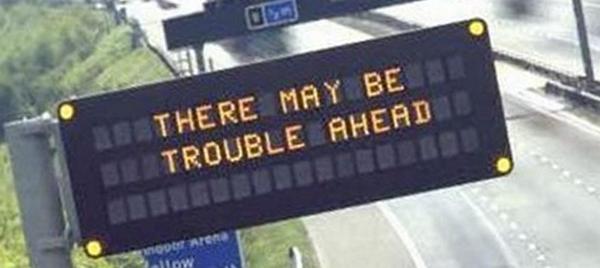
trouble-ahead

The first check I ever got from coaching basketball, I didn’t cash it. I kept it as a souvenir. But the second, third, and every other check went straight into my bank account.

That’s a nice story, but imagine if I told you that first check was for a million dollars. If you came to my house and saw a check like that in a frame hanging on the wall you’d think me a fool.

God’s promises are like uncashed checks. We can draw upon them or we can hang them on our walls and look at them. Here’s an example:

God is just: He will pay back trouble to those who trouble you and give relief to you who are troubled, and to us as well. This will happen when the Lord Jesus is revealed from heaven in blazing fire with his powerful angels. (2 Thessalonians 1:6-7)

God will give relief to you who are troubled. Swell! When?

Some read these words and conclude that we will get relief when Jesus comes or when we die. “Life is hard but all will be well in the sweet by and by.” In other words, death is a savior and this is an uncashed check.

Others read these words and see a lesson from history. “The Thessalonians got trouble from religious Jews, but relief came when the Romans destroyed the Jewish temple in AD70.” So God brings relief by orchestrating the death of a million Jews? Hmm, what’s wrong with that picture?

God will give you relief

Paul is promising relief to the Thessalonians now, not 20 years later when Jerusalem burns or centuries later when Christ returns. But what will relief look like? If you got relief in your troubles, how would you know?

“That’s easy, my troubles would disappear.”

But that’s a promise the Bible never makes. Jesus said, “In this world you will have trouble” (John 16:33).

“God will remove the troublemakers from my life.”

Again, this is contrary to scripture. Paul got a thorn in the flesh, a tormenting messenger from Satan, and God didn’t remove the thorn. Instead he gave him grace to deal with it.

Trouble is a fact of life. Trouble may come from religious Jews or godless Romans. It could come from a bullying boss or an untrustworthy employee. It might come from a coworker or rival, but in this life you will have trouble.

Biblical relief

Blessed be the God and Father of our Lord Jesus Christ, the Father of mercies and God of all comfort, who comforts us in all our affliction so that we will be able to comfort those who are in any affliction with the comfort with which we ourselves are comforted by God. (2 Corinthians 1:3-4)

God comforts us and gives us relief in our afflictions. He does this by revealing more of Jesus to us. “Our comfort abounds through Christ” (2 Cor 1:5). Your troubles may be big, but Jesus is bigger still. When you see him, you will have relief in your troubles.

I have said these things to you, that in me you may have peace. In the world you will have tribulation. But take heart; I have overcome the world. (John 16:33, ESV)

If Christianity means anything, it means we can enjoy supernatural peace in times of trouble. We don’t need Romans to slaughter our oppressors. Nor do we need to suck it up until Judgment Day. We can have peace in our tribulation today. Jesus said so.

A case study

“God will give you relief.” The word for relief can be translated rest, as in the following verse:

For even when we came into Macedonia our flesh had no rest, but we were afflicted on every side: conflicts without, fears within. (2 Corinthians 7:5)

When Paul was in Macedonia he was severely beaten with rods in one city then hounded out of two others. How did God give Paul relief during this time of trouble?

But God, who comforts the depressed, comforted us by the coming of Titus; and not only by his coming, but also by the comfort with which he was comforted in you, as he reported to us your longing, your mourning, your zeal for me; so that I rejoiced even more. (2 Corinthians 7:6-7)

“God comforted us” when Titus arrived with a good report. It is not hard to imagine Paul leaving Macedonia downcast and depressed. He was battered, bruised and down in the dumps. Then Titus showed up and Paul was comforted.

Something about Titus’ arrival released the grace of Jesus and the result was rest for Paul’s spirit, soul and body. Trouble was still out there, but Paul was no longer troubled. Indeed, he rejoiced.

Back to Thessalonica

The Christians in Thessalonica were experiencing trouble, but Paul promised that God would give them relief. That relief would not take the form of death or Romans killing their enemies. It would be real, practical relief. But what would that relief look like?

Finally, brethren, pray for us that the word of the Lord will spread rapidly and be glorified, just as it did also with you; and that we will be rescued from perverse and evil men; for not all have faith. But the Lord is faithful, and he will strengthen and protect you from the evil one. (2 Thessalonians 3:1)

It would be great if we never had to deal with “perverse and evil men”, but Paul is wise enough to know it doesn’t always happen. Sometimes those thorns remain. Doesn’t matter. Haters gonna hate, but “the Lord is faithful.” Trouble may come but he will strengthen and protect us in our troubles.

This is not a promise to hang uncashed on your wall. This is a promise you can take to the bank.

The grace of our Lord Jesus Christ be with you all.

Un soulagement dans vos difficultés

2 Thessaloniciens 1:6

Posté le 3 novembre 2016 par Paul Ellis // 50 commentaires

à l’affût des problèmes

Le premier chèque que j’ai reçu en étant entraîneur de basket, je ne l’ai pas encaissé. Je l’ai gardé en souvenir. Mais le deuxième, le troisième, et tous les autres chèques sont allés directement sur mon compte en banque.

C’est une belle histoire, mais imaginez si je vous disais que ce premier chèque était d’un million de dollars. Si vous veniez chez moi et que vous voyiez un tel chèque dans un cadre accroché au mur, vous me prendriez pour un fou.

Les promesses de Dieu sont comme des chèques non encaissés. Nous pouvons les utiliser ou les accrocher à nos murs et les regarder. En voici un exemple :

Dieu est juste : Il remboursera le malheur à ceux qui vous troublent et soulagera ceux qui sont troublés, et nous aussi. Cela se produira lorsque le Seigneur Jésus sera révélé du ciel dans un feu ardent avec ses anges puissants. (2 Thessaloniciens 1:6-7).

Dieu vous soulagera, vous qui êtes troublés. Soulagés ! Quand ?

Certains lisent ces mots et en concluent que nous serons soulagés lorsque Jésus viendra ou lorsque nous mourrons. “La vie est dure mais tout ira bien dans la douceur d’ici peu”. En d’autres termes, la mort est un sauveur et ceci est un chèque non encaissé.

D’autres lisent ces mots et y voient une leçon de l’histoire. “Les Thessaloniciens ont eu des problèmes avec les Juifs religieux, mais le soulagement est venu quand les Romains ont détruit le temple juif en 70 après JC.” Donc Dieu apporte un soulagement en orchestrant la mort d’un million de Juifs ? Hmm, qu’est-ce qui ne va pas avec cette image ?

Dieu vous soulagera

Paul promet un soulagement aux Thessaloniciens maintenant, pas 20 ans plus tard quand Jérusalem brûlera ou des siècles plus tard quand le Christ reviendra. Mais à quoi ressemblera le soulagement ? Si tu étais soulagé de tes problèmes, comment le saurais-tu ?

“C’est facile, mes problèmes disparaîtraient.”

Mais c’est une promesse que la Bible ne fait jamais. Jésus a dit : “Dans ce monde, vous aurez des problèmes” (Jean 16:33).

“Dieu supprimera les fauteurs de troubles de ma vie.”

Là encore, c’est contraire aux Écritures. Paul a reçu une épine dans la chair, un messager tourmentant de Satan, et Dieu n’a pas retiré l’épine. Au contraire, il lui a donné la grâce de s’en occuper.

Les ennuis font partie de la vie. Les ennuis peuvent provenir de Juifs religieux ou de Romains impies. Ils peuvent provenir d’un patron tyrannique ou d’un employé indigne de confiance. Ils peuvent venir d’un collègue de travail ou d’un rival, mais dans cette vie, vous aurez des problèmes.

Le secours biblique

Béni soit le Dieu et Père de notre Seigneur Jésus-Christ, le Père des miséricordes et Dieu de toute consolation, qui nous réconforte dans toute notre affliction, afin que nous puissions réconforter ceux qui sont dans quelque affliction que ce soit, avec la consolation dont nous sommes nous-mêmes consolés par Dieu. (2 Corinthiens 1:3-4)

Dieu nous réconforte et nous soulage dans nos afflictions. Il le fait en nous révélant davantage de Jésus. “Notre réconfort abonde par le Christ” (2 Cor 1:5). Tes problèmes sont peut-être importants, mais Jésus l’est encore plus. Quand tu le verras, tu seras soulagé dans tes difficultés.

Je vous ai dit ces choses, afin qu’en moi vous ayez la paix. Dans le monde, vous aurez des tribulations. Mais prenez courage, j’ai vaincu le monde. (Jean 16:33, ESV)

Si le christianisme signifie quelque chose, cela signifie que nous pouvons jouir d’une paix surnaturelle en temps de troubles. Nous n’avons pas besoin que les Romains massacrent nos oppresseurs. Nous n’avons pas non plus besoin de faire de la lèche jusqu’au jour du Jugement dernier. Nous pouvons avoir la paix dans nos tribulations aujourd’hui. Jésus l’a dit.

Une étude de cas

“Dieu vous soulagera”. Le mot pour soulagement peut être traduit par repos, comme dans le verset suivant :

Car même lorsque nous sommes arrivés en Macédoine, notre chair n’avait pas de repos, mais nous étions affligés de toutes parts : conflits au dehors, craintes au dedans. (2 Corinthiens 7:5)

Lorsque Paul était en Macédoine, il a été sévèrement battu à coups de verges dans une ville et chassé de deux autres. Comment Dieu a-t-il soulagé Paul pendant cette période de troubles ?

Mais Dieu, qui console ceux qui sont abattus, nous a consolés par la venue de Tite ; et non seulement par sa venue, mais encore par la consolation qu’il a éprouvée en vous, en nous rapportant votre désir, votre deuil, votre zèle pour moi ; de sorte que je me suis réjoui davantage encore. (2 Corinthiens 7:6-7)

“Dieu nous a consolés” lorsque Tite est arrivé avec un bon rapport. Il n’est pas difficile d’imaginer Paul quittant la Macédoine abattu et déprimé. Il était meurtri, meurtri et déprimé. Puis Tite est arrivé et Paul a été réconforté.

Quelque chose dans l’arrivée de Tite a libéré la grâce de Jésus et le résultat a été le repos de l’esprit, de l’âme et du corps de Paul. Les problèmes sont toujours là, mais Paul n’est plus troublé. En fait, il se réjouit.

Retour à Thessalonique

Les chrétiens de Thessalonique connaissent des difficultés, mais Paul promet que Dieu les soulagera. Ce soulagement ne prendrait pas la forme d’une mort ou de Romains tuant leurs ennemis. Ce serait un soulagement réel et pratique. Mais à quoi ressemblerait ce soulagement ?

Enfin, frères, priez pour nous afin que la parole du Seigneur se répande rapidement et soit glorifiée, comme elle l’a été pour vous, et que nous soyons sauvés des hommes pervers et mauvais, car tous n’ont pas la foi. Mais le Seigneur est fidèle, et il vous fortifiera et vous protégera contre le malin. (2 Thessaloniciens 3:1)

Ce serait formidable si nous n’avions jamais affaire à des “hommes pervers et méchants”, mais Paul est assez sage pour savoir que cela n’arrive pas toujours. Parfois, ces épines restent. Cela n’a pas d’importance. Les haineux haïront, mais “le Seigneur est fidèle”. Les ennuis peuvent arriver, mais il nous fortifiera et nous protégera dans nos difficultés.

Ce n’est pas une promesse à accrocher sur votre mur. C’est une promesse que vous pouvez emmener à la banque.

La grâce de notre Seigneur Jésus-Christ soit avec vous tous.

THE CURE FOR GUILT

The Cure for Guilt

Posted on July 31, 2013 by Paul Ellis // 57 Comments

The other day I lost my temper.

It was only for a moment, but it was enough. Damage was done.

Later I felt sick about what I did and took steps to make amends. This is how guilt works. Guilt is a signal that our lives have been disrupted by sin. Guilt is a sign that a hurt needs to be healed.

But there’s a problem.

Ever since sin was given free leash in the Garden of Eden, guilt has gotten out of control.

We feel guilty for things we did and didn’t do. When we do well we feel guilty for not doing better. And when we fail, guilt pounds us.

Worst of all, guilt never goes away. Like an alarm that won’t switch off, guilt is the soundtrack to our lives.

Burdened by guilt we turn to religion in the hope of finding relief. Instead, we encounter the condemning ministry of the law. Religion tells us we’re even worse than we thought. We have not only let down friends and family, we’ve let down God.

With religious zeal we try to make the guilt go away but it’s no use. We keep nine laws but break the tenth. We’re good six days but stumble on the seventh.

No matter how hard we work, the guilt pile just keeps growing.

Guilt is a killer

I am convinced that guilt and condemnation are at the root of many of our health problems. Guilt breaks us. Our emotional bones were made soft for love, not hard for guilt-bearing.

I was a pastor for ten years and I can tell you that a lot of counseling done in the church is guilt-based. Pastors spend the much of their time helping others manage their guilt. Which is ironic since pastors are the ones making folk feel guilty in the first place.

(Don’t feel condemned my preaching brothers, but stop preaching mixture. It’s making others sick and sucking the life out of you.)

If only there was a cure for guilt. There is!

Let us draw near to God with a sincere heart in full assurance of faith, having our hearts sprinkled to cleanse us from a guilty conscience and having our bodies washed with pure water. (Heb 10:22)

Since the cross is God’s cure for your sin, it is also the cure for your guilt. Do you battle with guilt? Then look to the cross. Your sins are there.

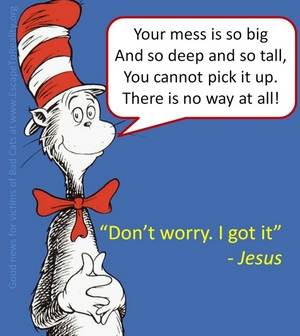
Cat_in_hat

Justified = not guilty

To be guilty means to be held responsible for your sin. I’m all for taking responsibility for our mistakes but when it comes to sin all the responsibility in the world isn’t going to clear your sinful name. Your sin burden is simply too great.

On the cross, Jesus took responsibility for all your sin. He literally became sin and in him all sin was condemned (Rom 8:3). The gospel declares your sin problem has met its match in Jesus Christ.

Do you know what this means?

Under law, the best of us is justly charged guilty of sin. But under grace, the worst of us is charged righteous on account of Jesus (2 Cor 5:21).

This is one of the most profound revelations of grace yet many miss it. They say, “I know I am righteous and justified but I feel guilty.”

Connect the dots. If you are righteous and justified, you cannot be guilty.

“But, Paul, I feel guilty.”

That feeling is a symptom of unbelief in the goodness of God. Don’t let that feeling run around like a rat in the attic. Deal with it. Take that feeling and make it bow to the obedience of Christ.

He has forgiven you all your sins: Christ has utterly wiped out the damning evidence of broken laws and commandments which always hung over our heads, and has completely annulled it by nailing it over his own head on the cross. (Col 2:13-14, Phillips)

Under the law, there was a long list of charges against you. “You’re a lazy Christian, a lousy parent, and a poor excuse for a human being.”

Want to know what Jesus thinks of those charges against you? He nailed them to the cross. Don’t agree with those charges. Agree with Jesus!

Guilt from the Bible?

Many Christians battle with guilt because they’ve not fully grasped the finished work of the cross. They’re filtering life through the obsolete lens of the rule-keeping covenant.

Guilt is what you get when you are constantly told you are not doing enough, giving enough, praying enough. Since this mixed-up message is the predominant theme of graceless Christianity, is it any wonder guilt has become an epidemic?

Much of what gets done in the name of the Lord is motivated by guilt.

“Jesus died for you, what will you do for him?” Crumbs. I’d better roll up my sleeves and get busy.

“People are going to hell because you are not evangelizing. Sign up for our outreach and make your guilt go away.”

It’s manipulation of the worst kind and it is about as far from Jesus as you can get.

To make matters worse, many of our Bibles were translated by the guilt-conscious. Do you know how many times the words “guilt” and “guilty” appear in the New Testament? The answer depends on which Bible you’re reading:

2    Young’s Literal Translation

3    American Standard Version

6    King James Version

13    Message Bible

14    NASB and ESV

16    New International Version

34    Good News

45    Amplified

These numbers reveal how much guilt is in your diet. For instance, if you read the NIV you’re getting nearly triple the guilt that you’d get from the KJV. If you read the Amplified, you’re getting nearly eight times as much guilt.

Some Bibles should come with a health-warning: “Contains added guilt and traces of religious nuts.”

I looked up all the Greek words for “guilt” and “guilty” in Vines and found there are very few. In fact, Vines spends more time listing words that have been incorrectly translated as guilty.

I won’t bore you with the details of my study but here’s an interesting question: How many verses say that Christians are guilty?

Answer: Zero.

Nada.

Not one.

So the next time you hear a message that makes you feel guilty, you can reject it as unbiblical.

When I lost my temper the other day, I apologized and quickly made amends. There was nothing religious about that. It’s just love. It’s common sense.

But dead religion would’ve said, “Paul, you’ve not done enough. Every sin is a sin against God. On account of your sin you are now out of fellowship with him. You broke it, so you fix it. Examine your heart, confess your sin before God and he will wipe your slate clean.”

Such a message appeals to our religious flesh but it’s an anti-Christ pile of manure.

Instead of leading you back to the one you hurt, it’ll cause you to withdraw and stare at your navel.

Instead of thanking God that in Christ you are always righteous, you’ll waste time asking him to do what he’s already done.

Instead of laying hold of the grace that empowers you to sin no more, you’ll beat yourself up like a religious flagellant.

(If you think I’m against confession, I’m not. And if you want to write in and tell me about 1 John 1:9, read this.)

The new language of grace

Guilt may be the lingua franca of dead religion but it wasn’t a language the New Testament writers spoke. It’s certainly not a language they speak in heaven.

If you speak the faithless language of guilt, I suggest you learn the new language of God’s love and grace.

When you have seen the finished work of the cross, it changes the way you view your mistakes and failings. You no longer dwell on your weaknesses – there’s no power there. Instead, you fix your eyes on Jesus who was “delivered over to death for our sins and was raised to life for our justification” (Rom 4:25).

When you sin, the accuser will seek to bring a case against you. And in the eyes of the flawless law, he has a good case!

However, the issue is not whether you have stumbled but whether Jesus has been raised. And if he has been raised then you have been justified. Case dismissed.

It takes no faith to look at your mistakes and condemn yourself. It takes faith to look at Christ and say, “Because of you, I have been judged not guilty for all time. Thank you, Jesus!”