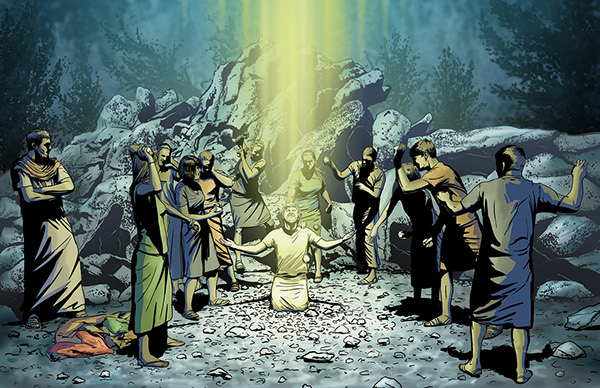
Persecution Sowing the Seed Abroad

Act 8:4

Therefore they that were scattered abroad  went every where preaching the word.

The word « scattered aboad » is the word used three times in acts meaning the believers were « sown or seeded all around »  THey were driven by persecution, but they continues to plant the seed of the word of God where ever they went. You could not stop the movement of Gods word.

It was also used in Acts 11. The word of the Gospel had been given to the Italian Gentiles in the household of Cornelius in Acts 10. This was an world shaking event for the Jews to overcome their myoptic vision limited by their misunderstanding and national pride.

Even in Acts they still were preaching to only Jews in all the foriegn lands. Jesus in Acts 1 :8 told them to go to all the uttremost parts of the earth.  But they stayed in Jerusalem until they were chased out.  Now the seed of the word had to go to the uttermost parts of the earth and do its work.

Preaching the word. The early Christians preached the word of God (Acts 8:14) which is to say the preached the gospel of Jesus. If they had preached the old covenant law, they would not have been persecuted by the religious leaders.

Act 8:5

Then Philip went down to the city of Samaria, and preached Christ unto them.

Here Philip was heralding and broadcasting Christ. Not the law but Christ. Preaching and telling the good news of the Word of God was the same as heralding and preaching Christ, because all of Gods word was in Christ our risen savior!

Act 8:6

And the people with one accord gave heed unto those things which Philip spake, hearing and seeing the miracles which he did.

And just as Jesus told the disciples that those who preached for Him would have miracles to establish their words.  Philip saw the might power of God because he preached!

Mar 16:20

And they went forth, and preached every where, the Lord working with them, and confirming the word with signs following. Amen.

When people are healed then there is great Joy

Act 8:7

For unclean spirits, crying with loud voice, came out of many that were possessed with them: and many taken with palsies, and that were lame, were healed.

The word of God spread and was sown with power, healing and demonstration of the Holy Spirit

Act 8:8

And there was great joy in that city.

Samaria had great joy becaue they were set free from the devils work, demons and sickness left!

 Act 8:9

But there was a certain man, called Simon, which beforetime in the same city used sorcery, and bewitched the people of Samaria, giving out that himself was some great one:

Here is an example of a man using another source of spirit power, He was using demons and not the power of God! This is called « sorcery » and He « bewitched people »

WHen GOd works the glory is always given to God our Father, but when miracles are performed by sorcery and people are hypnotized, the worship goes to some man instead of God and Jesus, the only Man.

The word for bewitched is existemi and it means to be « knocked off your feet » « Amazed » « shocked » even « drive on out of their normal mind »   Like hypnotism. It was the way Issac felt when he « trembled » at realizing Jacob tricked him for the birthright. OR how Eli the prophet in 1 Samuel felt when he two sons were killed.  Or when Jesus performed miracles and healed people were hypnotized,  dumbfounded or shocked

But here it there was a nother power at work stealing the glory from God and placing it on a man, named Simon. He was hypnotizing people for his own gain though « magic »

This word sorcery means magic. In the Greek sorcery was « Mageia » and it was only used here in Acts 8 as a unique usage.  It is the work or action of « Magos » which were a class of Egyptian, then Babylonian and then Persian « wise men » who really were only fools that misled and gained self glory by facinating the people with their occult knowlegde and power given by Satan.

We remember that they could not compare their tricks with the power of God when Moses stood them down in Egypt. Also in the time of Daniel the power of God in Daniel put them in a bad light.

Dan 1:20

And in all matters of wisdom and understanding, that the king enquired of them, he found them ten times better than all the magicians H2748 and astrologers that were in all his realm.

Today it is technology and the wonders of science and medicine that get the glory. Now Covid has been bewitching the population into a global hypnotism and  men like Fauci are getting the glory.  The power of the Holy spirit is so much greater.

Dan 5:7

The king cried aloud to bring in the astrologers, the Chaldeans, and the soothsayers. And the king spake, and said to the wise men of Babylon, Whosoever shall read this writing, and shew me the interpretation thereof, shall be clothed with scarlet, and have a chain of gold about his neck, and shall be the third ruler in the kingdom.

This magic or sorcery was the occult fools wisdom that empowered systems like Babylon, until Gods servant came to town!

Dan 5:11

There is a man in thy kingdom, in whom is the spirit of the holy gods; and in the days of thy father light and understanding and wisdom, like the wisdom of the gods, was found in him;

When Daniel discerned the dreams and was able to give interpretation he did not take the glory but gave it back to God! HE was not looking for anything, because Daniel knew His God gave him all he needed.

Dan 5:17

Then Daniel answered and said before the king, Let thy gifts be to thyself, and give thy rewards to another; yet I will read the writing unto the king, and make known to him the interpretation.

This is the difference of the two powers. Both God and the devil are spiritual powers. But God always wins. The dream was interpreted by the servant of God Daniel and the astrologer, soothsayers, magicians could do nothing. Why? Because they depended on demons for their power and in God’s presence they had to shut up.

So it was here in Acts as Philip as a son of God with the full power of Christ could show down any magician or sorcer

And what is so great about God, is that He is love and can even change the heart of men who were deeply involved with all of Satans tricks and false signs.

Act 8:10

To whom they all gave heed, from the least to the greatest, saying, This man is the great power of God.

Simon was controling and profiting from all these fools that thought he was the great power of God. He must have used some powerful signs to do that. Yet the greater power of God and Love won even Simon!

Act 8:11  And to him they had regard, because that of long time he had bewitched them with sorceries.

I am sure it took much humility for Simon to admit he was wrong and then even  lose his coveted position. But he believed! He had to listen to the point he trusted the Gospel and then was forever changed by the inward change of being sealed.

However when any person first believes he is saved. At least he has eternal life dwelling within. But that doesnt mean his old habits and his mind change. It begins a journey of growth in grace and salvation of his mind and body.  God begins on the inside not the outside to save us.

Act 8:13

Then Simon himself believed also: and when he was baptized, he continued with Philip, and wondered, beholding the miracles and signs which were done.

Acts 8:13

Even Simon himself believed; and after being baptized, he continued on with Philip, and as he observed signs and great miracles taking place, he was constantly amazed.

  • Simon himself believed. The man who operated in counterfeit signs and wonders marvelled when he saw the real thing. He believed Philip’s message and was water baptized, but he was not filled with the Holy Spirit (see Acts 8:16) and his subsequent actions show he did not have a good grasp of the grace of God (see Acts 8:18). He received the holy spirit when he trusted the Gospel and was sealed. Eph 1 :13 but and he was Baptised in the name of Jesus. It was not necessary that he was baptised in water. That is an outward ritual still. He may have or may have not been dunked in a tub. But his soul was cleaned by his trust and Christ entered to clean house.

     Yet Jesus had a lot of work to do inside his attic and Simon was begining on the road to be conformed to Christ. 

    We can see that there are two words and two ways we receive Christ’s spirit

First we dechomai or receive it passively as Simon did but did not immediatle show results. The seed of eternal life is planted but it needs different amounts of time to grow through the old mans concrete. It will but it takes time and when it is showing we call this the second kind of receiving «Lambano » which is active receiving so it is shown in the outward action. This is when it is demostrated or manifest.  Simon was in a bad way and it took time.

PAUL LE FLIC

PAUL LE COP
Il ne faisait qu’appliquer la loi.
6 minutes de lecture
EN BAS
Paul était un pharisien juif (Philippiens 3:6-5). Il se considérait comme extrêmement pieux (Actes 26:5). Il était très instruit et excellait dans sa connaissance de la loi de Moïse (Galates 1:14). Son zèle pour la Loi le poussait à l’appliquer au mieux de ses connaissances. Aussi, lorsqu’une secte étrange et blasphématoire du judaïsme a commencé à gagner en popularité de son vivant, il a entrepris de faire respecter la loi.

La secte blasphématoire du judaïsme qui a commencé à exploser en popularité s’appelait “la Voie” (appelée plus tard le christianisme) – suivre les enseignements et l’exemple de Jésus. Les Juifs considéraient les affirmations de Jésus comme un blasphème, et ils l’ont mis à mort pour cela (Matthieu 26:65-66). Il est important de se rappeler que les Juifs étaient totalement justifiés par leur loi en tuant Jésus. Leur loi leur ordonne de tuer les blasphémateurs.

Quiconque blasphème le nom du Seigneur doit être mis à mort. L’assemblée entière doit le lapider. Qu’ils soient étrangers ou natifs du pays, s’ils blasphèment le Nom, ils doivent être mis à mort.
Lévitique 24:16

Comme tout bon Juif du premier siècle, Paul ne se souciait pas seulement de suivre la loi de Moïse, mais aussi de veiller à ce que son entourage le fasse aussi. Ainsi, Paul s’est mobilisé pour voyager et rechercher la justice selon la loi. Il était à la fois le gardien et l’exécuteur de la loi. Paul était, à toutes fins utiles, un officier de police pour sa nation.

LA MORT DE TOUS LES CHRÉTIENS
La première mention de Paul dans la Bible se trouve dans les Actes des Apôtres (Actes 7), où il est un témoin approbateur de la lapidation d’un chrétien nommé Étienne. Étienne avait affirmé que la présence de Dieu ne résidait pas dans le Temple, ce qui avait mis les autorités juives dans une colère noire. Les membres du Sanhédrin (dont Paul était censé faire partie) ont traîné Étienne hors de la ville et l’ont lapidé à mort. Au moment de mourir, il tomba à genoux et s’écria : “Seigneur, ne leur reproche pas ce péché.” (Actes 7:55-60). Étienne a démontré le cœur de Jésus, l’amour de l’ennemi, même dans les derniers moments de sa vie.

La loi ordonnait que tous les blasphémateurs soient mis à mort. Ce commandement a justifié la mise à mort de Jésus, et il a également justifié la mise à mort de ses disciples. Paul savait que la loi devait être respectée et il a donc approuvé la mise à mort d’Étienne (Actes 8:1). Paul était un homme de loi et d’ordre. Paul est allé voir le chef du gouvernement de sa nation, le Grand Prêtre, et a demandé l’autorisation légale d’aller tuer et emprisonner des chrétiens (Actes 9:1-2). Cette autorité lui a été accordée, et il a lancé une campagne de persécution contre tous les adeptes de la Voie (Actes 8:2-3). L’autorité donnait à Paul le droit légal et moral de capturer et de tuer des chrétiens – et il était zélé à ce sujet.

Paul dit de lui-même que “pour ce qui est du zèle, il persécute l’Église ; [et] pour ce qui est de la justice fondée sur la loi, il est sans défaut”. (Philippiens 3:6). Le livre des Actes des Apôtres dit que Paul “se mit à détruire l’Église. Allant de maison en maison, il arrachait hommes et femmes et les mettait en prison.” (Actes 8:3). Paul a dit : “Car vous avez entendu parler de ma manière de vivre antérieure dans le judaïsme, de l’intensité avec laquelle j’ai persécuté l’église de Dieu et essayé de la détruire.” (Galates 1:13). Avant de rencontrer Jésus, Paul s’était donné pour mission d’éradiquer ce groupe croissant de transgresseurs de la loi, connus sous le nom de disciples de “la Voie”.

L’ARRIVÉE DE JÉSUS
Paul était un Juif zélé qui connaissait parfaitement la loi de Moïse et la suivait à la lettre (Galates 1:14). Un jour, alors qu’il était en route pour rassembler des chrétiens, il fut renversé par une lumière aveuglante venant du ciel. Jésus dit à Paul : “Pourquoi me persécutes-tu ?” (Actes 9:3-5). À partir de ce moment, Paul a vu Dieu et toute l’Écriture d’une manière différente. Mais de quelle manière ?

Tout d’abord, Paul ne se considère plus comme étant sous la loi de Moïse (1 Corinthiens 9:20). Selon Paul, Jésus est la fin de la Loi (Romains 10:4 ESV). Il affirme que “si vous êtes conduits par l’Esprit, vous n’êtes pas sous la loi”. (Galates 5:18). Selon Paul, au lieu d’être sous la loi, nous sommes sous la grâce (Romains 6:14). Il dit que “la lettre [de la loi] tue, mais l’Esprit donne la vie.” (2 Corinthiens 3:6). Paul avait l’habitude d’utiliser la lettre de la loi pour tuer les chrétiens, mais après avoir rencontré Jésus, tout a changé. Paul dit que nous sommes “morts à la loi” et “qu’en mourant à ce qui nous liait, nous avons été libérés de la loi, afin de servir à la manière nouvelle de l’Esprit, et non à la manière ancienne du code écrit”. (Romains 7:4, 6). La loi qui exigeait que les chrétiens soient tués n’avait plus d’emprise sur Paul ; il en a été libéré.

Non seulement Paul a été libéré de la loi, mais il tenait absolument à ce que tout le monde fasse également l’expérience de cette liberté. Il est allé jusqu’à qualifier de “chiens” et de “malfaiteurs” ceux qui tentent de maintenir l’adhésion à la Loi (Philippiens 3:3). Il a dit que quiconque essaie d’enseigner que quiconque devrait suivre l’Ancien Testament prêche “un autre évangile – qui n’est en fait pas du tout un évangile” et qu’ils “essaient de pervertir l’évangile du Christ”. (Galates 1:6-7). Paul était dégoûté que son adhésion à la loi de Moïse l’amène à persécuter les chrétiens.

DÉPOSER L’ÉPÉE
Renier Jésus, c’est renier le Père, et quiconque renie Jésus sera renié devant le Père (1 Jean 2:23, Matthieu 10:33 ESV). Nier Dieu est évidemment un péché et un blasphème. Sous la Loi, le blasphème est puni de mort. Le changement radical qui s’est produit dans la compréhension de Paul ne concernait pas seulement qui avait raison et qui avait tort. Il ne s’agissait pas seulement de savoir qui commettait réellement le blasphème. Si c’était le cas, Paul aurait simplement commencé à tuer des Juifs au lieu de chrétiens. Non, au contraire, le changement radical qui s’est produit dans la compréhension de Paul a fait qu’il n’a plus jamais fait usage d’une once de violence jusqu’à la fin de sa vie.

La première chose que Paul a faite lorsqu’il a rencontré Jésus a été de poser son épée. Dans l’esprit de Paul, la violence n’était plus justifiée pour aucune raison. Paul avait rencontré le Prince de la paix, un Christ qui refusait la violence à tout bout de champ, même sous la menace de la mort. Pour Paul, la Bible n’était plus une excuse valable pour recourir à la violence, comme cela avait été le cas pendant des milliers d’années. Pour Paul, quiconque lisait l’Ancien Testament sans Jésus comme guide le faisait avec un esprit obtus (2 Corinthiens 3:14). Et la nouvelle éthique de Paul allait être mise à l’épreuve presque immédiatement. Tout comme Paul avait tenté de tuer des chrétiens, les Juifs se sont retournés contre Paul et ont cherché à le tuer (Actes 9:23, 29 ; 23:12). Mais comme son premier assassinat, Étienne, Paul ne s’est pas battu et ne s’est pas défendu par la violence.

Suivez mon exemple, comme je suis l’exemple du Christ.
1 Corinthiens 11:1

Paul a cessé d’agir comme un policier. Il a cessé de faire respecter la loi et a commencé à aimer les gens. Il était maintenant sous la “loi du Christ”, une loi d’amour qui n’a pas besoin d’être appliquée. Alors qu’autrefois Paul exerçait son autorité en recourant à la violence coercitive, il en est venu à considérer cela comme un péché contre Dieu. Le système de “pouvoir sur les autres” est intrinsèquement mauvais, c’est pourquoi Jésus a dit : “Vous savez que les chefs des nations les dominent, et que leurs hauts fonctionnaires exercent sur eux leur autorité. Il n’en est pas de même pour vous.” (Matthieu 20:25-26). Avoir autorité sur d’autres humains est un affront à Jésus, qui détient lui-même toute autorité. Aussi Paul a-t-il déposé son épée et pris sa croix (Matthieu 16:24). Nous devrions suivre son exemple comme il a suivi l’exemple de Jésus.

LA DIFFUSION DE L’ÉVANGILE


Actes 8:1
Saul était tout à fait d’accord pour le mettre à mort.
En ce jour-là, une grande persécution commença contre l’Église de Jérusalem, et ils furent tous dispersés dans les régions de la Judée et de la Samarie, à l’exception des apôtres.
(a) Saul ; voir l’entrée pour Actes 7:58.
(b) Ils étaient tous dispersés. Jésus a dit à ses disciples d’aller dans le monde après avoir reçu la puissance d’en haut, c’est-à-dire après la Pentecôte (Actes 1:8). Mais la plupart d’entre eux n’ont pas quitté Jérusalem jusqu’à ce que la persécution les en chasse.
” Mieux vaut obéir à Dieu. S’accrocher à leur orgueil national ou culturel ne servait à rien. S’accrocher à leur temple religieux et à leurs sacrifices ne servait à rien. “
Actes 8:3
Mais Saul se mit à ravager l’église, entrant dans les maisons les unes après les autres, et arrachant hommes et femmes, il les mettait en prison.
(a) Saul ; voir l’entrée pour Actes 7:58.
(b) Traîner des hommes et des femmes. Saul était un persécuteur égalitaire responsable de l’arrestation et de l’exécution d’hommes et de femmes chrétiens.
Pourquoi tuer des femmes qui, jusqu’à la croix, étaient passées largement inaperçues aux yeux des autorités ? Après la Pentecôte, les femmes ont pris le relais, et celles qui étaient devenues partenaires dans le ministère sont devenues partenaires dans le martyre. Hommes et femmes ont été remplis de l’esprit, ont parlé en langues et ont proclamé la parole de Dieu avec audace (voir Actes 2:17-18, 4:31).
Actes 4:31 NET
Après avoir prié, le lieu où ils étaient assemblés fut ébranlé. Tous furent remplis de l’Esprit Saint et se mirent à annoncer courageusement la parole de Dieu.
Jean Chrysostome, l’archevêque de Constantinople, a dit ceci au sujet des femmes de l’Église primitive : “Les femmes de ce temps-là étaient plus fougueuses que des lions, partageant avec les Apôtres leurs travaux pour l’amour de l’Évangile. C’est ainsi qu’elles voyageaient avec eux, et qu’elles accomplissaient aussi tous les autres ministères” (source : “Homélie 31 sur les Romains”).

(c) La prison. À l’époque biblique, les gens n’allaient pas en prison pour des années d’incarcération mais pour une courte période afin d’attendre leur procès. Après leur procès, ils étaient soit punis, soit libérés. Saul a arrêté des chrétiens dans l’espoir qu’ils seraient exécutés (voir Actes 9:1, 22:4).

Actes 8:4
Ceux qui avaient été dispersés allaient donc prêcher la parole.

(a) Ceux qui avaient été dispersés. Jésus avait dit à ses disciples d’aller dans le monde entier après avoir reçu le Saint-Esprit (Actes 1:4, 8). La Pentecôte était passée, mais les chrétiens de Jérusalem étaient restés sur place. Il a fallu la pression de la persécution pour les faire sortir de chez eux.
Actes 8:4
Ceux qui avaient été dispersés allaient donc prêcher la parole.

(a) Ceux qui avaient été dispersés. Jésus avait dit à ses disciples d’aller dans le monde entier après avoir reçu le Saint-Esprit (Actes 1:4, 8). La Pentecôte était passée, mais les chrétiens de Jérusalem étaient restés sur place. Il a fallu la pression de la persécution pour les faire sortir de chez eux.
Actes 1:4
Pendant qu’il était avec eux, il déclara : “Ne quittez pas Jérusalem, mais attendez-y ce que mon Père a promis, et dont vous avez entendu parler par moi”.
Actes 1:8
Mais vous recevrez une puissance, lorsque le Saint-Esprit sera descendu sur vous, et vous serez mes témoins à Jérusalem, dans toute la Judée et la Samarie, et jusqu’aux extrémités de la terre.”
(b) La prédication de la parole. Les premiers chrétiens ont prêché la parole de Dieu (Actes 8:14), c’est-à-dire qu’ils ont prêché l’évangile de Jésus. S’ils avaient prêché la loi de l’ancienne alliance, ils n’auraient pas été persécutés par les chefs religieux. Jésus était la Parole de Dieu.
Actes 8:14
Les apôtres de Jérusalem, ayant appris que la Samarie avait accepté la parole de Dieu, y envoyèrent Pierre et Jean.
Actes 8:12
Mais lorsqu’ils eurent cru Philippe annonçant la bonne nouvelle du royaume de Dieu et du nom de Jésus-Christ, ils se firent baptiser, hommes et femmes confondus.
Certains disent qu’ils ont été baptisés avec de l’eau. D’autres disent qu’ils ont été baptisés avec le feu du Saint-Esprit. Certains disent les deux. Mais je dis que l’importance était d’être baptisé au nom de Jésus. Cela signifie que tout ce qu’il a accompli, et dans Actes 1, c’était le don du Saint-Esprit qui se déversait sur tous ceux qui entendaient.

Actes 8:13
Simon lui-même crut ; et après avoir été baptisé, il continua avec Philippe, et comme il observait les signes et les grands miracles qui se produisaient, il était constamment étonné.

(a) Simon lui-même a cru. L’homme qui opérait des signes et des prodiges contrefaits s’émerveillait quand il voyait la vraie chose. Il a cru le message de Philippe et a été baptisé dans l’eau, mais il n’a pas été rempli du Saint-Esprit (voir Actes 8:16) et ses actions ultérieures montrent qu’il n’a pas bien saisi la grâce de Dieu (voir Actes 8:18).

b) Signes et grands miracles. L’évangile du royaume est un évangile de démonstration (Matthieu 4:23). Lorsque nous prêchons la bonne nouvelle, le Saint-Esprit confirme la parole par des signes surnaturels (Marc 16:20).

Marc 16:20
Ils sortirent et proclamèrent partout, tandis que le Seigneur travaillait avec eux et confirmait la parole par les signes qui l’accompagnaient].

Spreading the Gospel

Acts 8:1

Saul was in hearty agreement with putting him to death.
And on that day a great persecution began against the church in Jerusalem, and they were all scattered throughout the regions of Judea and Samaria, except the apostles.

(a) Saul; see entry for Acts 7:58.

(b) They were all scattered. Jesus told his followers to go to the world after they received power from on high, that is, after Pentecost (Acts 1:8). But most of them didn’t leave Jerusalem until persecution drove them out.

« Better to obey God. Hanging on to their nationial or cultural pride did nothing. Hanging onto their relgious temple and sacrifices did nothing. »

Acts 8:3

But Saul began ravaging the church, entering house after house, and dragging off men and women, he would put them in prison.

(a) Saul; see entry for Acts 7:58.

(b) Dragging off men and women. Saul was an equal-opportunities persecutor responsible for the arrest and execution of Christian men and women.

Why kill women who as recently as the cross had gone largely unnoticed by the authorities? After Pentecost, women stepped up, and those who became partners in ministry became partners in martyrdom. Men and women both were filled with the spirit, spoke in tongues, and proclaimed the word of God boldly (see Acts 2:17-18, 4:31).

Act 4:31 NET

When they had prayed, the place where they were assembled together was shaken, and they were all filled with the Holy Spirit and began to speak the word of God courageously.

John Chrysostom, the Archbishop of Constantinople, said this about the women of the early church: “The women of those days were more spirited than lions, sharing with the Apostles their labors for the Gospel’s sake. In this way they went travelling with them, and also performed all other ministries” (source: “Homily 31 on Romans”).

(c) Prison. In Biblical times, people did not go to prison for years of incarceration but for a short period to await trial. After their trial they were either punished or released. Saul arrested Christians in the expectation that they would be executed (see Acts 9:1, 22:4).

Acts 8:4

Therefore, those who had been scattered went about preaching the word.

(a) Those who had been scattered. Jesus had told his followers to go into all the world after they had received the Holy Spirit (Acts 1:4, 8). Pentecost had come and gone but the Jerusalem Christians stayed put. It took the pressure of persecution to get them out the door.

Acts 8:4

Therefore, those who had been scattered went about preaching the word.

  • Those who had been scattered. Jesus had told his followers to go into all the world after they had received the Holy Spirit (Acts 1:4, 8). Pentecost had come and gone but the Jerusalem Christians stayed put. It took the pressure of persecution to get them out the door.

Act 1:4

While he was with them, he declared, “Do not leave Jerusalem, but wait there for what my Father promised, which you heard about from me .

Act 1:8

But you will receive power when the Holy Spirit has come upon you, and you will be my witnesses in Jerusalem, and in all Judea and Samaria, and to the farthest parts of the earth.”

  • Preaching the word. The early Christians preached the word of God (Acts 8:14) which is to say the preached the gospel of Jesus. If they had preached the old covenant law, they would not have been persecuted by the religious leaders. Jesus was the Word of God.

Act 8:14

Now when the apostles in Jerusalem heard that Samaria had accepted the word of God, they sent Peter and John to them.

Acts 8:12

But when they believed Philip preaching the good news about the kingdom of God and the name of Jesus Christ, they were being baptized, men and women alike.

Some they were baptised with water. Somes say they were baptised with the fire of the holy spirit. Some say both. But I say the importance was being baptised in the name of Jesus. Meaning evey thing He accomplished, and in Acts 1 it was the gift of the holy spirit that poured onto everyone that heard.

Acts 8:13

Even Simon himself believed; and after being baptized, he continued on with Philip, and as he observed signs and great miracles taking place, he was constantly amazed.

(a) Simon himself believed. The man who operated in counterfeit signs and wonders marvelled when he saw the real thing. He believed Philip’s message and was water baptized, but he was not filled with the Holy Spirit (see Acts 8:16) and his subsequent actions show he did not have a good grasp of the grace of God (see Acts 8:18).

  • Signs and great miracles. The gospel of the kingdom is a show and tell gospel (Matt 4:23). When we preach the good news, the Holy Spirit confirms the word with supernatural signs (Mark 16:20).


Mar 16:20

They went out and proclaimed everywhere, while the Lord worked with them and confirmed the word through the accompanying signs.]]

STEPHEN LE MARTYR

Actes 7:51

“Vous, les hommes au cou raide, incirconcis de cœur et d’oreilles, vous résistez toujours au Saint-Esprit ; vous faites comme vos pères.

Vous résistez toujours au Saint-Esprit. Dans la nouvelle alliance, la foi est décrite comme un repos (Rom. 4:5, Heb. 4:3), tandis que l’incrédulité est décrite en termes d’actions et de verbes.

Rom 4:5 KJV

Mais à celui qui ne travaille pas, mais qui croit en celui qui justifie l’impie, sa foi est comptée pour justice.

Héb 4, 3 KJV

Car nous qui avons cru, nous entrons dans le repos, comme il l’a dit : Comme je l’ai juré dans ma colère, s’ils entrent dans mon repos ; bien que les œuvres aient été achevées dès la fondation du monde.

L’incrédulité est une œuvre morte. L’incrédulité, c’est résister au Saint-Esprit et s’accrocher à des idoles sans valeur (Actes 7:51, 14:15). L’incrédulité, c’est rejeter Jésus (Jean 3:36) et renier le Seigneur (Jude 1:4). C’est repousser la parole de Dieu et se juger indigne de la vie (Actes 13:46). C’est supprimer la vérité (Rom. 1:18) et prendre plaisir à la méchanceté (2 Th. 2:12). C’est se détourner (Héb. 12:25), s’égarer (2 Pi. 2:15), et fouler aux pieds le Fils de Dieu (Héb. 10:29).

Act 14:15 NASB

et disant : “Hommes, pourquoi faites-vous ces choses ? Nous aussi, nous sommes des hommes de même nature que vous, et nous vous annonçons l’Évangile, pour que vous vous convertissiez de ces choses inutiles à un Dieu vivant, qui a fait le ciel, la terre et la mer, et tout ce qui s’y trouve.

Jn 3:36 NET

Celui qui croit au Fils a la vie éternelle. Celui qui rejette le Fils ne verra pas la vie, mais la colère de Dieu demeure sur lui.

Act 13:46

Paul et Barnabas répondirent courageusement : “Il fallait d’abord vous annoncer la parole de Dieu. Puisque vous la rejetez et que vous ne vous estimez pas dignes de la vie éternelle, nous nous tournons vers les païens.

Rm 1,18

Car la colère de Dieu se révèle du ciel contre toute impiété et toute injustice des hommes qui suppriment la vérité par leur injustice,

Héb 10:29 NET

Quel plus grand châtiment pensez-vous que mérite cette personne qui méprise le Fils de Dieu, qui profane le sang de l’alliance qui l’a rendu saint, et qui insulte l’Esprit de grâce ?

________________________________________

Actes 7:52 KJV

“Lequel des prophètes vos pères n’ont-ils pas persécuté ? Ils ont tué ceux qui avaient annoncé la venue du Juste, dont vous êtes maintenant devenus les traîtres et les meurtriers ;

Le Juste. Jésus-Christ est le Juste et le Rameau vertueux dont parlent les prophètes (Is. 24:16, 53:11, Jer. 23:5, 33:15). Tout comme Jésus est la Parole faite chair, la Vérité vivante et la personnification de la grâce du Père (Jean 1:14, 14:6), il est l’incarnation de la justice de Dieu.

Es 53,11

Après avoir souffert, il réfléchira à son œuvre, il sera satisfait quand il comprendra ce qu’il a fait. “Mon serviteur acquittera beaucoup de gens, car il a porté leurs péchés.

Jn 14,6

Jésus répondit : “Je suis le chemin, la vérité et la vie. Personne ne vient au Père que par moi.

Mais ces hommes rejettent le seul chemin vers le Dieu qu’ils disaient servir.

Act 7:54 KJV

Quand ils entendirent ces choses, ils devinrent furieux et grincèrent des dents contre lui.

Act 7:55

Mais Étienne, rempli de l’Esprit Saint, regarda attentivement vers le ciel et vit la gloire de Dieu, et Jésus debout à la droite de Dieu.

Étienne était rempli de l’Esprit Saint et d’amour pour ses oppresseurs, y compris Saul qui allait devenir le grand apôtre Paul. Le Sanhédrin, le tribunal juif chargé de statuer sur les décisions religieuses, décide de rejeter Jésus et l’Évangile. Étienne ne pouvait faire autrement que de se soumettre à l’appel de l’Esprit Saint en lui et de continuer à être un témoin ou un “martyr”, même jusqu’à la fin de sa vie.

Dieu a donné à Etienne la révélation de Jésus debout pour lui, l’encourageant et l’accueillant dans la félicité éternelle. Aucune perte, mais tout à gagner. Ils ont donc tué Étienne, mais pas l’esprit de Paul.

Actes 7:58

Lorsqu’ils l’eurent chassé de la ville, ils commencèrent à le lapider ; et les témoins déposèrent leurs robes aux pieds d’un jeune homme nommé Saul.

(a) La lapidation. Le Sanhédrin avait l’autorité de mettre à mort des personnes pour des crimes religieux. Ils ont lapidé Étienne (Actes 7:58), ils ont discuté de la lapidation d’une femme prise en adultère (Jean 8:5), et ils avaient déjà essayé de lapider Jésus (Jean 10:31).

(b) Un jeune homme. Le mot “jeune” peut désigner toute personne âgée de moins de 40 ans. Saul était probablement âgé d’une trentaine d’années.

(c) Saul. C’est la première mention de l’apôtre le plus influent du Nouveau Testament. Avant d’être connu sous le nom de Paul, l’écrivain d’épîtres qui a implanté des églises, Saul était un pharisien zélé qui chassait les chrétiens (Actes 22:4). Saul était un terroriste religieux extrêmement dangereux qui “persécutait jusqu’à la mort les adeptes de cette voie, arrêtant hommes et femmes et les jetant en prison” (Actes 22:4).

Après sa conversion spectaculaire, ce champion du péché est devenu un champion de l’Évangile. Paul et quatre autres auteurs ont écrit collectivement près de la moitié de la Bible entière. (Les autres sont Moïse, Esdras, Luc et Jérémie).

Saul n’a pas changé son nom en Paul mais était plutôt connu sous les deux noms. “Saul, qui était aussi connu sous le nom de Paul” (Actes 13:9). En tant que Juif zélé, il portait son nom hébreu Saul ; en tant qu’apôtre des Gentils, il portait son nom romain Paul.

STEPHEN THE MARTYR

Acts 7:51

“You men who are stiff-necked and uncircumcised in heart and ears are always resisting the Holy Spirit; you are doing just as your fathers did.

Always resisting the Holy Spirit. In the new covenant, faith is described as a rest (Rom. 4:5Heb. 4:3), while unbelief is described as in terms of actions and verbs.

Rom 4:5 KJV

But to him that worketh not, but believeth on him that justifieth the ungodly, his faith is counted for righteousness.

Heb 4:3 KJV

For we which have believed do enter into rest, as he said, As I have sworn in my wrath, if they shall enter into my rest: although the works were finished from the foundation of the world.

Unbelief is a dead work. Unbelief is resisting the Holy Spirit and clinging to worthless idols (Acts 7:5114:15). Unbelief is rejecting Jesus (John 3:36) and denying the Lord (Jude 1:4). It’s thrusting away the word of God and judging yourself unworthy of life (Acts 13:46). It’s suppressing the truth (Rom. 1:18) and delighting in wickedness (2 Th. 2:12). It’s turning away (Heb. 12:25), going astray (2 Pet. 2:15), and trampling the Son of God underfoot (Heb. 10:29).

Act 14:15 NASB

and saying, “Men, why are you doing these things? We are also men, of the same nature as you, preaching the gospel to you, to turn from these [fn]useless things to a living God, who MADE THE HEAVEN AND THE EARTH AND THE SEA, AND EVERYTHING THAT IS IN THEM.

Jhn 3:36 NET

The one who believes in the Son has eternal life. The one who rejects the Son will not see life, but God’s wrath remains on him.

Act 13:46

Both Paul and Barnabas replied courageously, “It was necessary to speak the word of God to you first. Since you reject it and do not consider yourselves worthy of eternal life, we are turning to the Gentiles.

Rom 1:18

For the wrath of God is revealed from heaven against all ungodliness and unrighteousness of people who suppress the truth by their unrighteousness,

Heb 10:29 NET

How much greater punishment do you think that person deserves who has contempt for the Son of God, and profanes the blood of the covenant that made him holy, and insults the Spirit of grace?


Acts 7:52 KJV

“Which one of the prophets did your fathers not persecute? They killed those who had previously announced the coming of the Righteous One, whose betrayers and murderers you have now become;

Righteous One. Jesus Christ is the Righteous One and the Righteous Branch spoken of by the prophets (Is. 24:1653:11Jer. 23:533:15). Just as Jesus is the Word made flesh, the living Truth, and the personification of the Father’s grace (John 1:1414:6), he is the embodiment of God’s righteousness.

Isa 53:11

Having suffered, he will reflect on his work, he will be satisfied when he understands what he has done. “My servant will acquit many, for he carried their sins.

Jhn 14:6

Jesus replied, “I am the way, and the truth, and the life. No one comes to the Father except through me.

But these men reject the only way to the God they said they were serving.

Act 7:54 KJV

When they heard these things, they became furious and ground their teeth at him.

Act 7:55

But Stephen, full of the Holy Spirit, looked intently toward heaven and saw the glory of God, and Jesus standing at the right hand of God.

Stephen was full of the Holy Spirit and Love for His oppressors including Saul who would become the great apostle Paul. The Sanhedrin, the ruling Jewish court for their religious decision decide to reject Jesus and the Gospel. Stephen could do no more than to submit to the call of the Holy spirit in him and continue to be a witness or “martyr” even to the end of his life.

God gave Stephen revelation of Jesus standing for Him cheering Stephen and welcoming him to Eternal bliss. No loss but everything to gain. So they killed Stephen, but not the spirit in Paul.

Acts 7:58

When they had driven him out of the city, they began stoning him; and the witnesses laid aside their robes at the feet of a young man named Saul.

(a) Stoning him. The Sanhedrin had the authority to put people to death for religious crimes. They stoned Stephen (Acts 7:58), they discussed stoning a woman caught in adultery (John 8:5), and they had tried before to stone Jesus (John 10:31).

(b) A young man. The word for young can mean anyone under the age of 40. Saul was probably in his thirties.

(c) Saul. This is the first mention of the most influential apostle in the New Testament. Before he became known as Paul the church-planting writer of epistles, Saul was a zealous Pharisee who hunted Christians (Acts 22:4). Saul was an extremely dangerous religious terrorist who “persecuted the followers of this Way to their death, arresting both men and women and throwing them into prison” (Acts 22:4).

After his dramatic conversion, this champion sinner became a champion of the gospel. Paul and four other authors collectively wrote almost half of the entire Bible. (The others are Moses, Ezra, Luke, and Jeremiah.)

Saul did not change his name to Paul but was rather known by both names. “Saul, who was also known as Paul” (Acts 13:9). As a zealous Jew he went by his Hebrew name Saul; as an apostle to the Gentiles he went by his Roman name Paul.

WWW SATAN CULT

Il semble excentrique de dire que je suis né dans un culte satanique.

Mais, c’est l’influence la plus importante dans ma vie.

J’ai été élevé à la télévision et maintenant sur Internet.

Pourtant, je ne pouvais pas le voir car, comme la plupart des gens, j’étais possédé par des satanistes.

Nous ne pouvons pas nous voir nous-mêmes.

Je ne parle pas d’une secte mineure.

Je parle de la société dans son ensemble. Le World Wide Web. Wor

La société a été intronisée dans un culte satanique, le cabalisme juif, c’est-à-dire la franc-maçonnerie, le communisme, le matérialisme.

Notre caractère et notre perception ont été déterminés par des satanistes, généralement des juifs cabalistes et des francs-maçons.

MON EXEMPLE

Dans ma jeunesse, la première chose que la société m’a enseignée est que DIEU EST MORT.

Le Créateur devrait être vénéré et célébré. Il devrait être notre centre d’intérêt constant.

Au lieu de cela, comme un squatter, il a été expulsé de sa création.

J’ai appris la liturgie de l’Existentialisme. “L’homme doit créer son propre sens car il n’y a pas de sens inhérent à la vie.”

Quelle connerie ! La vie a un sens inhérent. La vie est un miracle.

On a hérité d’un temple mais on choisit d’habiter la cave.

Ça dépasse l’entendement ! Mais bon, c’est le satanisme (communisme) pour vous.

Citations-sur-le-sexe-Woody-Allen-658×570.jpg

Pas des juifs chrétiens, mais (des juifs cabalistes qui intronisent la société dans leur culte sexuel)

La deuxième chose que j’ai apprise est que le rapport sexuel est l’expérience la plus élevée que la vie puisse offrir.

C’est mystique !

Alors, idiot crédule, je suis devenu accro au sexe.

J’ai gaspillé ma vie à courir après des chimères, le sexe et l’amour romantique.

Vous ne pouvez jamais obtenir une illusion.

La troisième chose que j’ai apprise, c’est de courir après l’argent. Alors, idiot crédule, j’ai développé une addiction au jeu.

Le monde est maintenant un casino géant où des milliards de personnes placent des paris en temps réel.

Idiot effacé, j’ai stupidement supposé que la société avait une sorte de sagesse, ou d’autorité morale.

La quatrième chose était la supposition subtile que les êtres humains sont ce qui se rapproche le plus de Dieu, qu’ils sont infiniment intéressants alors qu’en fait la plupart sont plutôt stupides, prétentieux et ennuyeux.

Obtenir un doctorat en littérature anglaise, c’était comme lire des entrailles, analyser les fautes de frappe dans les “grandes œuvres d’art”.

Elles détenaient une certaine “vérité” ésotérique.

C’était “l’humanisme”.

Le post-modernisme est encore plus stupide. Il n’y a pas de vérité objective. Tout est perception.

Conneries. C’est triste.

Le système éducatif moderne est un endoctrinement dans le cabalisme (communisme).

J’ai passé trop de temps à regarder les autres, au lieu de regarder Dieu, la voie de mon développement personnel.

J’ai été déformé par ces shibboleths “modernes” (c’est-à-dire satanistes).

Déformé, je n’étais plus que l’ombre de ce que j’aurais pu être.

Je souffre encore de cet endoctrinement.

LA PROGRAMMATION CONTINUE

Nous nous noyons dans le porno et les cochonneries.

La société moderne est comme un idiot vieillissant qui regarde les jeunes femmes déballer le même vieux paquet fatigué et prétend qu’il présente encore un certain intérêt.

Les satanistes ont détruit les rôles sociaux honorés d’épouse et de mère et ont transformé les femmes en stars du porno et en putains.

Maintenant que les satanistes ont été démasqués, je vois comment j’ai été corrompu par une société à laquelle je faisais naïvement confiance.

Et j’essaie de retrouver ma forme humaine.

Petit à petit, la société va aussi se réveiller.

Je me suis réveillé et je suis vivant en Christ mais mort à ce monde !

Traduit avec www.DeepL.com/Translator (version gratuite)

www SATAN CULT

It seems outlandish to say I was born into a satanic cult.

But, it’s the most important influence in my life.

I was brought up on TV and now Internet.

Yet, I couldn’t see it because, like most people, I was satanically possessed.

We can’t see ourselves.

I’m not talking some minor sect.

I’m talking about society as a whole. The World wide web. Wor

Society has been inducted into a Satanic cult, Jewish Cabalism, i.e. Freemasonry, Communism, materialism.

Our character and perception were determined by Satanists, usually Cabalist Jews and Freemasons.

MY EXAMPLE

As a youth, the first thing society taught me was GOD IS DEAD.

The Creator should be worshipped and celebrated. He should be our constant focus.

Instead, like a squatter, He’s been evicted from His Creation.

I learned the liturgy of Existentialism. “Man has to create his own meaning because there is no inherent meaning in life.”

What utter CRAP! Life has inherent meaning. Life is a miracle.

We inherited a temple but choose to inhabit the cellar.

It beggars belief! But hey, that’s Satanism (Communism) for you.

Quotes-about-Sex-Woody-Allen-658×570.jpg

Not Christian Jews but (Cabalist Jews inducted society into their sex cult)

The second thing I learned is that sexual intercourse is the highest experience life has to offer.

It’s mystical!

So, gullible fool, I became a sex addict.

I wasted my life chasing chimeras, sex and romantic love.

You can never obtain an illusion.

The third thing I learned was to chase the buck. So, gullible fool I developed a gambling habit.

The world now is a giant casino where billions of people place bets in real time.

Self effacing idiot, I stupidly assumed society had some kind of wisdom, or moral authority.

The fourth thing was the subtle assumption that human beings are the closest thing to God, infinitely interesting when in fact most are pretty stupid, pretentious and boring.

Getting a PhD in English Literature was like reading entrails, parsing typos in “Great works of art.”

They held some esoteric “truth”.

This was “humanism.”

Post modernism is even stupider. There is no objective truth. Everything is perception.

Bull shit. So sad.

The modern education system is an indoctrination into Cabalism (Communism.)

I spent too much time looking up to other people, instead of looking up to God, the path of my self development.

I was deformed by these “modern” (i.e. satanist) shibboleths.

Twisted out of shape, I was a shadow of what I could have been.

I am still suffering from this indoctrination.

THE PROGRAMMING CONTINUES

We are drowning in porn and smut.

Modern society is like a doddering idiot watching young women unwrap the same tired old package and pretending it still holds some interest.

Satanists have destroyed the honored social roles of wife and motherhood and turned women into porn stars and whores.

Now that the Satanists have been unmasked, I see how I was corrupted by a society I naively trusted.

And try to regain my human shape.

Gradually, society will also awaken.

I have awoken and I am alive in Christ but dead to this world!

Coming to the Temple

Coming to the Temple

Posted on November 15, 2016 by Paul Ellis // 13 Comments

temple_ad70

Here’s an obscure prophecy about Jesus that probably affects you more than you know:

“Behold, I am going to send my messenger, and he will clear the way before me. And the Lord, whom you seek, will suddenly come to his temple; and the messenger of the covenant, in whom you delight, behold, he is coming,” says the Lord of hosts. (Malachi 3:1)

For the Jewish exiles who had returned to Jerusalem and rebuilt the temple, this would have been an exciting prophecy. “The Lord is coming to his temple!” But when was this prophecy fulfilled? This is the $64,000 question!

Who’s it about?

Two people are mentioned in the prophecy: The messenger who clears the way is John the Baptist (see Matthew 11:10), and the messenger of the covenant or the Lord who follows him is Jesus.

According to the prophet, the latter follows the former suddenly, like a two-punch combination. First one, then the other. And this is what we see in the gospels; first John then Jesus.

Did Jesus go to the temple?

Many times. You probably know Jesus went to the temple to overturn tables and drive out cattle. But did you also know that Jesus made it his habit to teach in the temple courts?

Now during the day he was teaching in the temple… and all the people would get up early in the morning to come to him in the temple to listen to him. (Luke 21:37-38)

Jesus, the messenger of the new covenant, wanted the Jews to hear him so he went where they congregated:

I have spoken openly to the world; I always taught in synagogues and in the temple, where all the Jews come together; and I spoke nothing in secret. (John 18:20)

By coming to the temple to preach the good news, Jesus fulfilled the words of the prophet. The End.

Mr. Preterist speaks

“No, you’ve missed something there, Paul. Malachi 3 speaks of Jesus coming to the temple in judgment. This prophecy is about AD70 when Jesus came to judge the Jews and burn their temple.”

That’s a serious accusation. We’d better take a closer look.

But who can endure the day of his coming? And who can stand when he appears? For he is like a refiner’s fire and like fullers’ soap. He will sit as a smelter and purifier of silver, and he will purify the sons of Levi and refine them like gold and silver, so that they may present to the Lord offerings in righteousness. (Malachi 3:2-3)

Some believe this refers to the Roman destruction of the temple, but the “Who can stand” phrase comes from the Psalms:

If you, Lord, kept a record of sins, Lord, who could stand? But with you there is forgiveness, so that we can, with reverence, serve you. (Psalm 130:3-4, NIV)

No one can stand before a holy and righteous God. All of us fall short of the lofty standard and we all need the forgiveness that Christ freely offers. The problem was the religious leaders didn’t see it. They thought they could stand on their own moral performance, which is why Jesus was often so hard on them. He pummeled them with the law so that their boasting mouths might be silenced. He was tough on them so they might see their need for grace.

What about the fire and soap?

The refiner’s fire and fuller’s soap is not a reference to Romans burning Jerusalem, but Jesus dividing the pure from the dross and cleansing the sinner. The prophet said “he will purify the sons of Levi,” and he did this by offering himself on the cross:

(Jesus) gave himself for us to redeem us from every lawless deed, and to purify for himself a people for his own possession, zealous for good deeds. (Titus 2:14)

“But Malachi 3:5 says the Lord will draw near for judgment.”

And judgment is what happened whenever people encountered the Lord: Some believed him, others rejected him. That’s judgment.

He who believes in him is not judged; he who does not believe has been judged already, (John 3:18)

Judgment is not merely something that happens in the distant future. Judgment Day is a future manifestation of a present reality.

For judgment I came into this world. (John 9:39)

Jesus wasn’t saying, “I’m here to judge y’all,” for he also said “I pass judgment on no one” (John 8:15). But judgment is what happens when we respond to Jesus Christ. We judge, we decide, whether Jesus is who he says he is.

No Romans needed

Put it altogether and we see that Malachi’s prophecy of the Lord coming to the temple to refine, cleanse and judge was fulfilled during Christ’s time on earth. Jesus went to the temple because he wanted the sons of Levi (the priests) to hear the good news of the kingdom. Sadly, many of them rejected his message which is why, on his last visit, he pronounced the woeful consequences of their choice (see Matthew 23).

But his mission to purify the sons of Levi was not a failure. We have this idea that the priests all hated Jesus, but the fact is he won many:

The word of God kept on spreading; and the number of the disciples continued to increase greatly in Jerusalem, and a great many of the priests were becoming obedient to the faith. (Act 6:7)

As a result of the Lord coming to the temple many sons of Levi became followers of Christ. (Sidebar: One of the sons of Levi became instrumental in releasing the Apostle Paul into ministry. His name was Barnabas (Acts 4:36).)

Then the offering of Judah and Jerusalem will be pleasing to the Lord as in the days of old and as in former years. (Malachi 3:4)

Judah and Jerusalem were not made pleasing to the Lord on account of a Roman massacre. They were made pleasing by Jesus. Before Jesus came along, Jerusalem was the center of self-righteous religion. It was a hotbed of hypocrisy. But Jesus turned it into the birthplace of his church and ground zero for his gospel.

So what?

Why does this matter? It matters because there are some who use the words of Malachi to rewrite history and blame God for the massacre of the Jews in AD70. This is bad news because if God judged the same Jews that Jesus forgave then the Father and Son are a house divided. It means the gospel of Jesus is not as good as you think it is.

But the good news is that Jesus fulfilled Malachi’s prophecy by loving the sons of Levi. He did not slaughter them with Roman swords but he went to the cross for them and for us.

This is the version of history recorded in scripture. This is the good news story worth telling.

https://alvarolima.com/the-fullers-soap/

May be an image of 1 person and text that says 'IF Y'ALL DON'T REPENT I'M GONNA COME BACK IN 40 YEARS AND BURN THIS PLACE #STUFFJESUSNEVERSAID'

Like

Comment